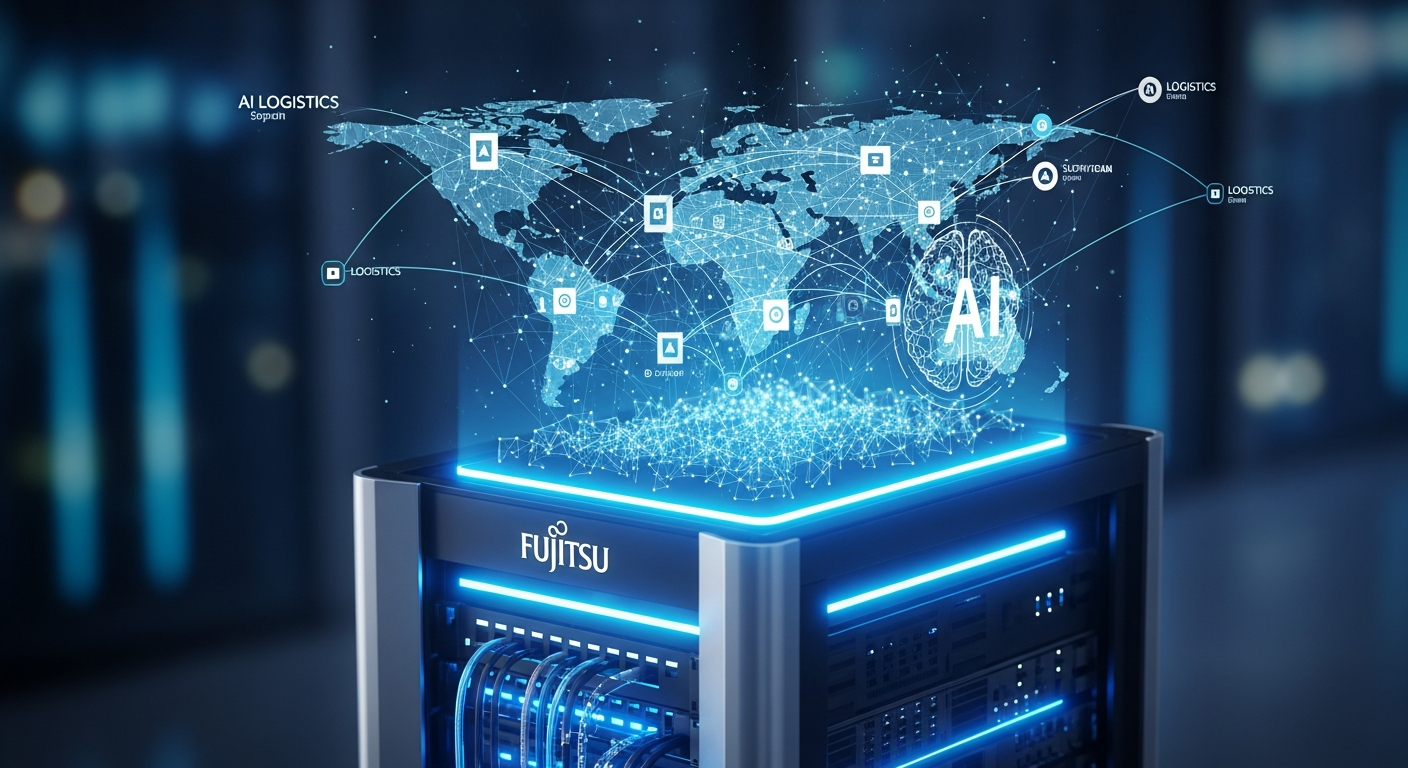

In recent times, supply chains have faced increasing complexity and fragility due to geopolitical tensions, climate change, and cyberattacks, costing an estimated $184 billion annually. Addressing these challenges, Fujitsu has launched a new AI-powered platform that utilizes Digital Twin technology and reinforcement learning to simulate potential supply chain disruptions and suggest alternative logistics routes, aiding companies in minimizing carbon emissions and maintaining operational continuity.
Technical and Market Analysis
Fujitsu’s new platform leverages AI agents to enable secure collaboration among AI agents from multiple companies. This allows businesses to respond quickly to changing market conditions and operational shifts. Specifically, the platform optimizes supply chain efficiency and supports business leaders in mitigating risks by enabling early detection of potential issues. Fujitsu has been focusing on visualizing and reducing CO2 emissions throughout its supply chain by linking product carbon footprint (PCF) data through its ESG Management Platform since 2023.
Strategic Insight
Reinforcement learning (RL) is applied to optimize decision-making processes by enabling systems to learn and adapt through trial and error. RL agents interact with environments, such as inventory systems or logistics networks, by taking actions (e.g., adjusting stock levels) and receiving feedback via rewards (e.g., reduced costs). This approach is particularly useful in dynamic and uncertain scenarios where predefined rules or static models struggle to adapt. Fujitsu’s platform leverages these benefits of RL to address complex supply chain problems.
Data and Evidence
AI adoption in Supply Chain Management (SCM) has reportedly led to a 15% reduction in costs, a 35% reduction in inventory levels, and a 65% increase in service levels. The SCM software market reached $30.73 billion in 2025, and the AI-enabled SCM market is projected to reach $27.4 billion by 2034. These statistics validate the positive impact of AI on supply chain management, suggesting that Fujitsu’s new platform can be competitive in the market.
Actionable Conclusion
Fujitsu’s AI-powered supply chain platform can help companies address supply chain complexity, reduce carbon emissions, and maintain operational continuity. Through this platform, companies can proactively identify potential risks in the supply chain, explore alternative logistics routes, and develop strategies to reduce carbon emissions. This not only contributes to the sustainable growth of companies but also plays a vital role in strengthening the resilience of the global supply chain.
[References & Sources]
- marsh.com
- martechedge.com
- aimagazine.com