
Energy Grid Attacks Expose Deep Societal Vulnerabilities
Do not underestimate the impact of a cyberattack on the global energy grid. A single, targeted strike has the power to paralyze modern society.
Technical Analysis: How the Attack Works
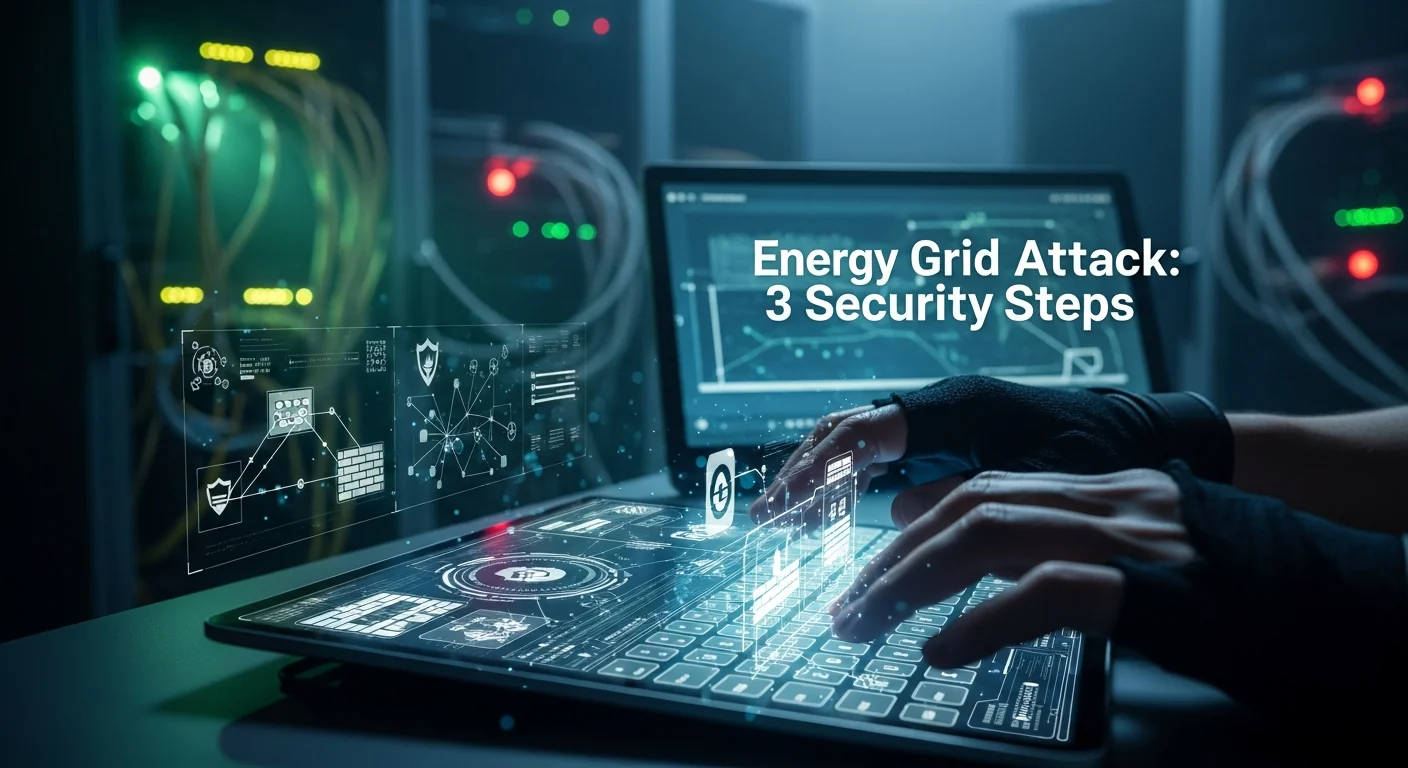
Attackers zero in on Energy Management Systems (EMS) and Industrial Control Systems (ICS). While common vectors like phishing and ransomware are used to infiltrate these critical networks, sophisticated zero-day exploits are also in the playbook. Once inside, threat actors can manipulate control commands, initiate system shutdowns, or exfiltrate sensitive data. This threat is magnified by a continued reliance on legacy protocols such as Modbus and DNP3, which leaves critical infrastructure dangerously exposed.
Market Impact Analysis
- Economic Losses: The economic fallout from a blackout is both immediate and severe, triggering massive production halts, staggering recovery costs, and lasting reputational damage. The 2021 Colonial Pipeline ransomware attack serves as a stark reminder; the incident led to a $5 million payout and sparked widespread fuel shortages across the nation.
- Social Disruption: Beyond the financial toll, power outages cause profound social disruption. Critical services like hospitals, public transit, and communication networks can grind to a halt, risking widespread chaos. These failures move beyond inconvenience and become lethal during extreme weather, as interruptions to heating in winter or cooling in summer can claim lives.
- Increased Security Investment: This escalating threat landscape is triggering a surge in cybersecurity spending. Governments and private firms alike are channeling significant capital into advanced technologies, comprehensive staff training, and broad awareness campaigns. As a result, this investment boom has propelled the global energy sector cybersecurity market to an estimated $14 billion in 2023.
Competitor Analysis
In the booming energy grid cybersecurity market, several key players are vying for dominance. Claroty has carved out a niche with its platforms for industrial control systems, giving clients vital visibility and threat detection within their OT and IoT environments. Another major player, Dragos, concentrates on threat intelligence and incident response tailored for the energy, manufacturing, and oil/gas sectors, offering OT-specific solutions that standard IT tools cannot match. Meanwhile, Palo Alto Networks is tackling the market by aiming to bridge the IT/OT divide with integrated platforms designed to secure both environments seamlessly.
Key Statistics
- According to the US Department of Energy (DOE), cyberattacks targeting the US energy sector skyrocketed by 75% in 2022 compared to the prior year.
- Despite a marginal 0.5% decrease in attacks on ICS components in Q1 2023 from the previous quarter, as reported by Kaspersky, the overall threat level remains alarmingly high.
- The financial sting is severe. A 2023 report from the Ponemon Institute puts the average loss for industrial organizations at $19 million per cyberattack.
3 Steps to Take Now
- Conduct Rigorous Security Vulnerability Assessments: Regular, proactive audits of the entire energy grid system are non-negotiable. This is the definitive way to identify potential attack vectors and apply critical patches before they can be exploited.
- Implement Layered Security Technologies: A robust defense is a layered defense. Deploying Intrusion Detection Systems (IDS), Intrusion Prevention Systems (IPS), and mandatory Multi-Factor Authentication (MFA) is essential for locking down critical operations.
- Invest in Continuous Cybersecurity Education: Technology alone is never enough. Routine training for all operators and staff is crucial for sharpening threat awareness and honing the organization’s collective cyber response capabilities.
1-Year Prediction
Over the next year, energy grid attacks will grow more sophisticated, with AI-driven tactics becoming the new norm. Defensive strategies must evolve at an even faster pace to counter this. We should also expect a push for stricter government regulations and a corresponding expansion of the cyber insurance market to mitigate these escalating risks.
