

Fujitsu’s AI Server: A Key to Enhanced Digital Sovereignty?
Server vulnerabilities now drive over 60% of global data breaches, turning the hardware layer into a critical battleground. In a strategic countermove, Fujitsu will shift its AI server production to the domestic Kasashima Plant starting in March 2026. This is a decisive step to secure Japan’s critical infrastructure under the Economic Security Promotion Act.
In-Depth Technical Analysis
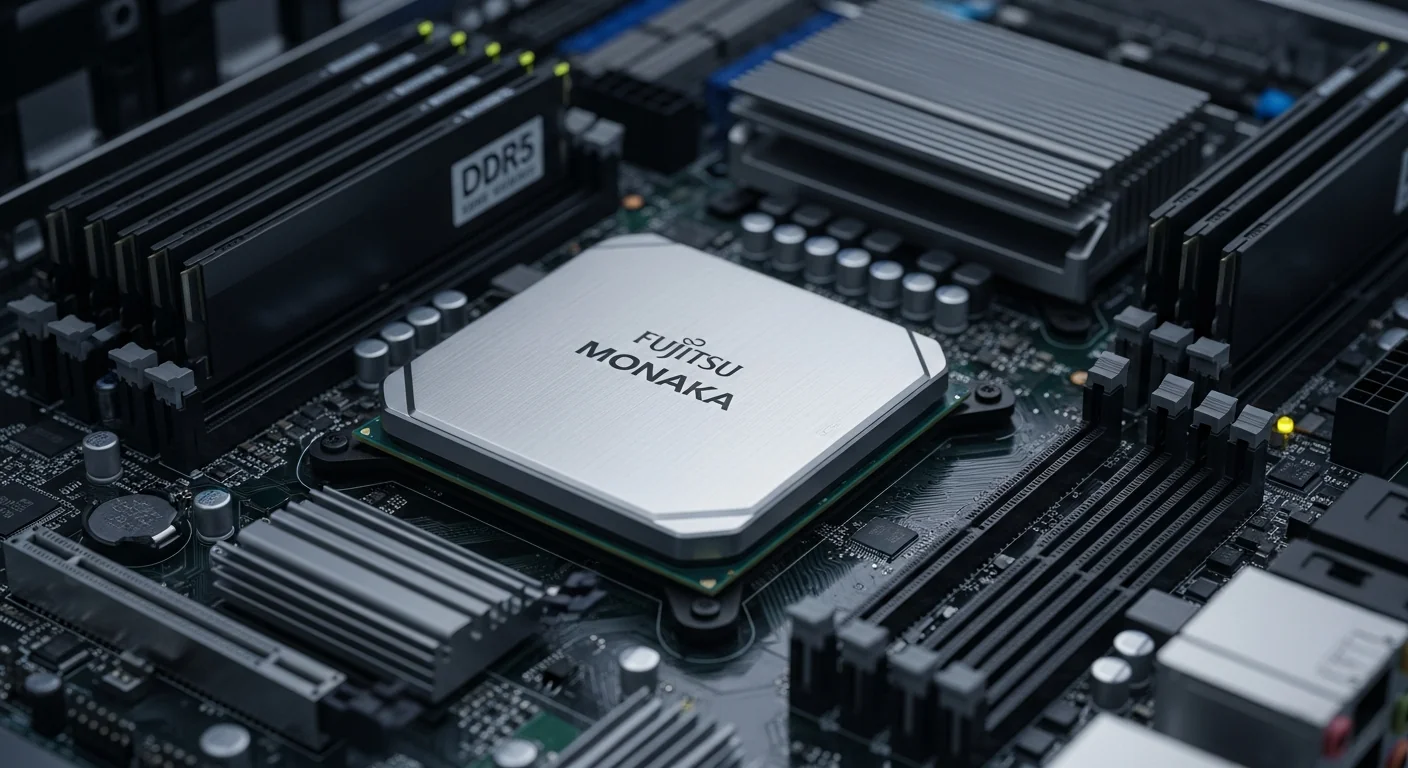
Powering this initiative is a formidable hardware stack: NVIDIA’s HGX B300 and RTX PRO 6000 Blackwell GPUs paired with Fujitsu’s proprietary FUJITSU-MONAKA processors. The real innovation, however, lies in confidential computing integrated directly at the processor level. This approach provides memory encryption and CPU isolation to physically block unauthorized access. Bringing production onshore is not just a logistical shift; it decisively cuts foreign dependencies and guarantees the supply chain traceability now essential for compliance with Japan’s new economic security mandates.
Market Impacts
- Enhanced Data Sovereignty: With the global data sovereignty market set to explode to $100 billion by 2027, Fujitsu’s move gives Japanese agencies and firms complete control over their infrastructure. This directly streamlines compliance and reinforces national security.
- AI Security Market Expansion: Fujitsu’s architecture directly targets the AI security market, which is expanding at over 30% annually. Its confidential computing capabilities are designed to thwart sophisticated model extraction attacks, crucial for protecting sensitive data processing in finance, healthcare, and defense.
- Revitalization of Japan’s IT Industry: Even a 10% share of Japan’s AI server market represents a multi-billion dollar opportunity for the company. The Kasashima plant will leverage expertise from the Fugaku supercomputer project, positioning Fujitsu to directly challenge foreign vendors for Japan’s most critical deployments.
Competitive Landscape
While global leaders Dell EMC (PowerEdge) and HPE (ProLiant) dominate with their versatile configurations, their security relies on Intel/AMD enclaves—a stark contrast to Fujitsu’s processor-native approach. This gives Fujitsu a twofold competitive edge. First, the powerful “Made in Japan” brand appeals directly to sovereignty-focused clients. Second, the MONAKA processor’s integrated security eliminates reliance on external CPU architectures for core protection, a key differentiator.
Key Statistics
- IBM reports the average cost of a data breach at $4.45 million.
- Gartner predicts global losses from cyber attacks will reach $10.5 trillion by 2025.
- Accenture’s report shows that 68% of companies are concerned about increasing cybersecurity risks.
Actionable Steps
- Re-evaluate Data Security Strategy: Firms must audit their current data security vulnerabilities and begin a serious evaluation of advanced technologies like confidential computing.
- Plan AI Server Deployment: Security requirements must become the top priority in AI server deployment strategies. Fujitsu’s sovereign-centric offerings now warrant close consideration.
- Consult Experts: To ensure compliance with evolving data sovereignty and security regulations, companies should seek expert assistance to build out optimal solutions.
Future Outlook
Expect the full FUJITSU-MONAKA server line to roll out in fiscal 2027, with a European expansion planned to follow. Fujitsu is already looking ahead, bolstering its AI security stack with LLM scanning and guardrails to counter generative AI risks. As data protection rules inevitably tighten, the integration of post-quantum cryptography looms as the next frontier.
