
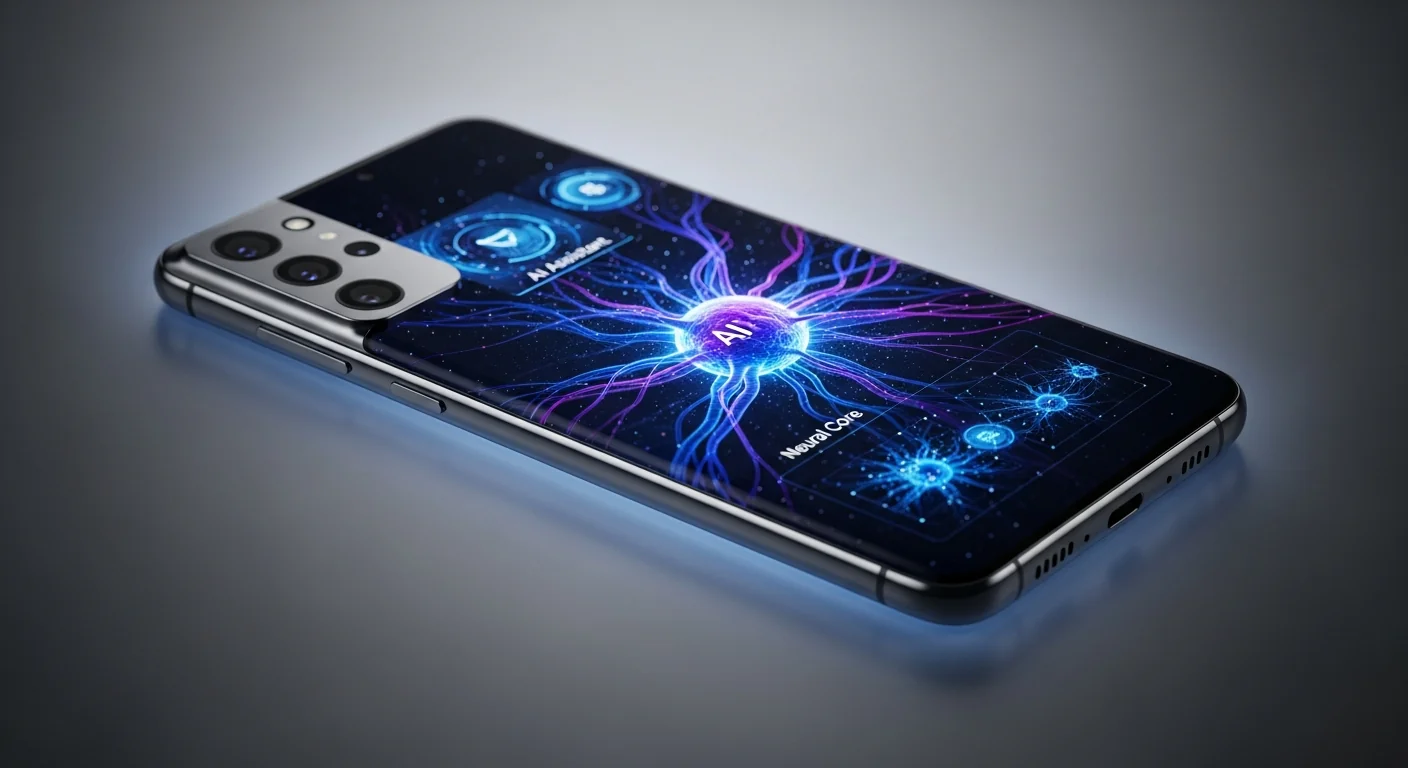

Galaxy S26: A Strategic Pivot to Agentic AI and Hardened Security
In the hyper-competitive smartphone market, Samsung is staking its claim with the Galaxy S26 lineup, making a calculated pivot toward agentic AI and a privacy-first design to outmaneuver Apple and Huawei. At the heart of this strategy is a new AI OS, co-developed with Google, which will be the defining feature across all three S26 models.
Technical Analysis
At the core of the Galaxy S26 experience lies agentic AI. This isn’t just another voice assistant; it’s software engineered to learn individual usage patterns, automating routine tasks and proactively surfacing information without explicit commands. Complex operations are managed through hands-free voice control, while a custom AI OS, built in tandem with Google, intelligently allocates processing loads between the Exynos 2600 and Snapdragon 8 Elite Gen 5 chipsets for maximum efficiency.
Powering these AI ambitions required a ground-up hardware redesign. A new Vapor Chamber dissipates heat 29% more effectively—a critical upgrade to prevent thermal throttling during intense AI workloads. The custom silicon provides the necessary muscle, delivering a 38% boost in NPU speed and a 23% improvement in the GPU. These are not just paper specs; they are the real-world gains needed for sophisticated on-device AI.
Market Analysis
There’s no ambiguity in the market signals: over 70% of smartphone buyers now list AI as a key purchasing factor, raising the stakes immensely. Competitors like Apple, with its computational photography, and Huawei, with its on-device processing, have already shifted premium expectations. Samsung’s countermove is agentic AI, positioning the Galaxy S26 not as a reactive tool, but as a proactive partner that anticipates user needs.
While Samsung’s classic three-tier strategy (S26, S26+, and Ultra) remains intact, it comes with a crucial twist: AI capabilities are standardized across the lineup. By offering identical processor options and a standard 12GB of RAM in all regions, the company ensures every user gets the same predictable AI performance. This move democratizes the core feature, guaranteeing no customer is left with a watered-down experience, regardless of their chosen model.
Enhanced Security
In a direct response to real-world vulnerabilities, every Galaxy S26 model will ship with a Privacy Display. This highly practical feature automatically narrows the screen’s viewing angle in public, shielding sensitive content from prying eyes. For commuters or any professional handling confidential data on the move, this is a tangible and significant security upgrade.
The expected physical fortifications are also present. IP68 water and dust resistance, combined with the latest Gorilla Glass Armor 2, solidify the S26’s premium build and durability.
Strategic Insight
The decision to partner with Google on AI is a telling strategic play. Rather than building another walled garden, Samsung is betting that collaboration will accelerate innovation far more quickly. This approach allows the company to leverage Android 16 and its own One UI 8.5 to bring agentic AI to market fast, while still differentiating through its core hardware strengths like processor choice and camera systems.
Of course, AI-heavy workflows are notoriously power-hungry—a reality Samsung addresses head-on. All three models boast an impressive 31 hours of video playback. For the power users inevitably drawn to the Ultra model, 60W charging is a non-negotiable feature, hitting 75% capacity in just 30 minutes to minimize the downtime that intensive AI tasks can create.
Conclusion
The Galaxy S26 is Samsung’s attempt to solidify its credentials as a serious AI player while directly tackling the privacy concerns that shape today’s market. Its promise is clear: agentic AI to streamline daily life, a Privacy Display for tangible security, and a tiered lineup for broad accessibility. But the success of this entire strategy hinges on one critical question: will the partnership with Google deliver a user experience that is seamless, powerful, and genuinely intelligent? The answer will define Samsung’s competitive standing as these devices hit the market.
