
South Korea’s gaming IP exports soared to $5.13 billion in 2024, dwarfing the combined overseas earnings of K-pop, film, TV, animation, and advertising. But this headline figure masks a brewing crisis. As the domestic market undergoes a painful restructuring, 2026 is emerging as the industry’s inflection point. Publishers must now pivot aggressively toward global distribution, multi-platform releases, and AI-powered development to regain their momentum.
Technical and Market Analysis
A clear demographic split now defines player preferences: PC gaming commands a predominantly male audience, while mobile has solidified its dominance among female players. South Korea stands as the world’s fourth-largest gaming market, generating $9.51 billion in revenue for 2024—a figure projected to hit an astounding $21.7 billion by 2030. While mobile gaming is the engine of this growth, the top-line number conceals a fundamental strategic shift. The market has moved beyond chasing user volume to extracting higher value per user. The industry’s entire next phase of growth now hinges on whether Korean studios can finally crack the premium PC and console segments on a global scale.
Strategic Shift
The MMORPG playbook that defined the 2000s no longer cuts it. NCSoft’s upcoming AION 2 perfectly illustrates the new approach: a simultaneous global launch on PlayStation 5, Xbox, PC, and mobile. This strategy is designed to capture a worldwide audience from day one, ditching the staggered regional rollouts of the past. Industry giants like Nexon, Krafton, Netmarble, and NCSoft have all reoriented their core strategies around overseas expansion instead of squeezing an already saturated domestic market. Seoul is backing this corporate pivot, providing over $50 million in annual subsidies and elevating gaming to the same policy status as film, even while tightening ethical guardrails on monetization.
Market Reality Check
With 33 million active gamers and 57 percent population penetration, Korea ranks fourth globally in market size. An incredible 97.5 percent smartphone penetration offers a powerful launchpad for mobile innovation. This mobile-first reality, however, comes at a cost. The iconic PC bang network, the very incubator for generations of esports champions, has shrunk by 23 percent since 2019, with facilities now operating at just over 20 percent occupancy. Mobile gaming’s dominance is absolute, claiming 59 percent of the total market share. And while a title like Stellar Blade showcases immense export potential, its success was heavily dependent on China, which accounted for a massive 55 percent of its revenue.
The AI and Platform Equation
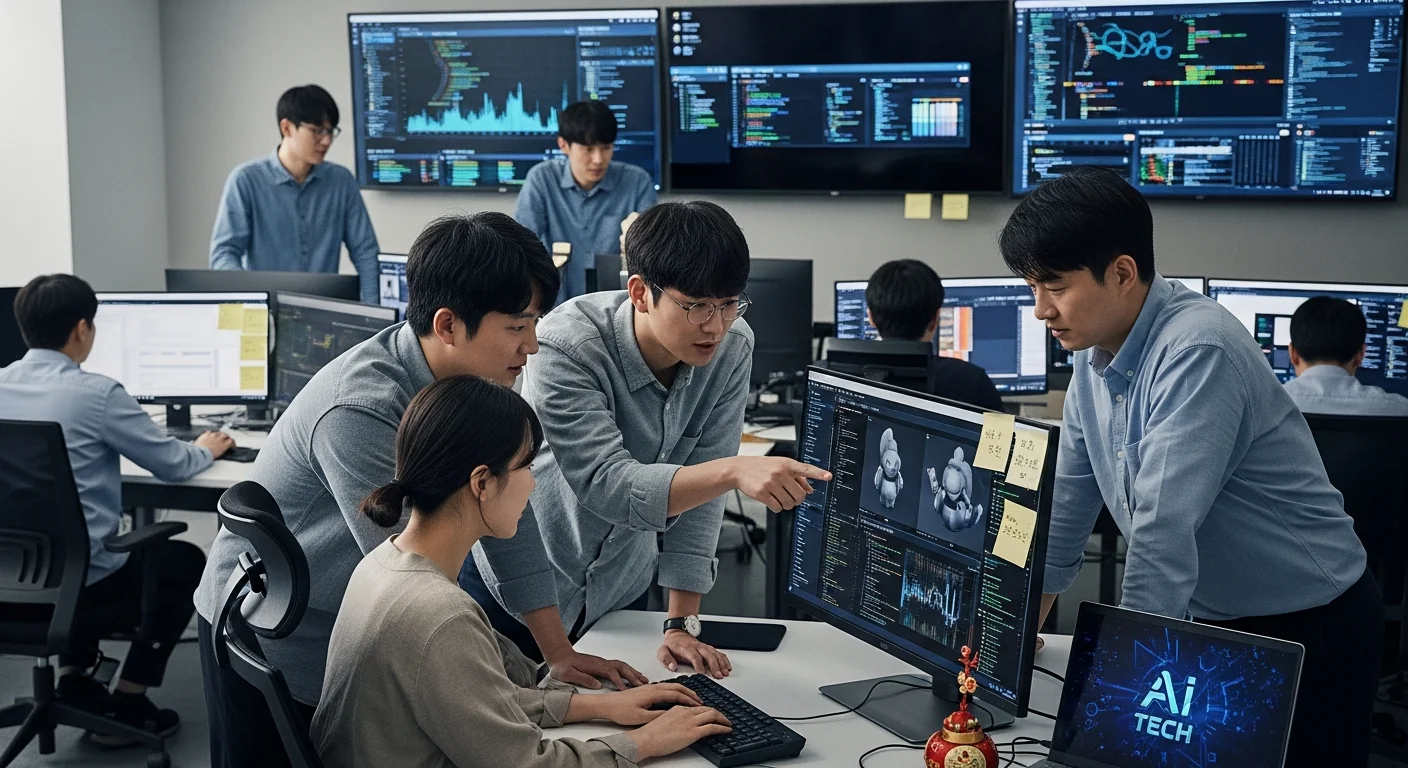
Generative AI has rapidly become the sector’s most critical competitive advantage. In Krafton’s inZOI, AI is used to create dynamic, conversational NPCs. NCSoft, meanwhile, has established dedicated AI R&D divisions to automate content generation across its entire upcoming slate. For development teams, the benefits are immediate, with AI handling everything from NPC dialogue and character art to soundtrack composition. This not only shortens development cycles but also elevates the final production quality. The real hurdle isn’t technical; it’s perception. Studios must find a way to be transparent about AI’s role without shattering creative immersion.
At the same time, the economics of distribution have shifted decisively in the publishers’ favor. Google’s revenue cut on the Android store has fallen from 30 percent to just 15 percent, and it no longer applies a surcharge for proprietary payment systems. This change alone could add 10 percentage points to the margins of major studios. NCSoft is already capitalizing, pocketing an extra 5.1 percentage points through its proprietary “Purple” payment layer on PC.
What Works Going Forward
Breaking into Western markets demands more than just an ambitious release calendar. Success will be determined by a strong presence at major gaming expos, intelligent localization that respects regional tastes, and genuine engagement with player culture. These are the factors that separate breakout hits from expensive flops. Domestically, Korean audiences continue to gravitate toward fiercely competitive systems; studios should double down on guild frameworks, persistent leaderboards, and real-time multiplayer combat. The masterstroke, however, is IP convergence. Weaving a single franchise across games, webtoons, anime, and merchandise—as demonstrated by Solo Leveling: Arise, which perfectly timed its game launch with its anime release—creates a powerful, self-reinforcing flywheel.
Publishers that execute this complex transition will compete on a global stage. Those that don’t will fade fast.
[References & Sources]
- seoulz.com
- thedrk.com
- playio.co
참고문헌
References & Sources
