
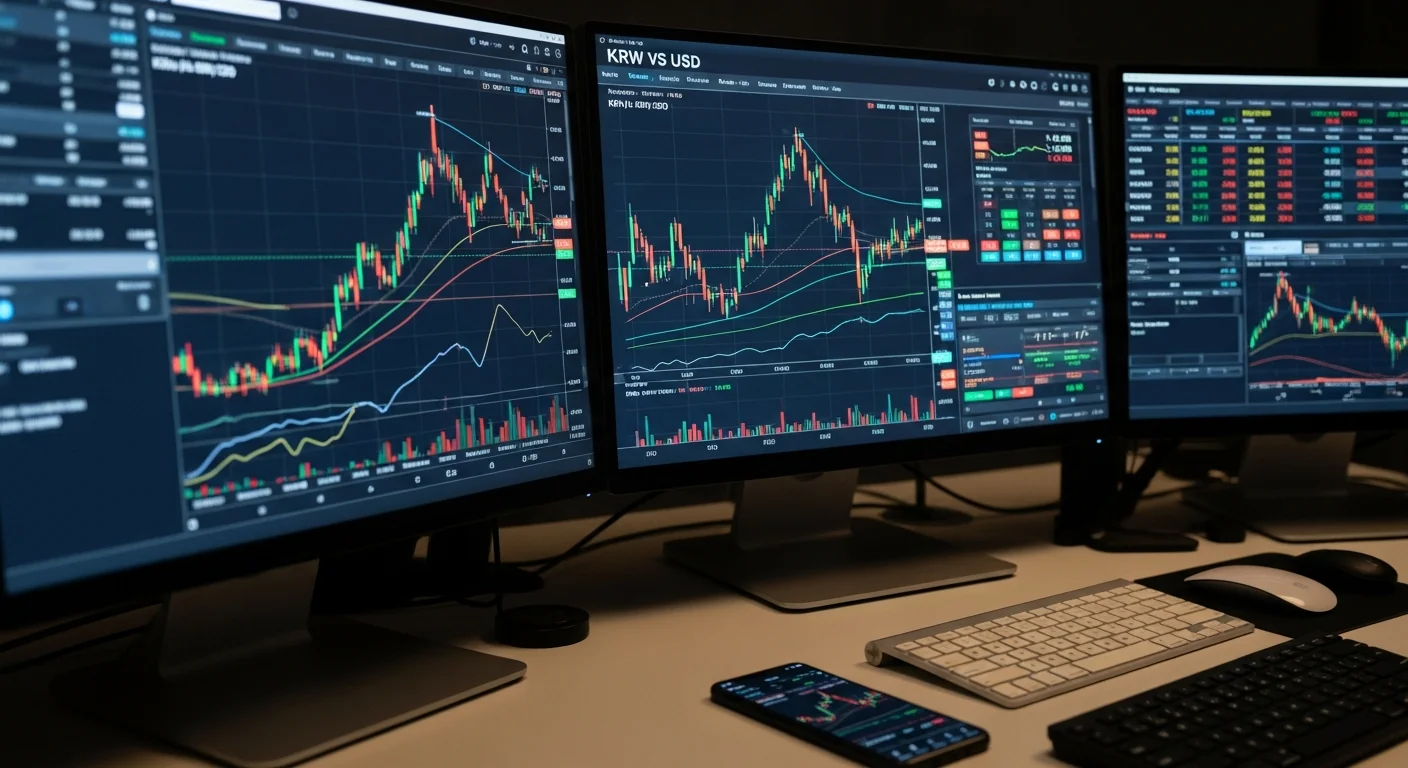

An unexpected surge in January’s U.S. Producer Price Index sent shockwaves through global markets, catapulting the KRW/USD exchange rate. The dollar’s sudden strength drove the pair to an intraday high of 1445.00 before a pullback in Treasury yields allowed it to settle near the 1440 mark. Here’s a breakdown of the drivers, the outlook, and actionable strategies for this volatile market.
1. Market Opening: Closing in the 1440s Amid Increased Volatility
At this point, every major U.S. data release holds foreign exchange traders captive, amplifying market swings. The surprise PPI print immediately reignited inflation fears and boosted the dollar’s safe-haven appeal. While a subsequent retreat in Treasury yields managed to cap the dollar’s explosive advance, it wasn’t enough to prevent the won from closing in the challenging 1440 territory.
2. In-Depth Analysis:
2.1. Technical Analysis
Technically, the won is trapped in a sideways channel, oscillating within the 1400 range. The 1420 level provides a clear floor of support, while the 1450 mark presents a formidable resistance ceiling. Although key indicators remain neutral, the recent explosion in volatility means any trend judgment must be made with extreme caution.
2.2. Market Sentiment Analysis
A deep schism defines current market sentiment. Traders are torn between the possibility of a Federal Reserve pivot toward easing and the mounting risk of a global economic slowdown. A recent string of mixed U.S. economic data has only deepened this confusion, souring sentiment across the board.
2.3. Macroeconomic Analysis:
U.S. Economy: A closer look at the January PPI data reveals that surging service sector prices were the primary culprit. This is a particularly sticky form of inflation, reinforcing our view that the Fed’s hawkish monetary policy will persist longer than many expect.
Korean Economy: Back in Korea, the economy is battling the dual headwinds of faltering exports and weak domestic demand. The sharp decline in semiconductor shipments remains the single largest risk factor. While the government’s proposed stimulus measures and supplementary budget may provide a floor for the economy, they are unlikely to trigger a significant rebound on their own.
3. Strategic Implications:
3.1. Risk Management
This kind of environment demands rigorous risk management. It is no longer just advisable; it is essential. To insulate portfolios from damaging currency fluctuations, investors must employ tools like currency hedging instruments or execute a disciplined dollar-cost averaging strategy.
3.2. Maintain a Long-Term Perspective
Investors must look past the short-term noise and anchor decisions in a long-term fundamental view. Considering the underlying strength of the Korean economy, the won is excessively undervalued at current levels. For patient capital, this sell-off could represent a compelling entry point into won-denominated assets.
3.3. Information Acquisition
Foreign exchange markets are a moving target. Staying ahead requires constant vigilance over key catalysts. U.S. economic releases, subtle shifts in Fed rhetoric, and emerging geopolitical risks must be continuously monitored and integrated into any active investment strategy.
4. Conclusion: A Cautious Approach and Long-Term View Are Needed
The conflict between a hot PPI report and falling bond yields has created a powder keg of volatility for the KRW/USD pair. The only prudent path forward is to tune out the daily static, focus on the long-term thesis, and manage exchange rate risk diligently. As macroeconomic data and market sentiment evolve, strategies must remain flexible, even as some analysts begin calling for a return to the 1,300s.
In a market this conflicted, caution is the only rational stance.
[References & Sources]
- seoulwire.com
- benzinga.com
- einfomax.co.kr
참고문헌
- >
vertexaisearch.cloud.google.com – mk.co.kr
>vertexaisearch.cloud.google.com – tradingeconomics.com
>ver
References & Sources
