
Energy Transition: Still a Long Road Ahead
Fossil fuels still supply over 80% of our energy, a stark reminder of the long road ahead despite the global push for renewables. That reality underscores the urgency behind the work of leaders like Lei Zhang, Envision’s CEO. His recent President’s Award from the Energy Institute—a first for any private-sector leader—is a powerful recognition of his drive to accelerate the world’s break from fossil fuel dependency.
Technical Analysis: Envision’s Innovation
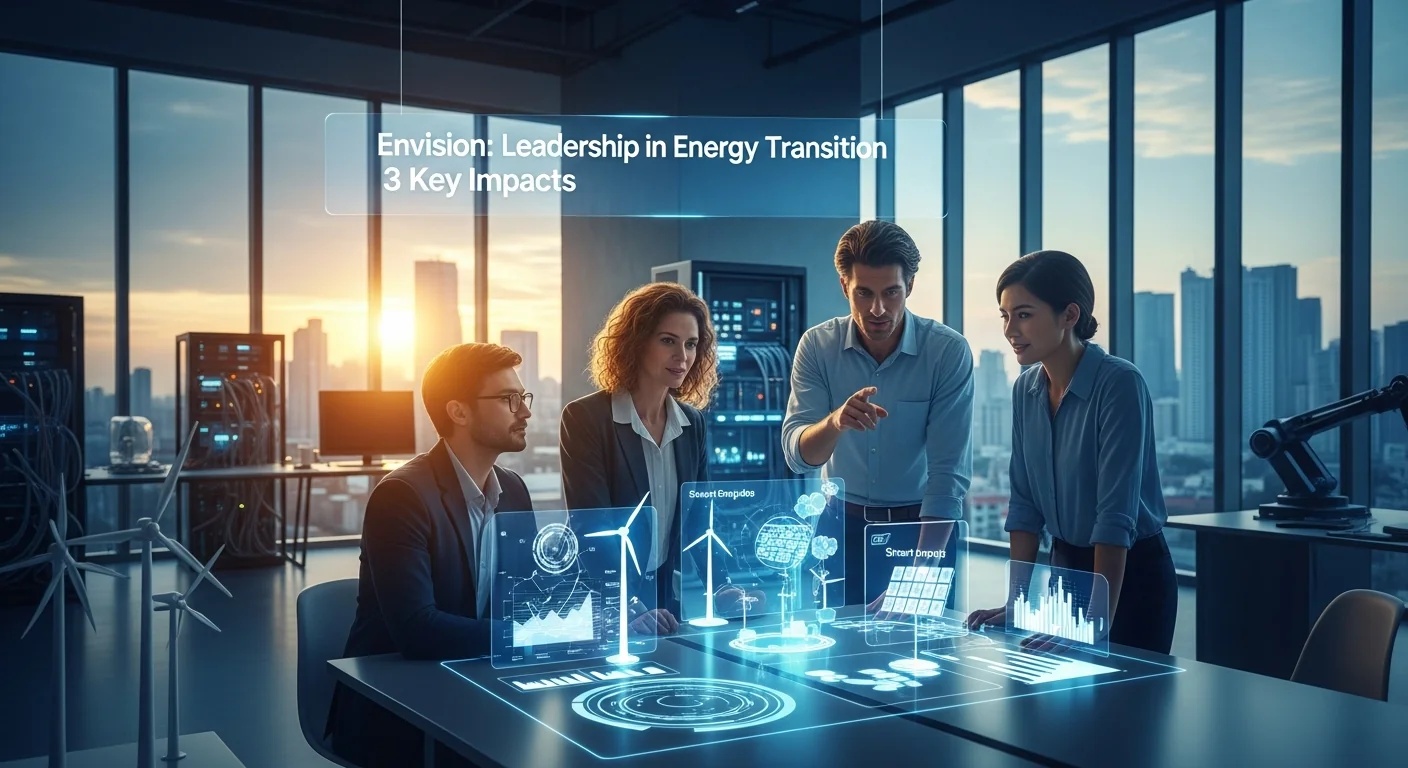
At the heart of Envision’s strategy is a potent combination of wind turbines, energy storage, and its AI-powered EnOS™ platform, creating a fully integrated energy ecosystem. Serving as the central brain, the EnOS™ platform crunches data from millions of assets to optimize both power generation and consumption. Its machine learning algorithms deliver precise wind forecasts, refine storage cycles, and match supply with demand in real time.
Market Impact: Envision’s Ripple Effect
- Enabling Distributed Energy Markets: By connecting over 200GW of assets globally, Envision is a key catalyst for the growth of distributed energy markets. This empowers communities to produce and use their own power, stabilizing grids while significantly cutting emissions.
- Improving Wind Power Efficiency: Envision’s turbines consistently generate up to 15% more energy than rival models. This superior efficiency directly drives down the cost of wind, making renewables a more formidable competitor to traditional energy.
- Expanding Energy Storage Solutions: Deploying 10GWh of storage in 2023 alone, Envision is aggressively tackling the core challenge of renewables: intermittency. This scale ensures large projects remain reliable and gives modern grids crucial flexibility.
Competitor Analysis: Envision vs. Vestas & Siemens Gamesa
While Vestas dominates onshore wind and Siemens Gamesa commands the offshore market, Envision is carving out a unique advantage. Its true weapon is EnOS™, which seamlessly integrates storage and AI. Legacy rivals are now playing catch-up on the software front, leaving Envision with a clear edge sealed by superior analytics.
Key Statistics: The Reality of Energy Transition
- IRENA: To hit 2050 carbon neutrality targets, annual investment in renewables must quadruple from current levels.
- IEA: Energy-related CO2 emissions climbed to a record high in 2023, showing the scale of the challenge.
- BloombergNEF: Global investment in renewables finally surpassed $500 billion in 2023, a positive but insufficient milestone.
What to Do Now: 3-Step Action Guide
- Increase Renewable Energy Investment: Capital is the fuel for this transition. Both individual investors and corporations must channel significant funds into renewable portfolios and direct projects to accelerate progress.
- Improve Energy Efficiency: Slashing overall consumption is critical. Adopting energy-efficient equipment and building conservation habits are practical, high-impact steps for any organization or household.
- Demand Policy Support: Systemic change requires political will. This means actively pressing governments for robust policies that expand renewables and mandate emissions cuts.
Future Prediction: 1 Year Outlook
Over the next year, expect Envision to significantly enhance its EnOS™ platform by focusing on the seamless integration of advanced battery controls and solar inverters. Its AI-driven forecasts will become even sharper, leading to more accurate demand prediction and a marked improvement in energy storage performance across its global network.
