
South Korean MMORPGs Challenge ‘Pay-to-Win’ and Reshape Global Strategy
The South Korean gaming market is projected to exceed $13.7 billion in revenue by the end of 2024, with forecasts indicating growth to $20.08 billion by 2029. Within this dynamic landscape, domestic MMORPG developers are aggressively challenging traditional business models and deploying novel strategies to capture global audiences.
The long-criticized ‘Lineage-like’ formula, characterized by auto-hunting and probability-based ‘pay-to-win’ (P2W) monetization, is undergoing a significant transformation. While elements of ‘pay to progress’ still draw criticism in some new titles, developers are actively working to reduce P2W features, particularly for global releases. For instance, Amazon Games, the global publisher for Throne and Liberty, made changes to remove P2W aspects for its Western launch. This signals a strategic pivot towards fostering long-term player engagement and mitigating negative perceptions associated with aggressive monetization.
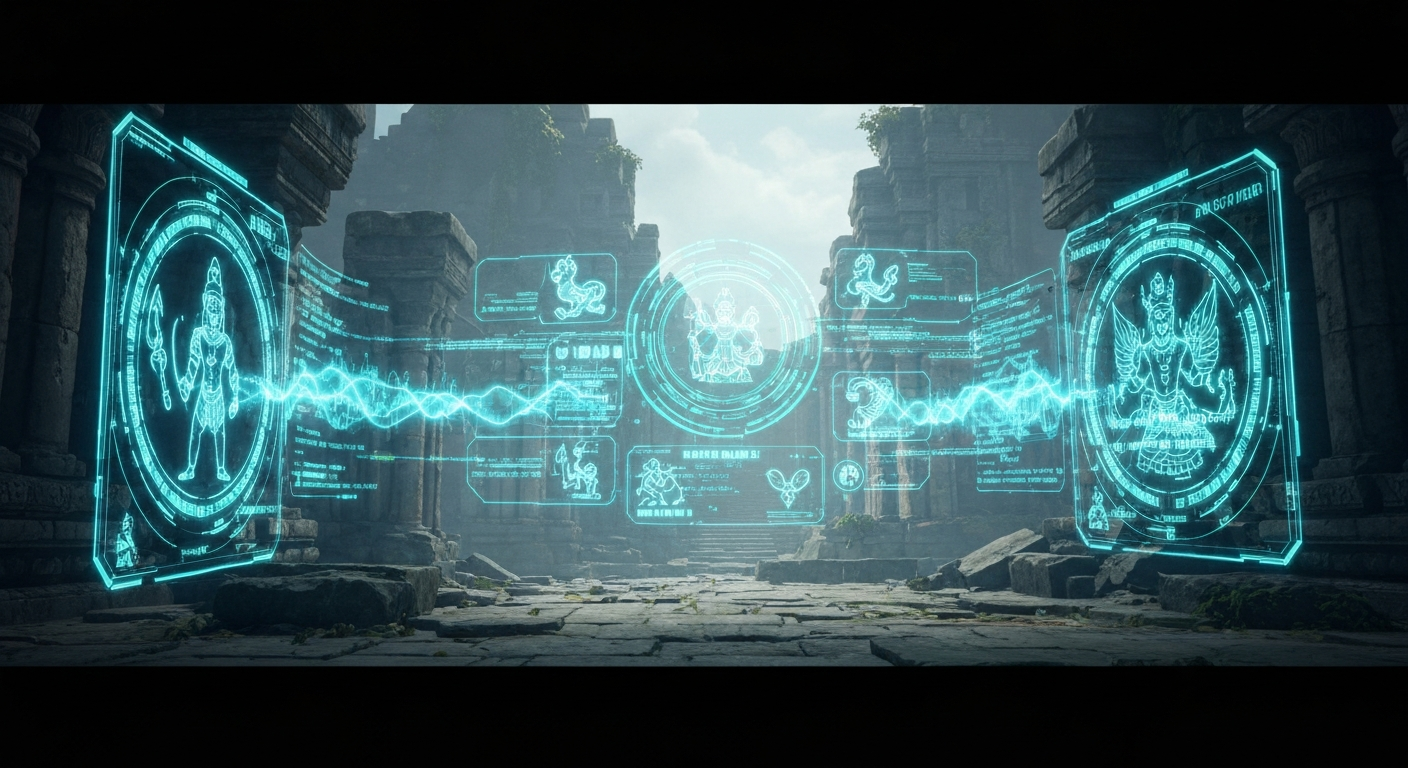
New MMORPGs are introducing player-driven governance systems, innovating how in-game economies and authority are distributed. Netmarble’s upcoming Sol: Enchant, for example, features a ‘divine authority system’ that grants players partial operational control, categorizing them into ‘Gods’ overseeing servers, ‘High Gods’ managing worlds, and a ‘Supreme God’ across all servers. This system extends beyond mere gameplay, offering expanded community participation and influence, which could significantly enhance a game’s longevity and player immersion. Such models resemble blockchain-based Decentralized Autonomous Organizations (DAOs), hinting at new forms of ownership and operational paradigms within gaming.
Leveraging public domain ancient mythology IPs has emerged as a key strategy for global market expansion. Odin: Valhalla Rising, based on Norse mythology, has successfully launched globally after its strong performance in Asia. Netmarble’s Vampir will draw from a gothic horror worldview. Nexon is also planning to reinterpret and utilize its older IPs, such as The Kingdom of the Winds. This approach allows developers to tap into universally recognized narratives, appealing to a broader international audience without the constraints of specific cultural references or high licensing fees. Public domain IPs offer a rich tapestry of lore and storytelling potential, enhancing game depth while managing development costs.
The concurrent release strategy for PC and console platforms marks a definitive shift for Korean MMORPGs, moving beyond their mobile-centric past to embrace mainstream global platforms. Major titles like NCSoft’s AION 2, Kakao Games’ Chrono Odyssey, and Pearl Abyss’s Crimson Desert are all targeting simultaneous releases on PC and consoles for North American and European markets. Notably, Chrono Odyssey adopts a ‘buy-to-play’ model, diverging from the prevalent free-to-play, microtransaction-heavy structure. These moves demonstrate Korean developers’ proactive response to Western players’ preferences for immersive, manual-control-based experiences. Utilizing advanced technologies like Unreal Engine 5 for AAA-level visuals, and focusing on story-driven content and exploration over automated gameplay, these studios are actively building global competitiveness.
Investors and market participants should closely monitor this paradigm shift. The reduction of P2W elements, while potentially impacting short-term revenue, is crucial for building player trust and establishing sustainable long-term monetization. The success of player governance systems and the originality of games leveraging public domain IPs will determine their global market penetration. Diversification across platforms and a stronger alignment with Western user preferences represent the new growth engines for Korean MMORPGs. Only through adaptability and bold innovation will Korean MMORPGs solidify their position in the intensely competitive global gaming market.
References & Sources
