
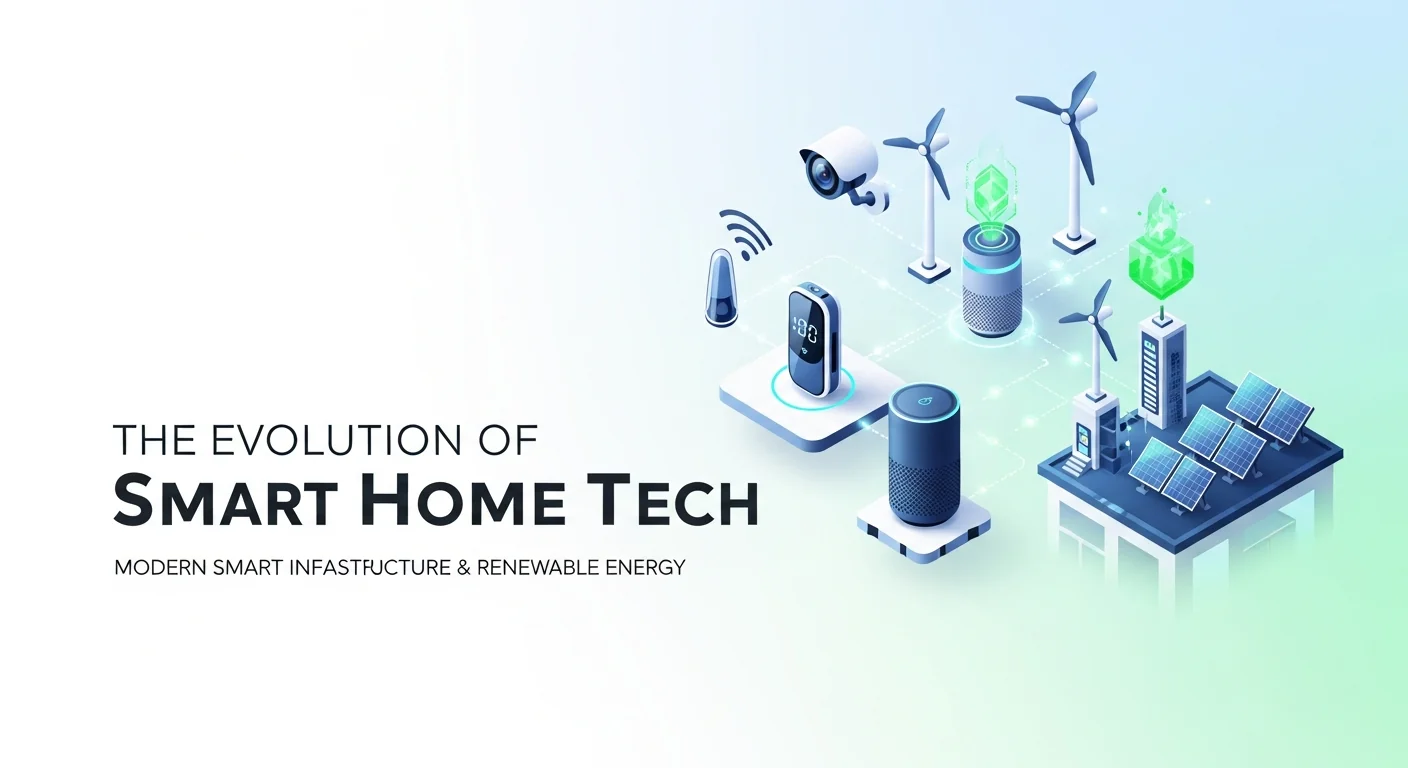

The Evolution of Smart Home Technology in 2026: Predictions and Perspectives
Smart home technology is no longer a disjointed collection of gadgets. By 2026, the industry has reached maturity, moving beyond mere convenience to deliver tangible value. These systems are now deeply integrated into our lives, creating real-world benefits by cutting energy costs, bolstering security, and supporting healthier lifestyles.
Key Predictions
- AI-Powered Intuitive Interfaces: Your home now anticipates your needs before you even voice them. Artificial intelligence has evolved beyond waiting for commands; it actively learns your daily routines to seamlessly adjust lighting, climate, and entertainment. Everything from optimizing energy use to detecting security threats and curating content now happens organically in the background, requiring zero user intervention.
- Seamless Interoperability: For years, market fragmentation was the Achilles’ heel of the smart home. That era is over, thanks to the widespread adoption of the Matter protocol. Devices from industry giants like Apple, Google, and Amazon now communicate flawlessly. The frustrating days of juggling multiple apps are gone, replaced by a unified dashboard for total home control.
- Predictive Maintenance: Say goodbye to expensive, unexpected repairs. A network of sensors now monitors the health of your home’s appliances in real time, catching potential failures long before they escalate into catastrophes. This shifts the paradigm from reactive fixes to proactive, scheduled maintenance, saving both money and headaches.
- Extended Reality (XR) Integration: Extended Reality—the fusion of augmented (AR) and virtual reality (VR)—has broken out of its entertainment silo. Practical applications are now deeply embedded in the home environment. You can virtually redesign a living room, engage with immersive educational programs, or collaborate with colleagues remotely. The lines between our physical and digital worlds are blurring faster than ever.
- Heightened Security and Privacy: The physical key is an artifact. Biometric authentication—facial recognition, fingerprints, and contactless entry—is now the standard for home access. Behind the scenes, robust encryption protocols safeguard personal data, while granular privacy controls give homeowners explicit authority over what information is collected and how it is deployed.
- Hyper-Efficient Energy Management: Slashing electricity bills by 10-40% has become a core feature, not a bonus. AI-driven energy systems analyze consumption patterns, automatically shifting heavy usage to cheaper, off-peak hours. When paired with solar panels and battery storage, the modern home transforms into a personal power station, simultaneously shrinking utility costs and its carbon footprint.
Ethical Considerations
This rapid technological evolution isn’t without its challenges. The more integrated our homes become, the greater the risk to our personal privacy. Issues of data security and algorithmic bias are no longer theoretical; they are urgent problems that demand solutions. If developers fail to build in transparency and clear accountability from the ground up, the consumer trust that underpins this entire ecosystem could evaporate overnight.
Conclusion
In 2026, the smart home is far more than a collection of gadgets; it is an essential partner in daily life. When built on a solid ethical foundation, these integrated systems do more than just cut costs and reduce chores—they actively improve our well-being. This transforms the smart home from a mere consumer purchase into a strategic, long-term investment in a better life.
