
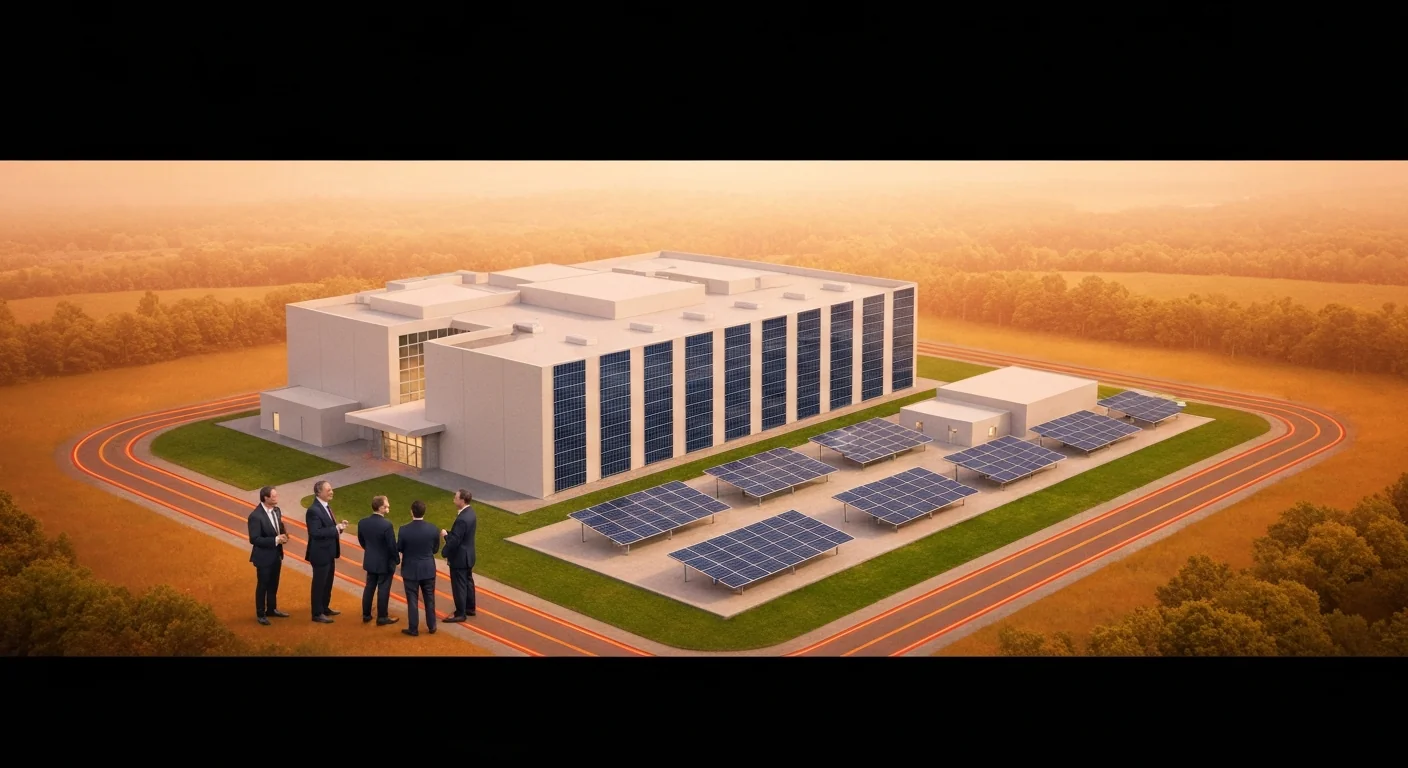

Google-DTE Energy Partnership: 1 GW Data Center Fuels Michigan’s Green Grid Expansion
Artificial intelligence is fueling an insatiable demand for computing power, a trend projected to double global data center electricity consumption to 945 TWh by 2030. This unprecedented surge makes power availability the single greatest constraint on industry growth. Against this backdrop, Google’s recent collaboration with DTE Energy in southeast Michigan is not just another deal; it exemplifies a critical evolution in how hyperscalers must now secure robust, sustainable energy for their expanding infrastructure.
At the core of this partnership is Google’s plan for a new 1-gigawatt (GW) data center, likely in Van Buren Township, Michigan. Yet, this move transcends simple facility expansion. It represents a profound strategic alignment with DTE Energy, enabling the development of 2.7 GW of new clean energy resources for the local grid. This contribution, encompassing solar power, advanced storage, and demand flexibility, far exceeds the data center’s own 1 GW consumption. Google has committed to fully covering its electricity costs and infrastructure needs, thereby protecting local ratepayers while actively enhancing grid resilience. For DTE Energy, this agreement is expected to generate nearly $1.7 billion in “positive affordability benefits” for its existing customers. The facility is slated to begin service in December 2027 and reach its maximum load by December 2028.
For both entities, the strategic advantages are compelling. Google accelerates its ambitious goal of operating on 24/7 carbon-free energy by 2030, building on a track record of matching 100% of its annual electricity use with renewable purchases since 2017 and contracting for a record 8 GW of clean energy in 2024 alone. By directly investing in new generation, Google mitigates the supply risks inherent in a rapidly electrifying economy. The choice of Michigan is no accident; it taps into a region where DTE Energy is aggressively expanding its renewable portfolio, with plans to add over 1,000 megawatts of new wind and solar annually starting in 2026. This perfectly aligns Google’s sustainability objectives with DTE’s clean energy transition.
Such energy-focused collaborations are fundamentally reshaping the competitive landscape for data center development. Tech giants are evolving into proactive “grid stakeholders,” co-investing in infrastructure and deploying their own power generation and storage to manage costs and boost reliability. This trend forces other hyperscalers to re-evaluate their energy procurement, likely driving a wave of similar long-term, utility-backed renewable agreements in other power-advantaged regions. Utilities, in turn, gain powerful partners to de-risk and accelerate their decarbonization roadmaps, transforming their traditional business models in the process.
Beyond the immediate energy benefits, Google’s $10 million Energy Impact Fund for Michigan communities demonstrates a crucial aspect of modern infrastructure development. By funding home weatherization, efficiency technologies, and local workforce training, Google builds the community support essential for the long-term success of such a large-scale project. This holistic approach signals a maturing understanding that community integration is not optional. The 20-year contract term, extending to at least December 2047, cements this relationship, providing long-term revenue visibility for DTE and stable, predictable power costs for Google.
Investors should take note. The utilities best positioned for growth are those with robust renewable energy development pipelines and a proven ability to forge partnerships with major technology firms. Securing long-term contracts with energy-intensive clients like Google signals strong growth prospects and enhanced balance sheet stability. The regions that proactively support data center development with clear, sustainable energy frameworks will inevitably attract the lion’s share of capital inflows. The ongoing “infrastructure investment supercycle” in data centers, projected to approach $7 trillion globally over the next five years, is fundamentally altering energy markets. Understanding these shifts is key to identifying the next wave of compelling investment opportunities.
References & Sources
