
Alphabet’s $185 Billion Bet: How Google Plans to Dominate AI
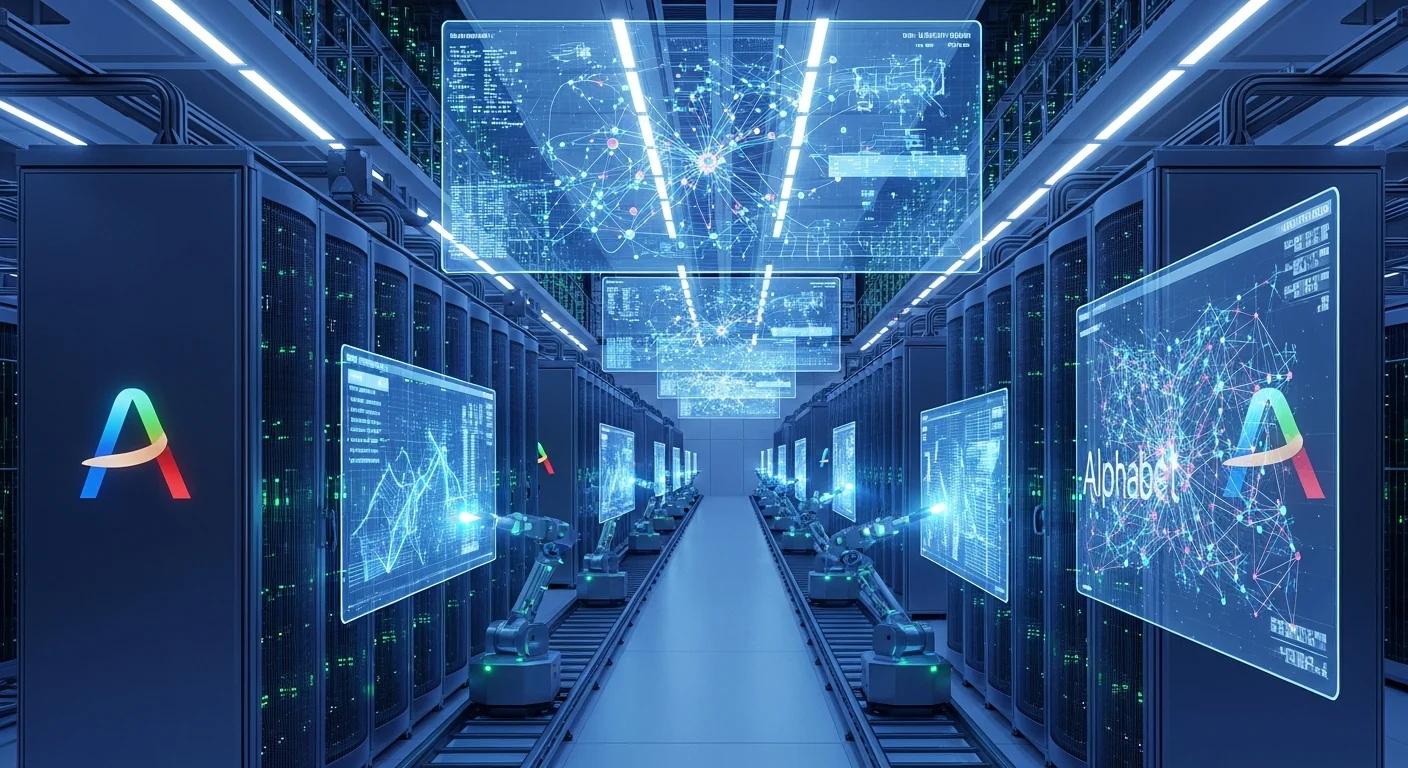
Alphabet is gearing up to spend as much as $185 billion on capital expenditures by 2026, a staggering bet on its AI future. This figure, nearly double last year’s $91.4 billion, sends an unmistakable message: the race for AI dominance is an arms race for raw computing power, and Alphabet refuses to be outgunned. The unprecedented investment underscores a brutal reality in today’s tech landscape, where the stakes are nothing short of existential.
The Arms Race for AI Infrastructure
This spending blitz marks a fundamental pivot in Alphabet’s competitive strategy. Powering everything from the Gemini models to Google Cloud services requires a colossal fleet of data centers, advanced servers, and networking hardware. As CEO Sundar Pichai bluntly framed it, maintaining a “brutal pace” in AI innovation demands a relentless infrastructure buildout. Any slowdown risks ceding critical ground to rivals like Microsoft, Meta, and Amazon, all of whom are building at a furious clip.
Drilling into the numbers reveals a multi-pronged offensive. Roughly 60% of the investment is earmarked for servers, with the remaining 40% funding data centers and networking. This hardware will directly support Google DeepMind’s frontier models, sharpen search and advertising capabilities, and, most critically, begin to tackle a growing backlog of cloud customer commitments. This isn’t happening in a vacuum; Meta recently threw down its own gauntlet with a $115 billion to $135 billion AI infrastructure plan, forcing every major player to either match the pace or fall behind.
Real Demand Justifies the Outlays
Forget the speculative spending sprees of past tech booms. Alphabet’s investment is grounded in hard, present-day demand. The company’s Cloud revenue soared nearly 50% in the final quarter of 2025 to hit $17.7 billion, contributing to overall revenues of $114 billion. Even more telling is the $240 billion backlog in unfulfilled cloud orders accumulated by year-end. Customers are literally lining up with commitments that Alphabet has not yet built the capacity to serve.
Adoption metrics paint an equally compelling picture. Gemini, Alphabet’s flagship AI application, has already rocketed to 750 million monthly active users this quarter. Internal data shows users are increasingly choosing AI interfaces over traditional web search, which is driving up time spent on its platforms. For CFO Anat Ashkenazi and Wall Street, these aren’t vanity metrics—they are direct revenue drivers that more than justify the massive infrastructure outlays.
The Capacity Crunch Won’t Disappear Soon
Even with this record-breaking spending, CEO Sundar Pichai admitted a hard truth on the latest earnings call: supply constraints will plague the company throughout 2026. Securing enough GPUs, acquiring suitable land for data centers, and managing enormous power consumption present a daunting set of logistical hurdles. The scale of the challenge is immense. Alphabet’s AI infrastructure head, Amin Vahdat, previously noted the company must double its capacity every six months just to keep pace with existing demand—a rate that makes even this historic spending plan feel potentially insufficient.
Alphabet isn’t just throwing cash at the problem, however. Its strategic $4.75 billion acquisition of data center operator Intersect is a clear move to accelerate the expansion of its physical footprint. Yet even savvy M&A can’t conjure GPUs out of thin air. As long as the ravenous demand for AI compute outstrips global supply, money alone won’t guarantee victory. The winners will be defined by superior execution, efficiency gains, and mastery of the hardware supply chain.
Strategic Opportunities Ahead
Beyond simply shoring up its cloud division, this massive capital injection unlocks pivotal strategic opportunities. The recent partnership to power Apple’s Siri and other services with Google AI is a potential game-changer. Successfully deploying its models across 2.5 billion Apple devices would instantly reshape the consumer AI landscape, creating a formidable counterweight to Microsoft’s high-profile OpenAI partnership.
The long-term vision comes into focus with the $16 billion funding round for Waymo, led by Alphabet itself. Google is building a foundational compute layer not just for cloud and search, but for an entire ecosystem of future AI applications, from autonomous vehicles to robotics. This isn’t merely an investment in more servers. It’s a calculated, multi-billion-dollar bet to own the core infrastructure that will define the next decade of technology.
