
Kazakhstan Smart City Collaboration: Key Agenda for Summit
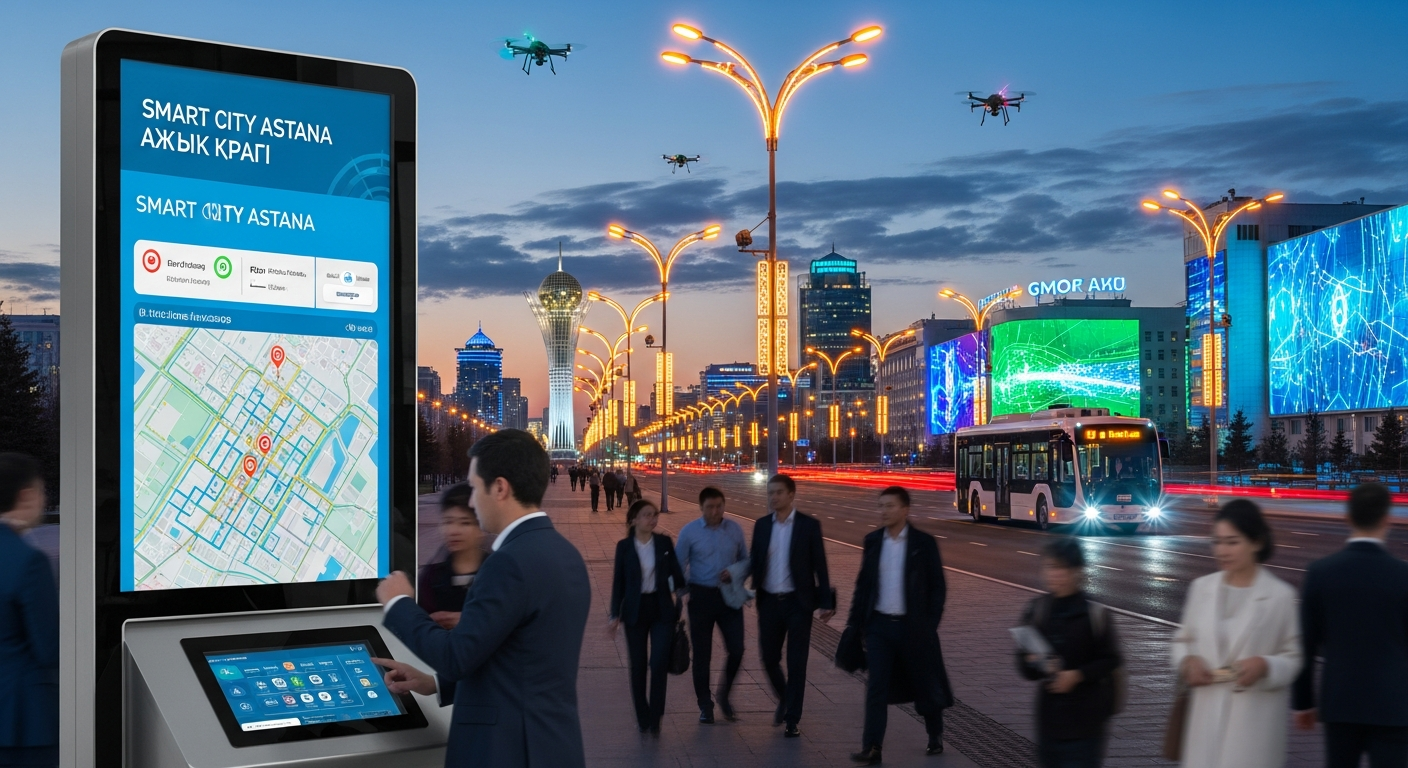
The smart city market is rapidly growing at an average annual rate of over 20%, emerging as a core element in future urban development. In line with this trend, Minister Kim Yoon-duk of the Ministry of Land, Infrastructure and Transport recently met with Ambassador Arystanov Nurgali of Kazakhstan to discuss expanding cooperation in smart cities, transportation, and energy infrastructure. They agreed to develop these areas as key agenda items for the upcoming Korea-Central Asia Summit.
Kazakhstan: Central Asia’s Largest Economy Pursues Smart City Ambitions
As the largest economy in Central Asia, Kazakhstan is actively promoting large-scale new city development and expansion of transportation and energy infrastructure at the national level. In particular, the government is leading the development of the 88,000-hectare Alatau New City project to alleviate population density and infrastructure burden in Almaty. Kazakhstan hopes to involve Korean companies through cooperation with the Korean government. Given its vast territory, Kazakhstan considers improving transportation and logistics efficiency a critical task and anticipates expanded cooperation with Korea not only in infrastructure construction but also in operation and maintenance.
Korea’s Smart City Technology to Contribute to Kazakhstan’s Urban Development
Korea possesses diverse experience and technology accumulated through new city development and smart city construction. Combining these capabilities with Kazakhstan’s urban development strategy and the K-City Network cooperation project implemented by the Ministry of Land, Infrastructure and Transport can benefit both countries. The K-City Network is a project that supports the establishment of smart city plans and overseas demonstration of domestic solutions based on intergovernmental cooperation.
Minister Kim Yoon-duk invited key figures from relevant Kazakhstan ministries to the ‘Central Asia Special Session’ of the Global Infrastructure Cooperation Conference (GICC) scheduled for September this year. He expressed hope to broaden cooperation in gas plant and transportation infrastructure projects. Both sides agreed to systematize smart city and infrastructure cooperation further through this meeting and develop it as a key cooperation agenda for the future Korea-Central Asia Summit.
Strategic Implications
This cooperation discussion can serve as an important stepping stone for entering Kazakhstan’s smart city market. The Alatau New City development project being pursued by Kazakhstan offers a good opportunity for Korean companies to apply smart city technologies and solutions. Furthermore, Kazakhstan has designated 2026 as the ‘Year of Digitalization and Artificial Intelligence’ and is focusing on fostering AI talent, creating synergy for technology cooperation related to smart cities.
Actionable Conclusion: Korean companies should actively participate in Kazakhstan’s smart city projects to demonstrate their technological prowess and secure a bridgehead for entering the Central Asian market. The government should support Korean companies’ entry into Kazakhstan through the K-City Network project and further strengthen cooperative relations between the two countries.
[References & Sources]
- daum.net
- kitvnews.co.kr
- yna.co.kr