
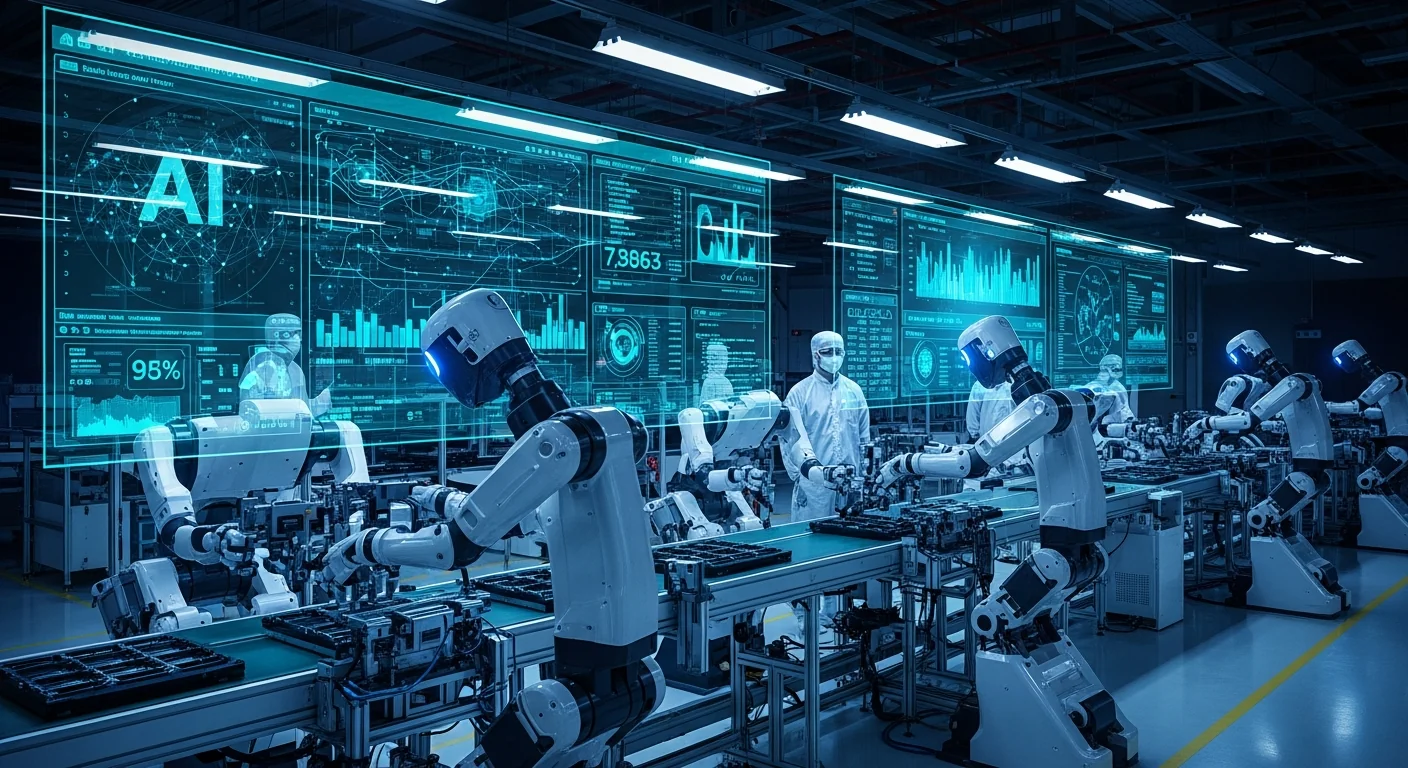

The next frontier in manufacturing is the creation of autonomous environments where AI grasps operational context in real-time and independently makes optimal decisions. Seizing this future, Samsung Electronics has unveiled a bold blueprint to convert all its manufacturing processes into ‘AI-Driven Factories’ by 2030. This vision entails a complete integration of AI across the entire manufacturing value chain, using AI agents to revolutionize quality and productivity.
Technical and Market Analysis:
Agentic AI is the linchpin of Samsung’s blueprint. This sophisticated technology moves beyond simple automation, enabling AI to formulate plans, execute them, and refine its own decision-making. Deployed first on the Galaxy S26 series production line, this technology is expected to drive peak efficiency across production, predictive maintenance, repairs, and logistics.
Complementing this is digital twin technology, which replicates the physical factory in a virtual space. This allows for rigorous testing of various scenarios and the identification of potential risks before they materialize. On the factory floor, humanoid and special-purpose robots will handle assembly, material transport, and precision tasks. In hazardous environments with high heat or noise, safety robots guided by digital twins will track and neutralize risks in real-time.
Strategic Insight:
Soaring labor costs and tangled supply chains are not just challenges; they are the very catalysts propelling Samsung’s pivot to AI-driven factories. This is a direct and powerful move to secure a competitive edge. AI-powered predictive maintenance can slash costs by 30% and reduce unexpected downtime by a staggering 45%. Furthermore, intelligent energy management systems will deliver additional cost savings while shrinking the company’s carbon footprint.
This transformation is not starting from scratch. Samsung already operates smart factories via its Nexplant platform, supported by 5G networks at its facilities in Korea and Austin. The next phase is even more ambitious: building an AI mega-factory equipped with over 50,000 NVIDIA GPUs and implementing an advanced digital twin environment linked to NVIDIA’s Omniverse platform.
Data and Evidence:
The numbers speak for themselves. AI holds the potential to boost manufacturing productivity by over 40% by 2035, while process costs could fall by up to 30%. Early adopters are already reporting revenue increases of 6-10%. The global market for AI in manufacturing, valued at $5 billion in 2023, is projected to explode to $68 billion by 2032.
Actionable Conclusion:
Samsung’s factory revolution is more than an internal project; it’s a roadmap for the future of manufacturing. The message to rivals is clear: to secure efficiency, cut costs, and build safer factories, the time to adopt AI, digital twins, and robotics is now. At the same time, this technological leap must be preceded by the establishment of robust AI governance that prioritizes ethics and safety above all else.
[References & Sources]
- samsung.com
- joins.com
- varindia.com
참고문헌
- >vertexaisearch.cloud.google.com – samsung.com
>vertexaisearch.cloud.google.com – sammobile.com
>vertexaisearch.cloud.google.com – mexc.com
References & Sources
