

Fujitsu’s AI Server Emerges as a New Solution for ‘Data Sovereignty’
Server security vulnerabilities are the root cause of over 60% of global data breaches. Against this backdrop, Fujitsu’s announcement to begin domestic production of ‘Made in Japan’ AI servers by March 2026 marks a significant turning point in the quest for data sovereignty.
Technical Deep Dive
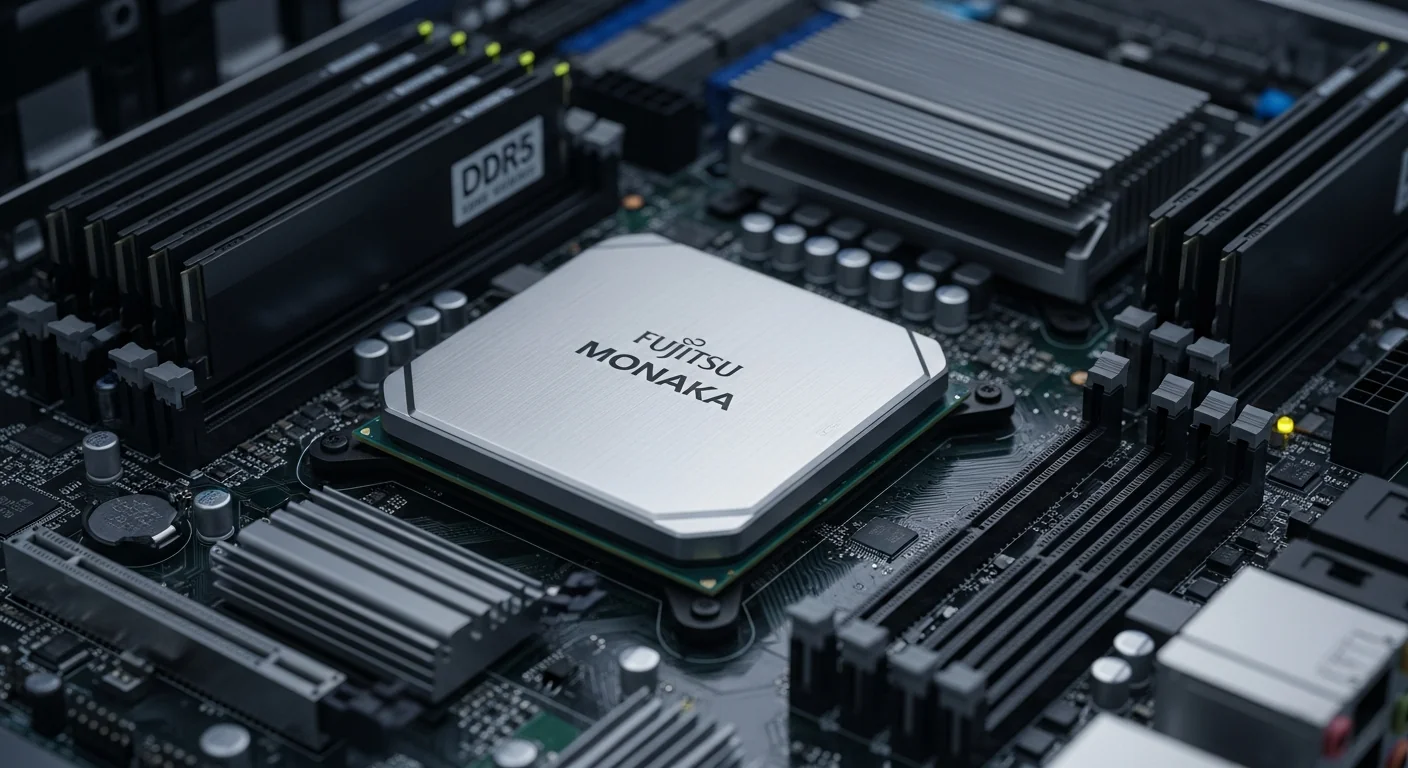
While the combination of NVIDIA GPUs and Fujitsu’s proprietary ‘FUJITSU-MONAKA’ processor delivers immense computational power, the architecture’s true genius lies in MONAKA’s confidential computing. Data remains encrypted even while being processed, creating an ironclad defense against unauthorized access and ensuring absolute integrity. Bringing production to Japan’s Isashima plant not only stabilizes the supply chain but also radically accelerates the response time to cyber threats.
Market Impact
- Strengthening Data Sovereignty: Fujitsu’s domestic server production directly hands data control back to Japanese government agencies and corporations. This move is a direct answer to the growing global demand for ‘Sovereign AI’ infrastructure amid rising geopolitical tensions and regulatory pressures, enabling better compliance and bolstering national security.
- Expanding the AI Security Market: The confidential computing architecture demolishes a key barrier that has hindered AI adoption in sensitive fields like finance, healthcare, and defense. Companies can now build sophisticated AI systems without the lingering fear of data compromise.
- Revitalizing Japan’s IT Industry: With a target of 30 billion yen in cumulative sales over the next three years from Japan’s critical infrastructure sector, Fujitsu is taking aim at digital services and defense. This domestic production strategy delivers a one-two punch: it slashes reliance on volatile overseas supply chains and lays the groundwork for Japan’s technological self-sufficiency.
Competitor Analysis
The global server market is dominated by Dell and HP, who leverage extensive hardware portfolios and mature ecosystems. Yet, neither has managed to integrate hardware-based confidential computing at the manufacturing level. This is precisely where Fujitsu’s competitive advantage lies. Its ‘end-to-end domestic production’ model—from component sourcing to final assembly within Japan—offers a level of supply chain transparency that competitors simply cannot replicate. Paired with the MONAKA processor’s native security architecture, this creates a powerful moat that is immune to simple price wars.
By the Numbers
- Data breaches cost companies an average of $4.45 million per incident (IBM).
- Global economic losses from cyber threats are projected to reach $10.5 trillion by 2025 (Gartner).
- 68% of companies report increased concern over escalating cybersecurity risks (Accenture).
Your Next Move
- Reassess Your Data Security Strategy: Conduct a thorough audit of your current infrastructure’s vulnerabilities. It’s time to seriously evaluate the adoption of confidential computing to close critical security gaps.
- Develop an AI Server Adoption Plan: Before making any procurement decisions, meticulously vet how Fujitsu’s domestic production capabilities align with your organization’s specific security and regulatory requirements.
- Consult with Experts: Partner with regulatory and security specialists to ensure your infrastructure decisions are aligned with evolving legal obligations and operational needs.
Future Outlook
Looking ahead, Fujitsu is set to leverage its deep experience in Arm-based CPU architecture to fully integrate the MONAKA processor into its commercial servers by fiscal year 2026. An expanded partnership with Super Micro Computer will be key, as will racking up wins within Japan’s critical infrastructure sectors. The ultimate goal is to fortify its ‘Sovereign AI’ infrastructure by integrating post-quantum cryptography, creating a future-proof defense against long-term geopolitical risks.
