

UK Pushes to Integrate AI Crisis Management into National Disaster Response
In the chaotic aftermath of a disaster, accurate information is the line between life and death. This stark reality has prompted the UK government to fast-track a new crisis response strategy, accelerating discussions to deploy industrial AI directly to the front lines.
Real-World Problems on the Ground
First Challenge: The Speed Gap The most glaring issue is speed. Traditional disaster response systems simply cannot keep pace with the velocity of a crisis. While field crews rely on outdated tools, manually drafting deployment plans and waiting for days, critical power and communication infrastructure lies paralyzed and vulnerable.
Industrial AI is the game-changer poised to overhaul this antiquated system. Before a disaster even strikes, an AI command center can predict a storm’s path and track all assets at risk in real time. It provides immediate answers to crucial questions: Which areas are the highest priority for recovery? Which power lines must be restored first? Which cell towers are essential for keeping hospitals online?
Second Challenge: Organizational Silos Another critical hurdle is the lack of coordination between organizations. In a crisis, individual company efforts are meaningless. Survival depends on integrating scattered resources and linking disparate systems. Industrial AI automates team deployments, reroutes crews in real time as conditions change, and helps technicians rapidly analyze component damage using images and video.
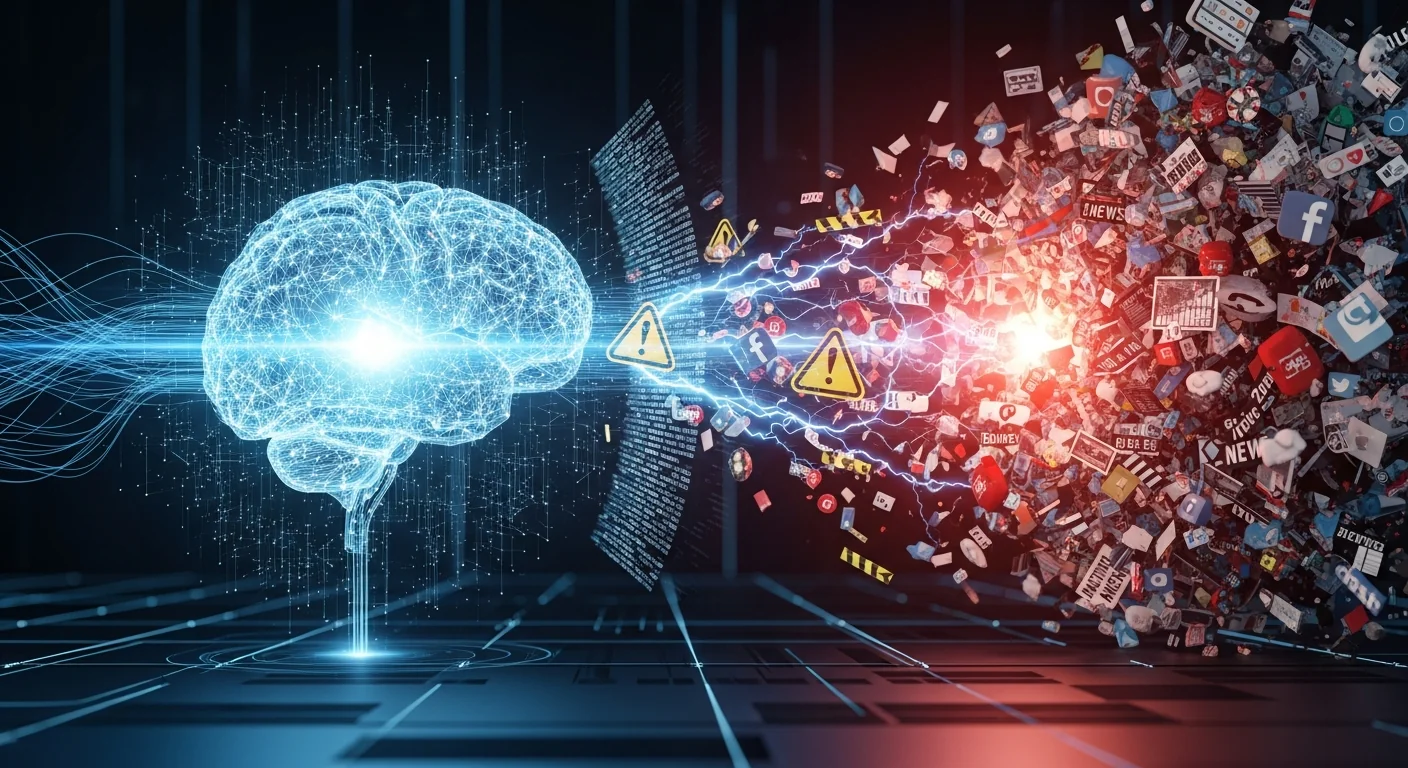
Third Challenge: Information Integrity Finally, the integrity of information itself is at stake. During a crisis, AI-generated disinformation can become a disaster in its own right. False evacuation routes, fake distress signals, and bogus health advisories can spread like wildfire on social media, causing massive harm. Existing fact-checking systems are ill-equipped to handle the rapidly evolving situation on the ground.
The UK Government’s Two-Track Strategy
The UK government is tackling these challenges with a two-track strategy.
The first track involves building a national security framework to guard against the risks of uncontrolled AI. Spearheaded by the Department for Science, Innovation and Technology (DSIT), this AI safety strategy mirrors biosecurity models, encompassing prevention, detection, and response. Notably, it grants the government institutional authority to intervene swiftly in an emergency. These are powerful new rights, including the ability to issue direct orders to AI companies, block public access if necessary, and even halt GPU activity.
The other track focuses on actively leveraging AI in actual disaster scenarios. Sector-specific Information Sharing and Analysis Centers (ISACs) will exchange threat intelligence in real time, feeding data into an AI engine that analyzes it and automatically formulates countermeasures. This structure is designed to dramatically shorten attacker dwell time in cyber threats and significantly reduce the manual workload for human analysts.
Public-Private Collaboration is Essential
Ultimately, the success of this entire initiative hinges on robust public-private collaboration. Experts unanimously agree that fragmented responses from individual companies or local authorities have clear limitations. The head of a major energy company’s emergency response team put it best: “If we could get properly equipped teams on-site *before* a disaster hits, hospitals would keep their power, our field agents would be safer, and communities would get back to normal much, much faster.”
To make this a reality, policymakers must urgently establish a national resilience framework built on AI. This means creating shared data standards and using a smart mix of incentives and regulations to encourage AI adoption among utilities, local governments, and NGOs. Companies, in turn, must elevate disaster response from a mere contingency plan to a core strategic capability, adopting an open mindset to share systems with adjacent organizations.
A Concrete Action Plan for Businesses
For UK companies, 2026 marks the year for executing a concrete implementation roadmap. The first quarter will focus on identifying high-impact AI use cases and establishing ethical governance frameworks. The second and third quarters will see investments in employee training and infrastructure expansion through cloud partnerships. While the goal is to integrate AI into core operational processes by year-end, a critical failsafe remains: final decisions and oversight must always rest with human experts.
The Landscape a Year from Now
If all goes to plan, the UK’s AI-powered disaster response system will be fully operational by the end of this year. But the faster technology evolves, the more unforeseen risks emerge. AI disaster response is not a one-time build; it is a continuous challenge that demands constant learning and adaptation from the government, corporations, and citizens alike.
