
Re-Evaluating Investment Strategy Amidst AI Volatility
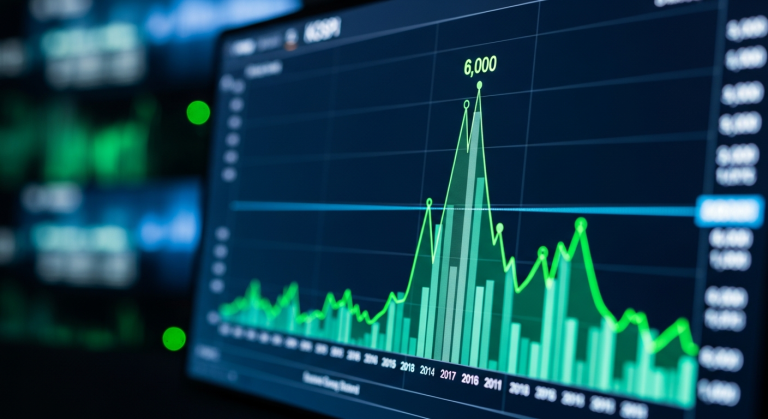
Surprisingly, while the S&P500 declined due to AI-related uncertainty, the Korean KOSPI surged over 5% in a single day. This vividly illustrates how quickly investor sentiment can shift. Now is the time to prepare for volatility and reassess your strategy.
In-Depth Analysis: AI Uncertainty and Market Reaction
The US S&P500 experienced a downturn due to challenges in securing short-term profitability and regulatory uncertainty surrounding AI technology, despite its growth potential. In contrast, the European Stoxx600 showed relative stability with a slight increase. This is likely because the European market’s approach to AI technology differs from that of the US, and its reliance on specific tech companies is lower. Despite the US market’s decline, the Korean stock market rebounded strongly, driven by proactive government support policies and expectations of improved performance from some companies.
Technical Analysis: The Mechanism of AI Uncertainty
AI-related uncertainty stems primarily from three factors. First, the unpredictability caused by the complexity of AI models. Deep learning models consist of numerous parameters, making them highly sensitive to small changes in input data. Second, the increasing technical debt due to the rapid pace of AI technology development. The constant emergence of new technologies raises concerns about the obsolescence of existing investments. Third, ethical and regulatory uncertainty surrounding AI. The lack of clearly established regulations to prevent the misuse of AI technology creates challenges for corporate investment decisions.
Market Impacts (Including Numbers)
- S&P500 Decline: Increased volatility in AI-related stocks led to a roughly 2% decrease in the S&P500 over one week.
- Korean KOSPI Rebound: Following the announcement of government AI industry promotion policies, the KOSPI jumped 5.3% in a single day.
- US 10-Year Treasury Yield Decline: As investors moved to safe-haven assets, the US 10-year Treasury yield fell by 0.15 percentage points.
Competitor Comparison: Nvidia vs. AMD vs. Intel
Nvidia, the leader in the AI chip market, has secured a dominant market share based on its GPU technology. AMD, on the other hand, possesses both CPU and GPU technologies and is expanding its market share through price competitiveness. Intel, a strong player in the CPU market, faces challenges in the AI market due to its relatively weaker GPU technology. Nvidia has built a developer ecosystem through the CUDA ecosystem and is expanding its influence in AI software and platforms. AMD is presenting an alternative to Nvidia CUDA through the open-source ROCm platform, but the scale of its ecosystem remains small. Intel is building a unified development environment that supports various hardware architectures, including CPUs, GPUs, and FPGAs, through oneAPI, but still lags behind Nvidia and AMD in AI performance.
Statistics (Source Cited)
- Gartner: The global AI software market is projected to reach $62.5 billion in 2024. (Source: Gartner)
- Statista: The AI semiconductor market is expected to reach $72.6 billion in 2025. (Source: Statista)
- McKinsey: 83% of companies that have adopted AI reported experiencing cost savings. (Source: McKinsey)
Action Guide for Investors (3 Steps)
- Reassess your portfolio: Adjust the proportion of AI-related stocks and balance risky and safe assets.
- Diversify your investments: Rather than concentrating investments in specific AI companies, diversify across AI-related companies in various industries.
- Invest for the long term: Don’t be swayed by short-term market fluctuations; make investment decisions from a long-term perspective.
One-Year Outlook
Over the next year, AI technology is expected to advance further and be applied to various industries. In particular, the use of AI technology is expected to become more active in autonomous driving, healthcare, and finance. However, discussions on AI ethics and regulations will intensify, and technology companies will need to prepare for this. Overall, the AI market will maintain its growth trend, but volatility is expected to remain high.