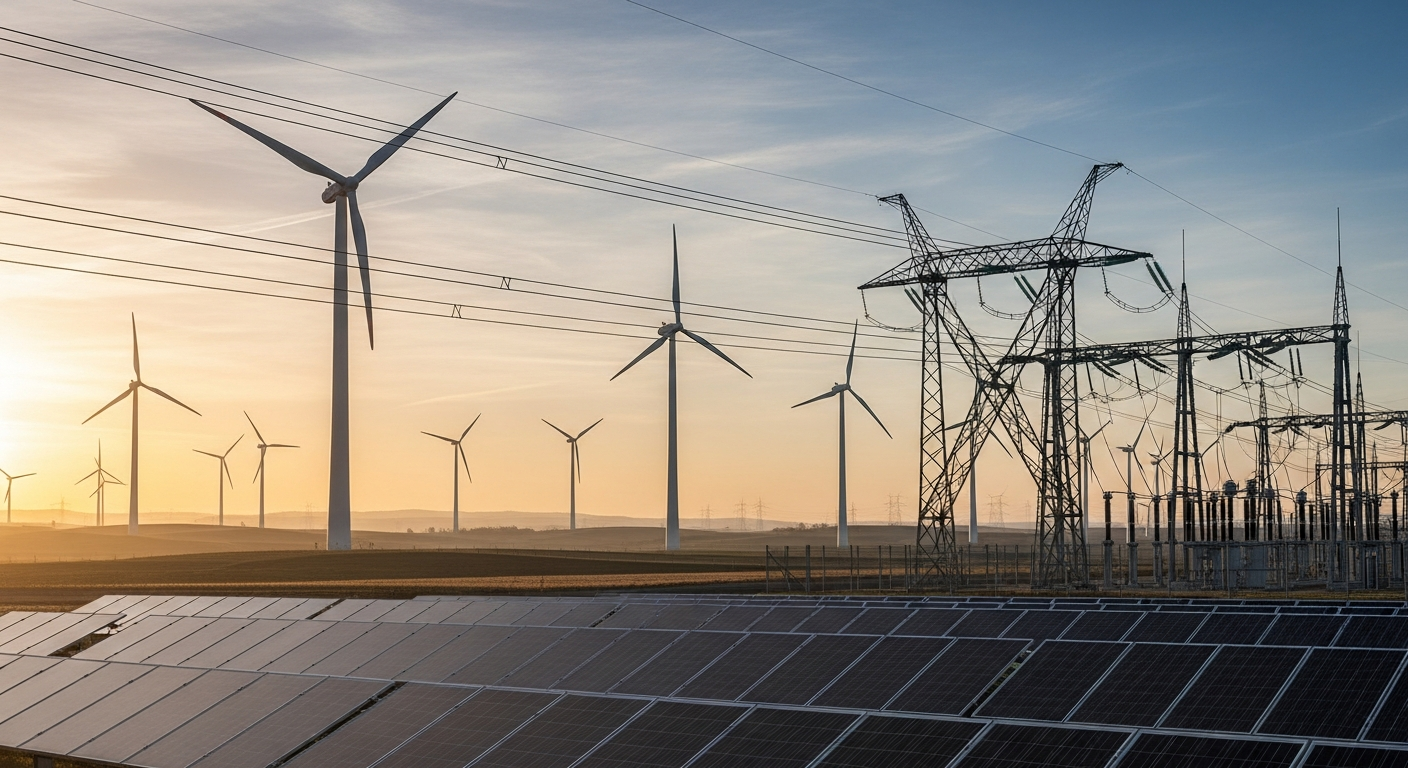

Germany’s energy transition just hit a major milestone: E.ON has connected its two-millionth renewable installation to the national grid. This isn’t just a symbolic achievement; it’s a concrete signal of accelerating change in a country that drew about 56% of its electricity from renewables in 2025. The integration of vast wind and solar capacity simply wouldn’t be possible without sophisticated networks like those E.ON operates.
Technical and Market Analysis
Despite covering only one-third of Germany’s total grid length, E.ON’s network punches far above its weight. It connects a staggering 70% of the nation’s onshore wind capacity and nearly half of all its photovoltaic systems. As the leading distribution operator, the company manages a vast 700,000-kilometer system across nine regional units. The total renewable capacity tied to its network has now reached 110 GW—a figure that decisively surpasses Germany’s peak electricity demand of 80 GW.
Strategic Insights
This rapid expansion is no accident; it’s the result of a deliberate and heavily funded strategy. Over the last two years alone, E.ON has poured nearly €10 billion into its German networks, prioritizing new renewable connections and critical infrastructure upgrades. To manage the operational surge, the company has added 6,000 employees over the past five years. Digital innovation is also a key pillar, with subsidiaries rolling out tools like SNAPpro, which allows developers to get rapid, non-binding grid connection assessments for wind or solar projects up to 100 MW.
Data and Evidence
The pace of change is breathtaking. While reaching the first million connections took E.ON over 15 years, the second million was achieved in just two and a half. Today, a new renewable installation is connected to its grid every two minutes. This relentless acceleration is essential if Germany hopes to meet its ambitious 2030 targets: sourcing 75% of its power from renewables and reaching 360 GW of total capacity.
Actionable Conclusion
Connecting the two-millionth renewable plant is more than a milestone; it’s a validation of Germany’s energy strategy. Continued investment, digital tool adoption, and strong policy support will undoubtedly fuel further growth. The real bottleneck, however, now lies with regulation. To maintain this momentum, regulators must act decisively to streamline grid connection processes, accelerate permitting, and implement clear siting guidance that prioritizes high-impact projects.
[References & Sources]
- windtech-international.com
- solarquarter.com
- eon.com
참고문헌