
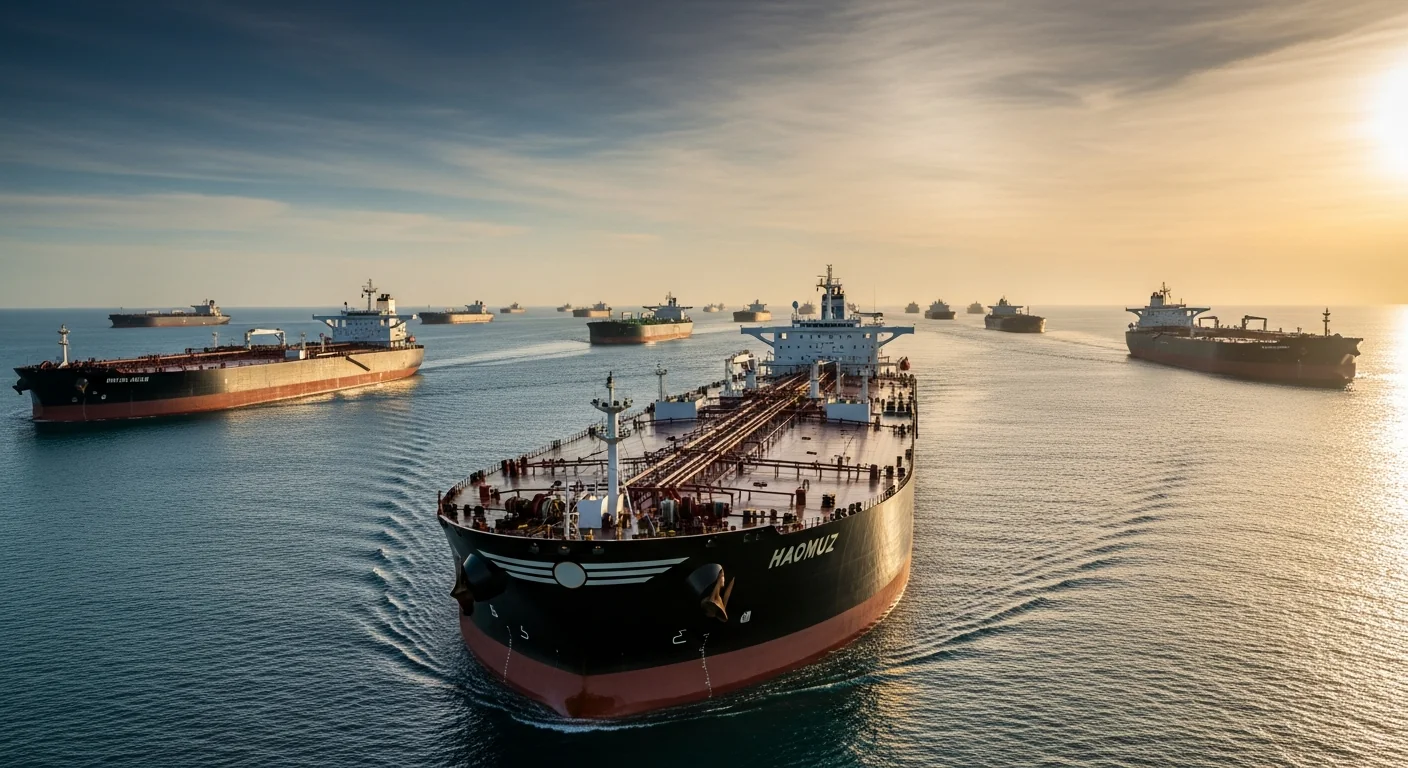

Global energy markets are in a tailspin as the blockade of the Strait of Hormuz becomes a reality. With Iran’s Revolutionary Guard restricting passage and both commercial operators and insurers pulling out, the strait has entered a de facto state of blockade. This chokepoint, responsible for 20% of the world’s seaborne crude oil transport, poses a lethal threat to the global economy if the shutdown persists.
Rapidly Shifting Market Signals
The standoff is escalating at an alarming pace. After U.S. President Trump demanded the strait be reopened within 48 hours and threatened to strike Iranian power plants, Tehran fired back, vowing to destroy all regional energy facilities. However, Iran has left the door ajar for negotiation, offering a conditional card: allowing passage for vessels not affiliated with “enemy nations.” In response, a coalition of seven countries, including South Korea, has intensified the pressure with a joint statement strongly condemning the closure and demanding freedom of navigation.
Soaring Oil Prices and Logistics Costs
The market’s reaction has been swift and severe. Brent crude has already shot past $80 a barrel, and consensus forecasts see it surging to the $120-150 range if the blockade holds. Shipping freight and insurance premiums have likewise skyrocketed to all-time highs. The supply disruption, choking off a flow of 20 million barrels of crude per day, will directly fuel global inflationary pressures.
Asia’s Vulnerability
China and India, with their absolute dependence on Middle Eastern crude, are particularly vulnerable to the fallout. Iran has already been forced to slash its production from a normal 4.2 million barrels per day to just 1 million. Other producers in the region will inevitably have to adjust their output, putting the energy security of Asia’s major economies on high alert.
Investor Strategy
In this climate of heightened geopolitical risk, the top priority is to reduce exposure to risk assets. Investors should trim positions in technology and overseas equities while turning their attention to oil tanker-related assets. Assuming the instability in the Strait of Hormuz could persist for years, a selective investment approach focused on energy infrastructure and key shipping firms remains a sound strategy.
Regardless of the outcome, extreme market volatility is now a given for the foreseeable future. The crucial question is whether Iran’s conditional reopening offer is a mere negotiating ploy or a genuine path to a solution. For investors, surviving this maelstrom means maintaining strategic flexibility and tightening risk management, all while closely monitoring the subtle diplomatic currents.
[References and Sources]
- wikipedia.org
- theguardian.com
- hindustantimes.com
References
- >vertexaisearch.cloud.google.com – carnegieendowment.org
>vertexaisearch.cloud.google.com – snakorea.com
>vertexaisearch.cloud.google.com – chosun.com
References & Sources
