
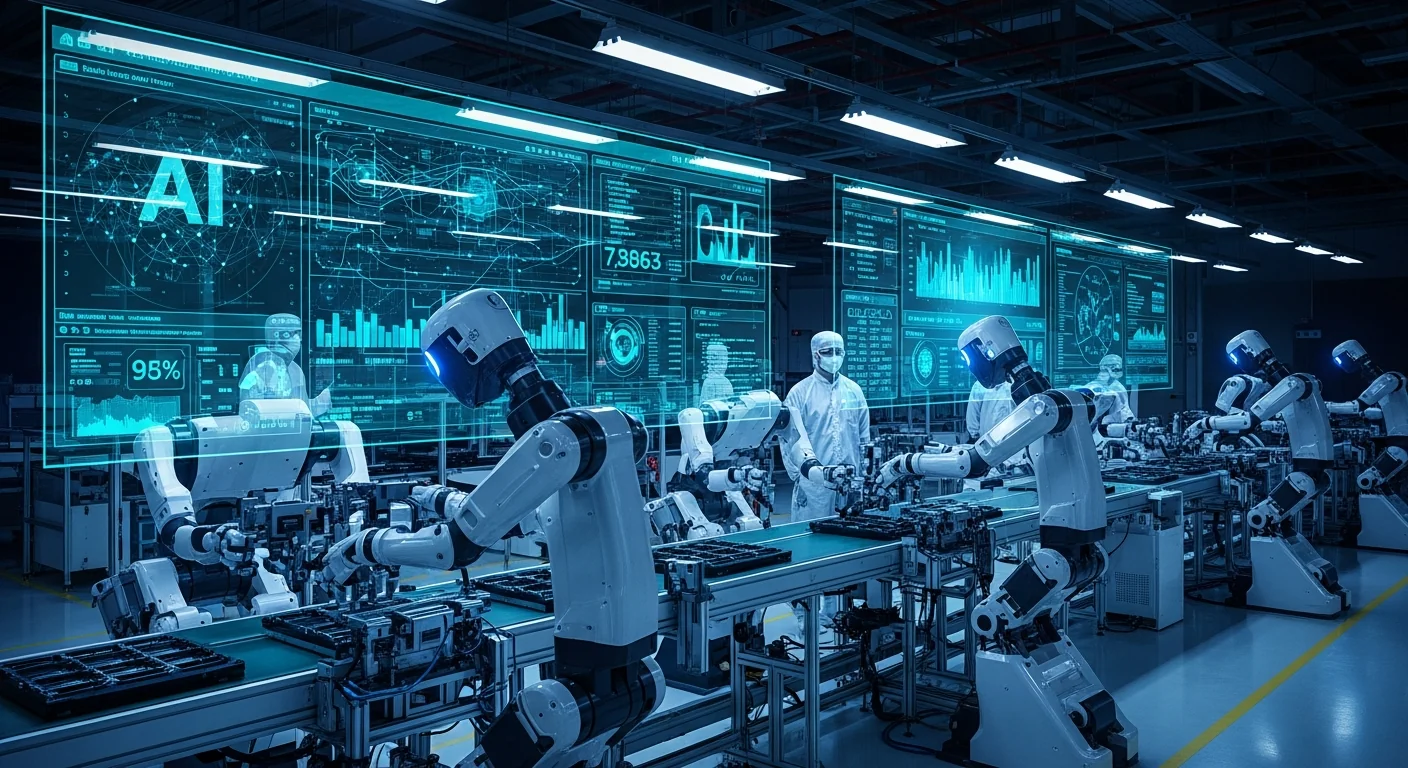

The manufacturing paradigm is shifting, moving beyond simple automation toward autonomous systems where AI makes its own decisions. Against this backdrop, Samsung Electronics’ declaration to convert all domestic and international factories into ‘AI Autonomous Factories’ by 2030 signals a powerful ambition to lead the market. The vision is comprehensive: deploy AI across the entire process from material receiving to final shipment, and embed AI agents in core areas like quality, production, and logistics to create a fully data-driven decision-making structure.
Samsung’s concept of ‘autonomy’ represents a fundamental departure from traditional ‘automation.’ This isn’t merely about adding more equipment. It signifies a complete paradigm shift, replicating entire processes in a digital space and allowing AI to directly intervene in judgment and execution. At the heart of this strategy is the transfer of agentic AI—technology that independently formulates and executes plans to achieve goals—honed within Samsung’s own mobile division and now being transplanted onto the factory floor.
Digital twin technology is the clear technical backbone supporting this massive undertaking. By simulating factory processes in a virtual environment, Samsung can eliminate potential risks and identify optimal operating scenarios before they are ever implemented. This virtual foundation will be complemented by a phased introduction of humanoid robots. Operating bots will manage production lines, logistics bots will transport materials, and assembly bots will handle precision tasks, all integrated with AI to perform their distinct roles. For hazardous areas with high heat or noise, digital twin-based environmental safety bots will be deployed to ensure workplace security.
From a management perspective, this investment is a strategic imperative to reduce variability across global plants and elevate overall manufacturing competitiveness. Lee Young-soo, Executive Vice President and Head of Samsung Electronics’ Production Engineering Research Institute, underscored this vision, stating, “The future of manufacturing innovation lies in building an autonomous factory where AI understands the site and makes its own optimal decisions.” Crucially, the plan’s feasibility is bolstered by a parallel governance strategy designed to address the critical issues of trust and safety essential for the widespread adoption of industrial AI.
Of course, translating this blueprint into reality presents significant hurdles. The core challenges are technology integration and on-site adaptability. Success will hinge on whether agentic AI can deliver consistent performance despite data variations across different global factories, and how seamlessly humanoid robots can be integrated into actual production lines. With the 2030 deadline just over the horizon, the entire industry is now closely watching the performance of Samsung’s pilot programs and the speed of its global rollout.
[참고 문헌 및 출처]
- samsung.com
- joins.com
- varindia.com
참고문헌
- >vertexaisearch.cloud.google.com – samsung.com
>vertexaisearch.cloud.google.com – hankyung.com
References & Sources
