
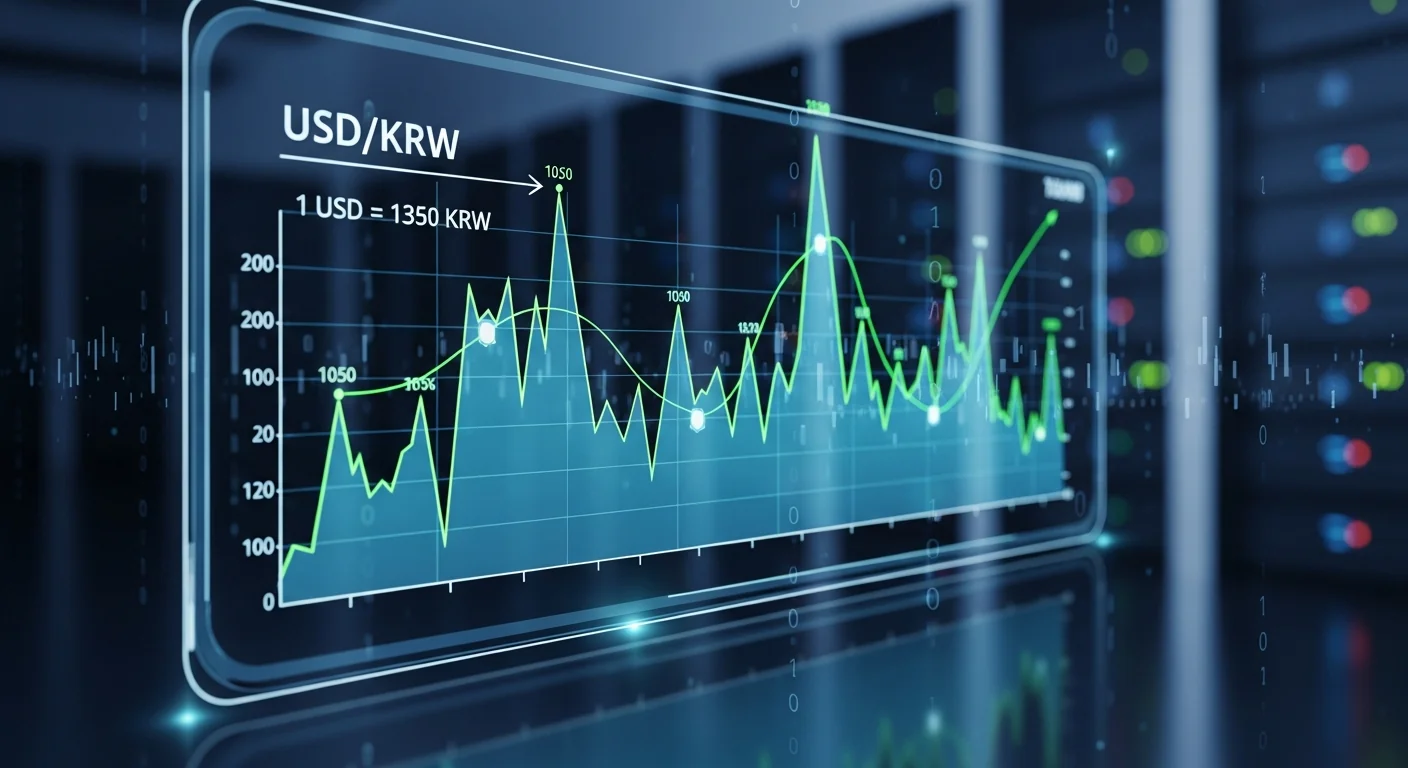

The military clash between the United States and Iran has sent shockwaves through global financial markets, pushing the Korean won past the critical 1,500 per dollar mark—a level unseen in 17 years, since the 2009 financial crisis.
The Anatomy of a Currency Plunge
After hovering in the 1,480s on the Seoul foreign exchange market, the won’s breach of 1,500 during overnight trading has amplified market jitters. This extreme volatility is rooted in a trifecta of pressures.
First, a classic flight to safety amid heightened geopolitical risk has sent investors flocking to the US dollar. Second, a fierce ‘Sell Korea’ wave by foreign investors is fueling the won’s decline, as they cash out of a KOSPI that had just hit a pre-conflict peak. Third, the specter of a blockade at the Strait of Hormuz is rattling oil markets. The mere threat from Iran was enough to cause a spike in international crude prices, a direct blow to South Korea’s energy-import-dependent economy. Brent crude futures had already neared $81.4 per barrel in early March, setting a tense backdrop.
Scenario Analysis: How High Can It Go?
The market’s focus has now shifted to just how high the exchange rate could climb. The consensus among financial analysts is that the won will depreciate in stages, with the duration of the conflict being the key determinant. KB Kookmin Bank projects the rate could stabilize between 1,430 and 1,470 if the conflict resolves within three to four days. However, a prolonged scenario of airstrikes and retaliations lasting three to four weeks, including a strait blockade, opens the door to a 1,470-1,500 range. The worst-case outlook—a two-to-three-month conflict involving attacks on oil facilities in Iran and neighboring countries—paints a grim picture of the won soaring from 1,490 to as high as 1,540.
This isn’t just a story about the won’s weakness; it’s about the dollar’s overwhelming global strength. The Dollar Index, which measures the greenback against a basket of six major currencies, has already surpassed the 99-point level. According to Korea Investment & Securities, a break above 100 is only a matter of time if these pressures persist.
The Government Wildcard
Of course, intervention by foreign exchange authorities remains a key variable. Should the situation de-escalate, decisive government action to stabilize the market could put the brakes on the won’s rapid depreciation. DS Investment Securities anticipates a period of high volatility where government intervention caps both the upside and downside, creating a turbulent but range-bound market. This aligns with the view that if the conflict settles into a long-term war of attrition rather than escalating, the won will likely see limited movement around the 1,480 mark, reflecting persistent uncertainty.
Past crises, however, caution against excessive pessimism. Woori Bank recalls the Israel-Iran dispute last June, where an initial spike in oil prices and a stock market dip were quickly reversed once the U.S. intervened decisively. Growing anti-war sentiment within the United States also serves as a check on the likelihood of a prolonged engagement.
Ultimately, as long as the strong dollar reigns, the South Korean economy faces the dual headwinds of slowing growth and rising inflation. Proactive measures to stabilize the currency market are critical, but so is a fundamental overhaul of the economy through improved energy efficiency and an expansion of renewable resources. The need for this structural change has never been more urgent.
[참고 문헌 및 출처]
- hani.co.kr
- ytn.co.kr
- knn.co.kr
참고문헌
- >vertexaisearch.cloud.google.com – dealsite.co.kr
>vertexaisearch.cloud.google.com – dealsite.co.kr
References & Sources
