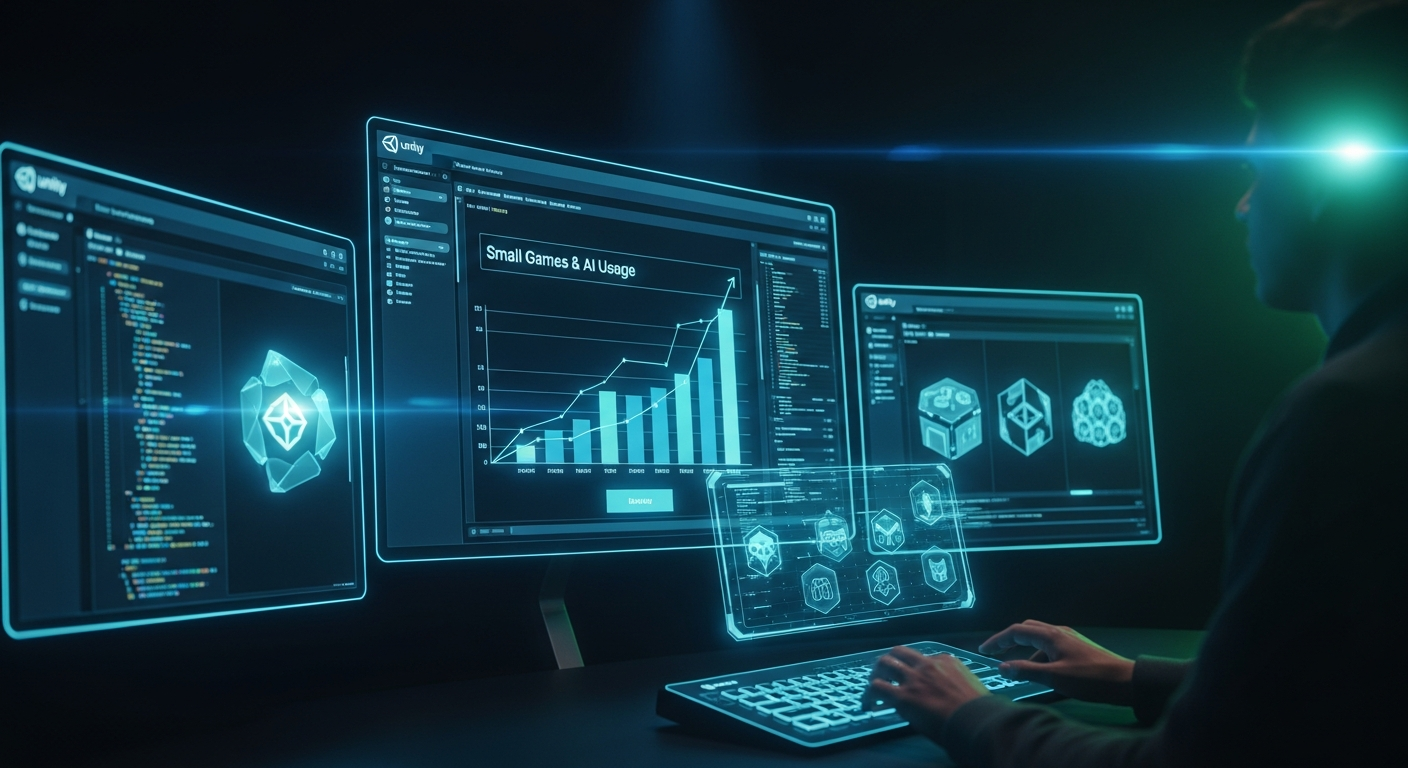

The game development landscape is undergoing a seismic shift. Faced with market uncertainty in 2026, studios are decisively pivoting to smaller, more manageable projects. According to Unity’s ‘2026 Game Development Report’, a significant 52% of teams now favor this approach—a clear strategy to shorten development cycles and accelerate time-to-revenue.
Strategic Adoption of AI Tools
The integration of AI is no longer a novelty; it’s a core production strategy. By embedding AI tools for coding, art, and testing, developers are fundamentally altering their workflows. The results are staggering: Unity reports its users have seen a 77% reduction in project timelines between January 2022 and December 2025, largely thanks to AI-powered coding assistance.
Revenue Diversification and User Acquisition
With user acquisition becoming an increasingly fierce battleground, studios are aggressively diversifying their revenue streams and seeking out new audiences. Online events and social media campaigns have become the go-to promotional tools. This global hunt for players has put emerging markets in the spotlight, with India now considered a prime target. To keep players hooked, features like cross-play and in-game rivalries are also being deployed to maximize engagement.
Conclusion
The path to success in 2026 is clear: develop smaller, ship faster, and leverage technology intelligently. This new playbook—defined by nimble projects, deep AI integration, and savvy user acquisition—shows a resilient industry adapting to market pressures. Ultimately, the goal is to free up human talent for what matters most. A recent Google Cloud survey underscores this trend, finding that 87 per cent of developers now use AI to automate repetitive tasks, allowing them to focus on pure creative work and deliver standout experiences.
[References & Sources]
- digitaltoday.co.kr
- wccftech.com
- unity.com
참고문헌