
SK Hynix Aims for AI-Powered Autonomous Fab by 2027
Did you know that 90% of semiconductor process data goes unused? SK Hynix is tackling this with its ambitious new fab.
Deep Analysis
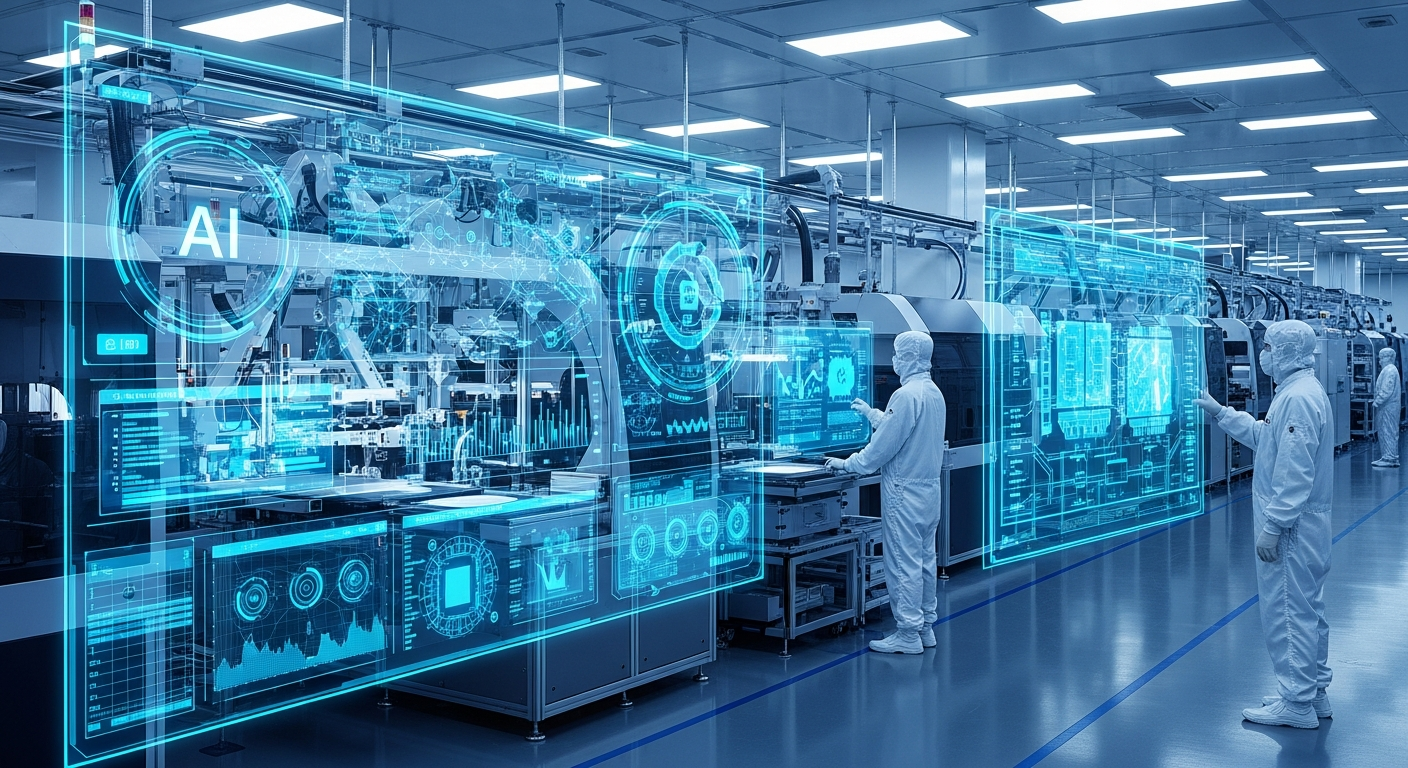
SK Hynix aims to launch its first ‘autonomous fab’ in 2027, automating all semiconductor manufacturing operations with AI. The AI will learn from veteran employees’ skills, preventing knowledge loss due to aging and retirement. This system aims to predict and react instantly to process anomalies.
Technical Implementation
The core of the autonomous fab is a data collection and analysis system. Data is collected in real-time from all equipment within the fab, and AI algorithms analyze this data to maximize process efficiency. Through machine learning, the AI learns and improves, mimicking the experience of skilled engineers to find optimal process conditions. The anomaly detection system identifies process anomalies in real-time and automatically takes corrective actions to minimize defect rates.
Market Impacts
- Increased Productivity: The autonomous fab is expected to increase productivity by up to 30%. AI-based optimized process management will increase wafer production and reduce costs.
- Reduced Defect Rate: Real-time anomaly detection and automatic correction systems are expected to reduce defect rates by more than 15%. This will enable the production of high-quality semiconductors and improve customer satisfaction.
- Reduced Operating Costs: Automated process management reduces human error and increases energy efficiency, reducing operating costs by more than 10%. This will significantly contribute to strengthening SK Hynix’s competitiveness.
Competitive Landscape
Samsung Electronics is increasing investment in AI-based process automation, but hasn’t announced plans to build a fully ‘autonomous fab’ like SK Hynix. TSMC focuses on smart factory construction using data analysis and prediction models, but differs from a fully automated system that minimizes human intervention. SK Hynix’s autonomous fab is an innovative attempt to differentiate itself from these competitors.
Key Statistics
- According to McKinsey, AI-based automation can improve semiconductor industry productivity by up to 20%.
- Gartner forecasts global semiconductor revenue will reach $595 billion in 2024.
- According to SEMI, semiconductor equipment investment is expected to exceed $100 billion in 2023.
Actionable Steps
Responding to SK Hynix’s autonomous fab plans:
- Strengthen Data Strategy: Semiconductor manufacturers must establish data collection and analysis systems to lay the foundation for AI-based automation.
- Develop AI Talent: Cultivate AI and machine learning technology experts to use in process automation and optimization.
- Build a Collaborative Ecosystem: Collaborate with AI solution companies to develop and implement process automation technologies.
Future Outlook
Within the next year, SK Hynix is expected to accelerate the development and testing of AI algorithms for autonomous fab construction. It will also collaborate with major equipment suppliers to secure the technical support needed to build automated systems. Competitors are likely to monitor SK Hynix’s progress and re-evaluate AI-based automation investment plans.