

Surprising Turnaround: Korea’s Economy Revived by AI?
In a significant shift, global investment banks are revising their growth forecasts for Korea upwards. The unmistakable engine driving this newfound optimism is the explosive global demand for AI, which is breathing new life into semiconductor exports and pulling the entire economy from a prolonged slump. A return to low 2% growth by 2026 is no longer a distant hope; it’s a tangible possibility.
How AI Semiconductors Boost the Korean Economy
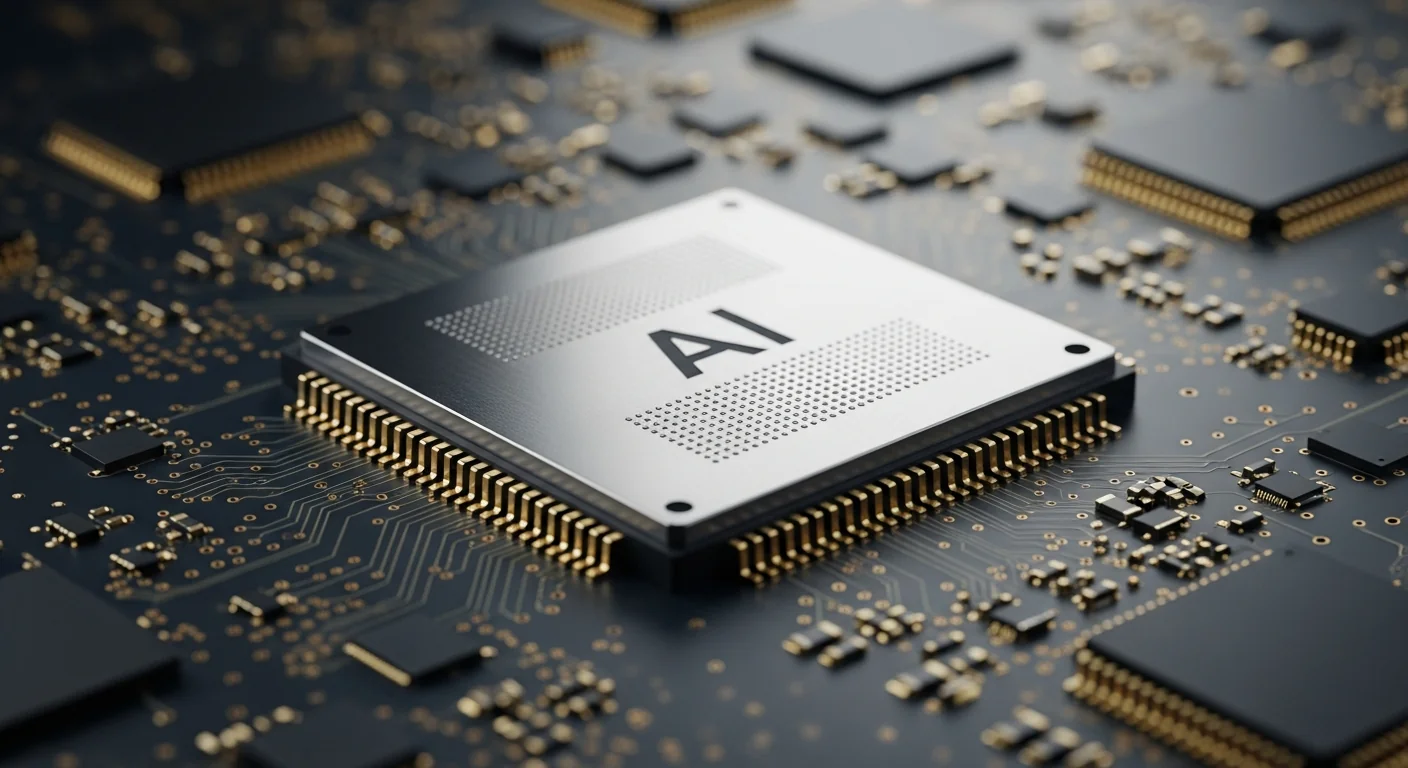
Technical Background: Specialized semiconductors—spanning GPUs, TPUs, and NPUs—are the bedrock of the AI revolution, providing the raw computational power needed to train and run complex models. Herein lies Korea’s critical advantage: its undisputed global leadership in memory semiconductors. These chips are uniquely suited for the massive parallel data processing that advanced AI demands, making them an indispensable component of the ecosystem.
3 Market Impacts of AI Chips
- Export Surge: The most immediate and visible impact is a dramatic surge in exports. Driven by insatiable demand for High Bandwidth Memory (HBM) for AI servers, semiconductor shipments leaped over 30% year-over-year in the first half of 2024 alone. This isn’t just a statistical blip; it’s directly padding the bottom lines of Korea’s top chipmakers.
- Investment Expansion: This export windfall is, in turn, fueling a massive wave of capital investment. Industry titans Samsung Electronics and SK Hynix have already committed tens of trillions of won to expand their AI chip production capacity. These investments are set to create powerful ripple effects across the domestic economy, stimulating equipment spending and generating high-quality jobs.
- New Growth Engine: Looking past the immediate balance sheets, AI chips represent something far more profound: a fundamental new growth engine for the nation. The technology is a catalyst for innovation across adjacent industries like autonomous driving and robotics. Korea’s established dominance in this critical sector is its ticket to securing long-term economic prosperity.
Competitive Landscape: Samsung vs SK Hynix
The domestic market has become a high-stakes battleground, with Samsung Electronics and SK Hynix locked in a fierce race for HBM supremacy. Both are pouring resources into developing next-generation memory and forging strategic alliances with global AI giants. This domestic duel is rapidly escalating into a global war, with US-based Micron making an aggressive push into the HBM space.
Statistics Highlighting AI Chip Growth
- Gartner: Global semiconductor revenue is projected to reach $624 billion in 2024. (Source: Gartner)
- Semiconductor Industry Association (SIA): The global semiconductor market is expected to grow by 13.1% in 2024. (Source: SIA)
- McKinsey: The AI chip market is projected to grow at an average annual rate of over 20% through 2030. (Source: McKinsey)
3 Steps You Should Take Now
- Consider Investing in AI Chip Companies: Keep a sharp eye on companies at the core of the AI chip ecosystem. For any serious investment portfolio, their growth potential is simply too significant to ignore.
- Learn AI Technology: A deep understanding of AI technology is no longer optional for investors; it is the defining skill set for navigating the next decade of market shifts.
- Pay Attention to Government Policies: Monitor government policies designed to bolster the AI chip sector. These initiatives will undoubtedly create significant tailwinds and opportunities for savvy investors and businesses poised to capitalize on them.
1-Year Outlook
Over the next year, expect the already blistering demand for AI chips to accelerate further. A primary catalyst will be the proliferation of on-device AI, which demands an entirely new class of low-power, high-performance processors. Korean firms are aggressively positioning themselves for dominance, sharpening their focus on next-generation HBM and sophisticated AI software to capture this burgeoning market.
