
KRW/USD Closes at 1440 After US PPI Surge: In-Depth Analysis and Investment Strategies
The recently announced surge in the U.S. Producer Price Index (PPI) has sent considerable ripples through global financial markets, directly impacting the KRW/USD exchange rate. Specifically, the January U.S. PPI exceeding market expectations initially drove the rate up to 1445.00 KRW/USD amid a stronger dollar. However, subsequent declines in U.S. Treasury yields exerted downward pressure on the dollar, pulling the exchange rate back to pre-PPI levels. This report provides an in-depth analysis of the factors behind this exchange rate volatility, offers a future outlook, and suggests investment strategies.
1. Market Opening: Closing in the 1440s Amid Increased Volatility
Recently, the foreign exchange market has become increasingly sensitive to U.S. economic data releases, leading to heightened volatility. In particular, the rise in the U.S. January PPI has fueled concerns about inflationary pressures, strengthening the safe-haven appeal of the dollar. However, with the decline in U.S. Treasury yields, the dollar’s strength was limited, and the KRW/USD exchange rate eventually closed around 1440.
2. In-Depth Analysis:
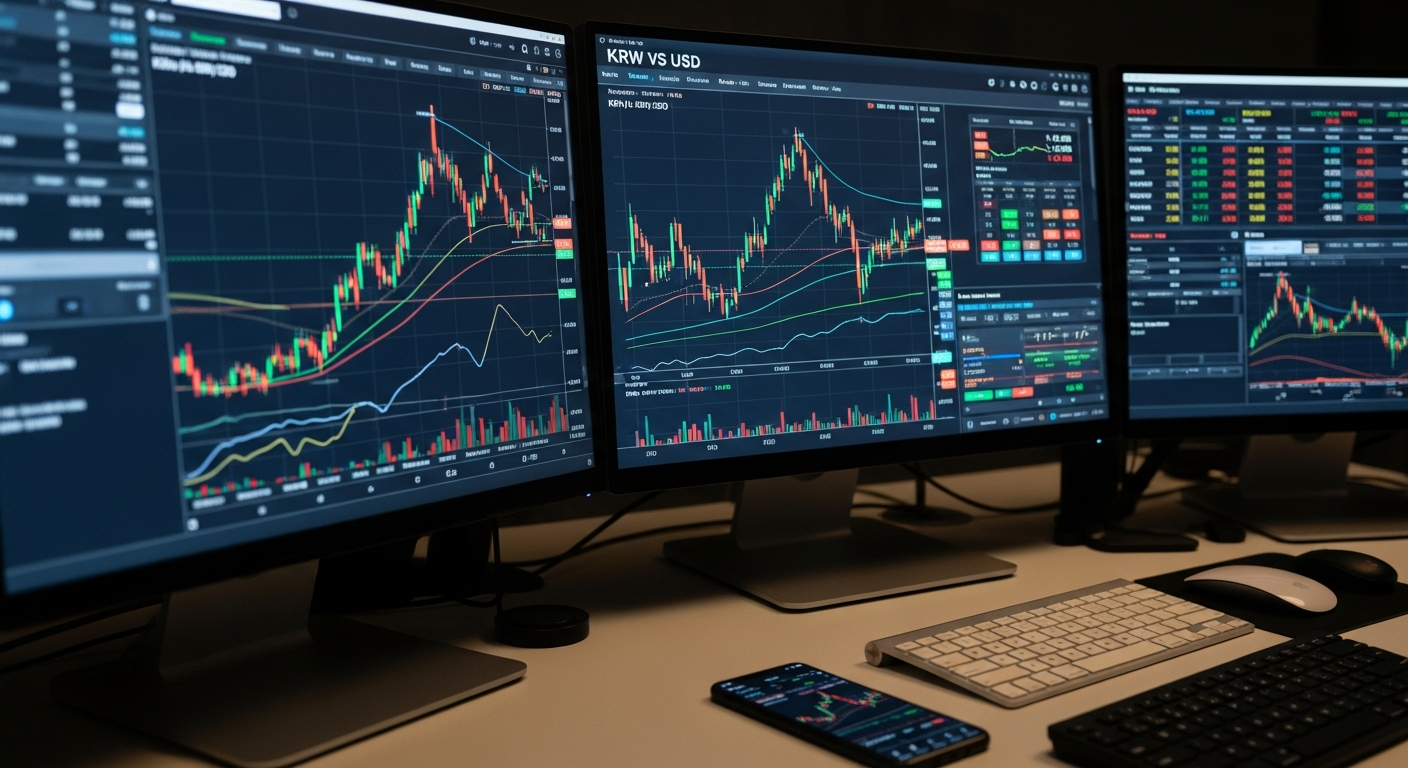
2.1. Technical Analysis: The KRW/USD exchange rate has recently been fluctuating within the 1400 range, showing a sideways trend. In the short term, the 1420 level is acting as a support line, while the 1450 level is acting as a resistance line. Technical indicators show neutral signals, but caution is advised in judging the trend due to increased volatility.
2.2. Market Sentiment Analysis: Market participants appear torn between the possibility of the Federal Reserve slowing down the pace of interest rate hikes and concerns about a global economic slowdown. The recent mixed signals from U.S. economic data have further increased market uncertainty, leading to a contraction in investor sentiment.
2.3. Macroeconomic Analysis:
U.S. Economy: The rise in the U.S. January PPI is attributable to the increase in service sector prices. This suggests that inflation may not ease in the short term, bolstering the view that the Fed’s interest rate hike stance may continue longer than expected.
Korean Economy: The Korean economy is facing difficulties due to sluggish exports and a domestic demand slump. In particular, the decline in semiconductor exports is acting as the biggest risk factor for the Korean economy. However, there are also expectations that the government’s active economic stimulus policies and supplementary budget could contribute to securing downside rigidity.
3. Strategic Implications:
3.1. Risk Management: Given the increasing exchange rate volatility, it is imperative to take full precautions for risk management. To minimize potential losses due to exchange rate fluctuations, consider using currency hedging instruments or a dollar-cost averaging strategy.
3.2. Maintain a Long-Term Perspective: It is important to avoid being swayed by short-term market fluctuations and to make investment decisions from a long-term perspective. In particular, considering the fundamentals of the Korean economy, if the won is deemed to be excessively undervalued, investing in won-denominated assets from a long-term perspective may be worth considering.
3.3. Information Acquisition: Continuous information acquisition is necessary regarding the various factors affecting the exchange rate market. Information on U.S. economic data releases, Fed policy changes, and geopolitical risks should be constantly updated and reflected in investment strategies.
4. Conclusion: Need for a Cautious Approach and Long-Term Investment
Recently, the KRW/USD exchange rate has been experiencing increased volatility due to a combination of factors, including the surge in the U.S. PPI and the decline in U.S. Treasury yields. Investors should make careful investment decisions from a long-term perspective, without being swayed by short-term market fluctuations. In particular, it is important to manage risks associated with exchange rate fluctuations and diversify investment portfolios. In addition, investment strategies should be flexibly adjusted while continuously monitoring macroeconomic conditions and market sentiment. Recently, some perspectives forecast exchange rates in the 1,300 range.
In conclusion, the exchange rate market is a difficult area to predict, so a cautious approach is always necessary for investment.
[References & Sources]
- seoulwire.com
- benzinga.com
- einfomax.co.kr