
Tech Giants Accelerate Energy Transition: Addressing AI’s Soaring Power Demand
The rapid advancement of artificial intelligence (AI) technology drives an unprecedented surge in energy demand. The International Energy Agency (IEA) projects data center electricity consumption will double by 2030, with AI-focused data centers tripling their power use. A single query on an advanced generative AI model, for instance, requires approximately 2.9 watt-hours (Wh) of electricity, nearly ten times that of a conventional Google search. In response, Google has signed a record-breaking deal to purchase the entire initial output of the Steel River Energy Center in Mississippi County, Arkansas, signaling a significant recalibration of its energy strategy for the AI era.
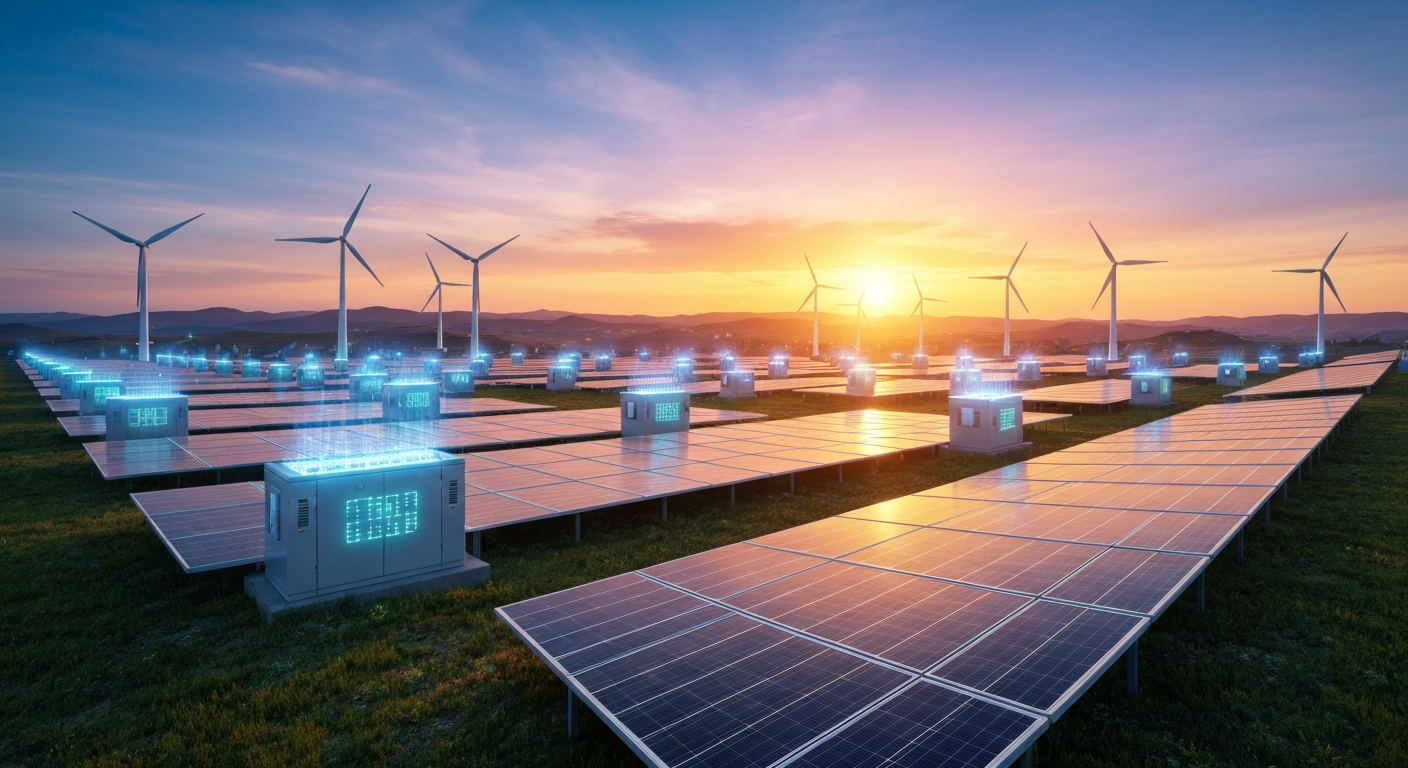
This landmark agreement represents Google’s largest solar and battery storage project in its global portfolio to date. Developed by Cypress Creek Energy, the Steel River Energy Center is slated for completion in 2029, with a total capacity of 2.5 gigawatts (GW) of solar generation and 2.9 gigawatt-hours (GWh) of battery storage. Google will procure the entire output from the first two phases, totaling 1.6 GW of solar and 1.9 GWh of battery storage, a crucial step toward meeting its escalating data center power needs. This project is designed to generate enough clean electricity to power over 315,000 Arkansas homes annually.
Google’s Evolving Energy Playbook: A ‘Power-First’ Approach
Google is executing a strategic pivot in its energy procurement. Moving beyond traditional power purchase agreements (PPAs) with third-party developers, the company now acts as an “anchor investor,” directly engaging in project development through a “power-first” strategy. This approach prioritizes the development of power generation alongside computing demand, diverging from the model of adding large new loads to the grid and securing power later. Google’s acquisition of Intersect Power for $4.75 billion in late 2025/early 2026 exemplifies this shift, bringing 3.6 GW of solar and wind projects and 3.1 GWh of battery storage pipeline in-house.
The company maintains an ambitious goal to operate on 24/7 carbon-free energy (CFE) across all its operations by 2030. To achieve this, Google covers 100% of the electricity costs for its data centers and any new infrastructure needs driven by its growth, committing not to pass these costs onto American households or small businesses. The Steel River project also bolsters the domestic supply chain, utilizing 100% U.S.-made structural steel sourced from Mississippi County, the nation’s leading steel-producing county. It will integrate U.S.-made solar modules from First Solar and battery energy storage systems from LG Energy Solution Vertech. This initiative is projected to create approximately 700 construction jobs per phase and generate an estimated $300 million in local tax revenue over its lifetime. Google is further investing $5 million in local energy affordability initiatives.
Competitive Landscape and Market Implications
The AI technology race now extends to a fierce competition for power infrastructure. Data center electricity demand surged 17% in 2025, with AI-focused data centers growing even faster. The IEA estimates the U.S. AI sector alone will require 50 GW of new electric capacity by 2028, equivalent to twice New York City’s peak electricity demand. This immense demand places significant strain on existing grids, underscoring the critical need for new generation and transmission infrastructure. Large-scale renewable projects like Steel River play a vital role in alleviating these bottlenecks and enhancing grid stability.
Google’s “power-first” model could set a precedent for other hyperscale companies. Co-locating renewable energy generation near data center sites or proactively securing power through massive PPAs can mitigate grid congestion and reduce operational costs. However, such large-scale projects demand substantial capital investment and navigate complex regulatory landscapes. With power availability becoming a decisive factor in hyperscalers’ expansion strategies, investment and innovation in sustainable energy solutions will determine the future competitiveness of tech companies.
Conclusion for Investors and Market Participants
The exponential growth in AI energy demand presents both immense opportunities and significant challenges for the power industry. Investors should increasingly focus on large-scale renewable energy projects, particularly those integrated with advanced battery storage systems. Google’s Arkansas project clearly demonstrates that tech companies are evolving beyond mere energy consumers to become key drivers of clean energy infrastructure development. Energy developers must align with these changing strategies from tech giants, exploring integrated solutions from the outset and leveraging domestic supply chains. Furthermore, governments and regulatory bodies must accelerate policy support and infrastructure upgrades to meet burgeoning power demands and expedite the clean energy transition. Securing stable, large-scale clean energy sources, alongside improving energy efficiency, will be the pivotal force powering the AI era.
References & Sources
