
Google Play Games’ PC Expansion Accelerates Ecosystem Unification
Mobile gaming continues to dominate the global market, projected to reach $103 billion in revenue by 2025, accounting for approximately 55% of the total gaming industry. Against this backdrop, Google’s strategic move to expand its Google Play Games ecosystem to PC represents more than just platform diversification; it signals a major push to consolidate its leadership in the global gaming landscape.
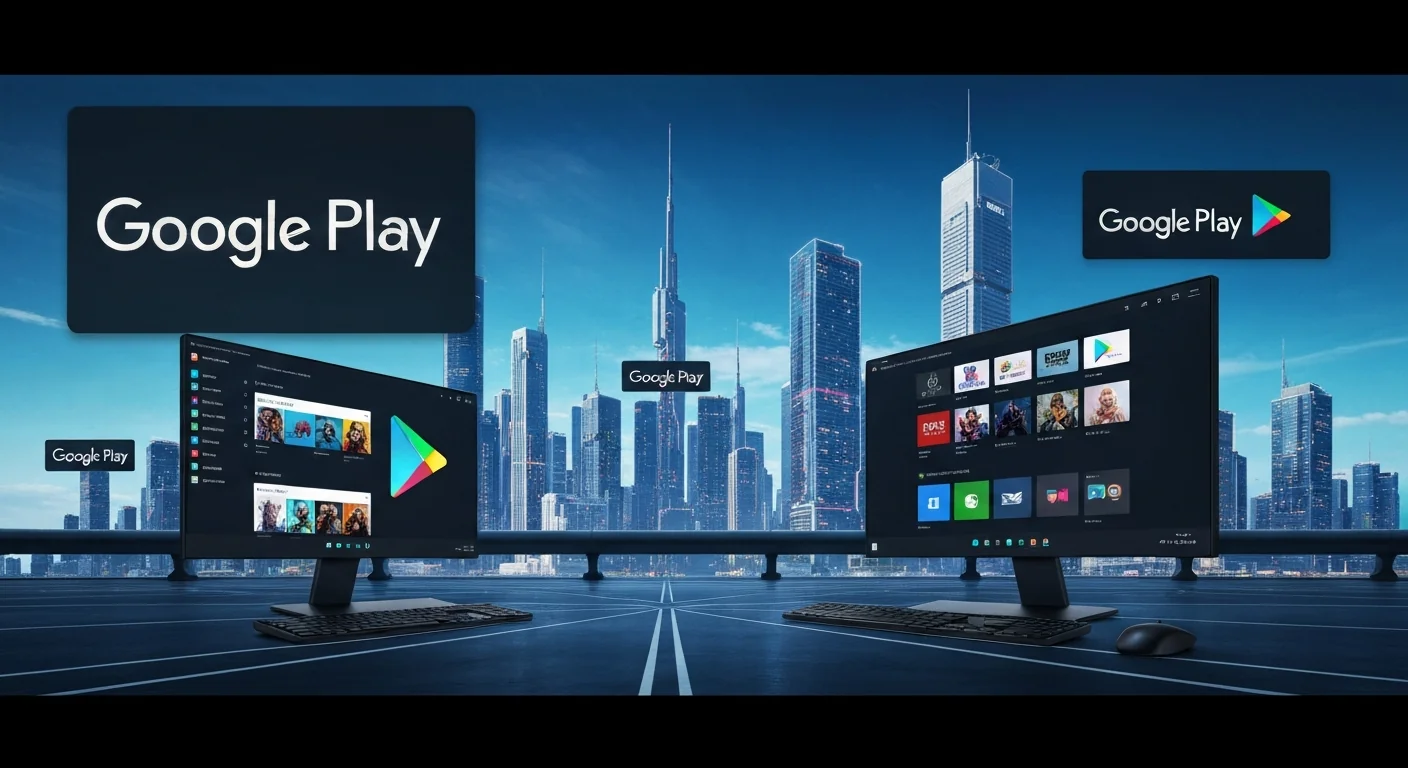
Google Play Games on PC officially rolled out its beta experience in January 2022, initially targeting users in Korea, Hong Kong, and Taiwan. The platform has since expanded its availability to over 140 countries and regions by 2023. While it initially focused on emulating Android games on Windows PCs, the service now operates as a standalone application on Windows 10 or 11, offering seamless synchronization of game progress and purchases between mobile devices and PCs. This cross-device continuity is a fundamental strength, allowing users to maintain their gaming experience across different hardware.
Strategic Insight and a Reshaped Competitive Landscape
Google’s PC market expansion carries profound strategic implications. Firstly, it functions as a ‘defensive strategy’ to retain revenue that might otherwise be lost when mobile gamers transition to PC. Many popular mobile-native games already offer dedicated PC versions on established platforms like Steam and the Epic Games Store, drawing mobile players away from Google Play. Google Play Games on PC aims to stem this outflow, keeping users and their spending within Google’s ecosystem.
Secondly, Google is moving beyond mere Android game emulation to emphasize support for ‘native PC games’. The company provides a dedicated PC SDK for native PC game development, facilitating in-app purchase integration and advanced security features. Developers can now manage both mobile and PC game builds efficiently within the Google Play Console. A significant development is the introduction of a ‘buy once, play anywhere’ model for select titles, allowing a single purchase to grant access across both mobile and PC versions. This initiative positions Google Play Games as a direct competitor to long-standing PC gaming platforms.
The PC gaming market, estimated at $61.84 billion in 2024, is projected to surge to $129.93 billion by 2030, with a compound annual growth rate (CAGR) of 13.5% from 2025. Google leverages its vast Google Play ecosystem, boasting over 2 billion monthly active users across 190+ countries, to capture a significant share of this expanding market. Incentives such as an ‘earnback program’ offering up to 15% additional revenue for PC games and new advertising tools are powerful lures for developers.
User experience enhancements are also a priority. Google has continuously added PC-optimized features, including keyboard and mouse input support, up to 4K resolution, custom control remapping, a game sidebar, and multi-account and multi-instance capabilities. The upcoming ‘Game Trials’ feature for selected paid titles promises to further improve accessibility for players.
Actionable Conclusion for Investors
Google Play Games’ expansion into PC gaming reflects the company’s long-term vision to create a unified, cross-platform gaming experience. Success hinges on robust developer adoption. Investors should closely monitor the uptake of Google’s native PC SDK, the effectiveness of its integrated build management tools, and the attractiveness of its revenue-sharing models for both PC and mobile developers.
Furthermore, overcoming the entrenched dominance of existing PC gaming platforms remains a critical challenge. Platforms like Steam possess extensive user bases, vast game libraries, and mature community features built over many years. Google Play Games must deliver distinct value, particularly by maximizing its inherent advantage of ‘seamless connection’ from mobile to PC. The market landscape will shift based on Google’s success in driving cross-platform game development and user acquisition, and the widespread adoption of its ‘buy once, play anywhere’ model. These factors will directly influence Google’s future advertising revenue and platform fees.
References & Sources