
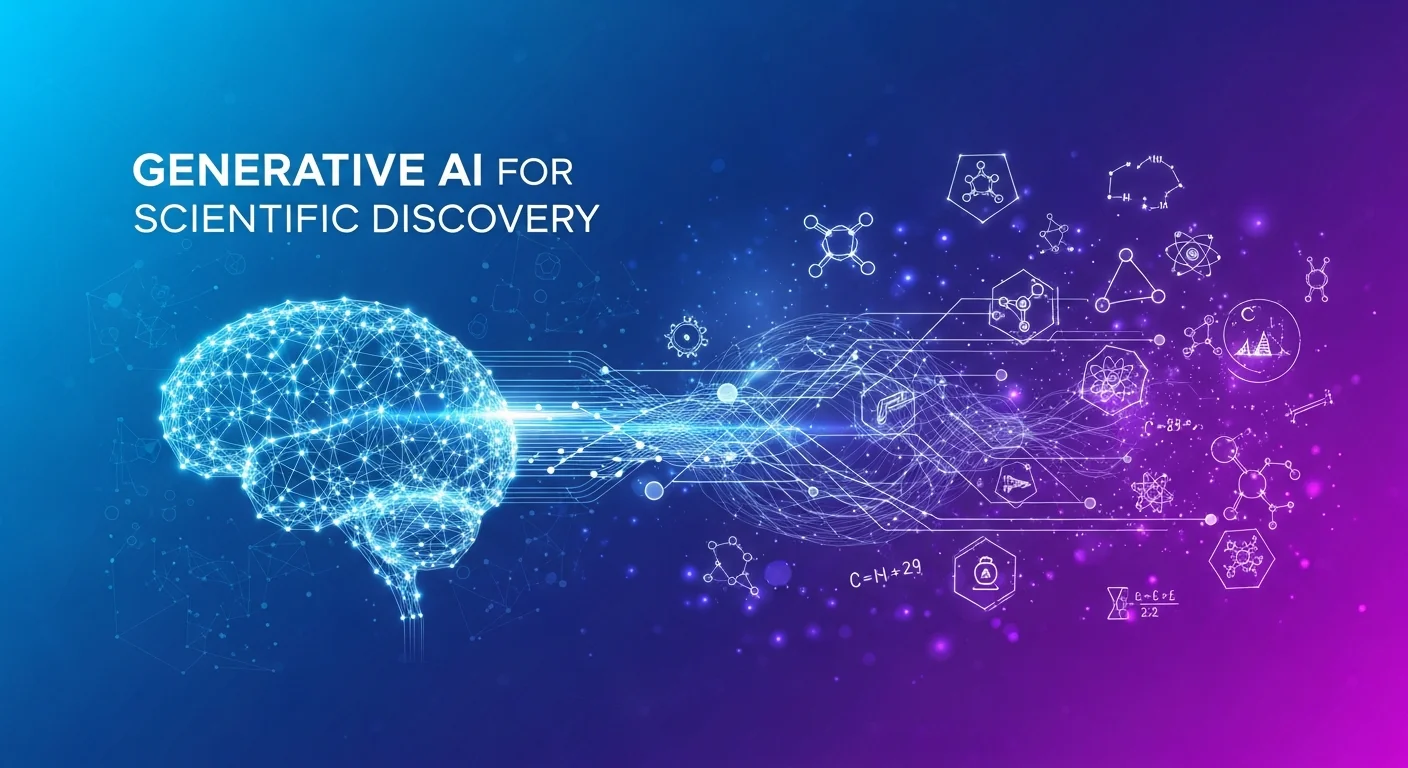

Generative AI: A New Horizon for Scientific Research
The impact of generative AI now extends far beyond creative pursuits like images and text. In the world of scientific research, it has become an indispensable tool for generating novel hypotheses, engineering innovative designs, and analyzing vast datasets at a speed and scale traditional methods simply cannot match.
Data-Driven Insights
From genomic sequences to protein structures and experimental results, modern science is drowning in data. Generative AI cuts through this deluge, acting as a powerful signal finder to identify patterns, discover hidden correlations, and provide new insights. This allows scientists to finally pinpoint overlooked details and pivot their research toward more promising avenues.
Rapid Iteration and Prototyping
In fields like drug discovery, materials design, and experimental optimization, generative AI is turbocharging development cycles. The technology enables the rapid prototyping of new ideas, slashing the time and costs associated with conventional methods. This frees up critical resources for more ambitious research. In drug development, for example, potential candidates can be identified almost instantly, their target interactions predicted, and delivery systems optimized in real-time.
Potential for Personalized Medicine
The promise of truly personalized medicine hinges on synthesizing a patient’s entire profile: genetics, lifestyle, and clinical history. This complex challenge is precisely where generative AI excels. It enables the design of personalized treatments that consider individual genetic characteristics, lifestyle habits, and disease history. The technology can forecast how a patient will respond to specific therapies, allowing for customized strategies that deliver far more precise outcomes.
Key Applications
- Drug Discovery: Generating novel drug candidates, predicting drug-target interactions, and optimizing drug delivery mechanisms.
- Materials Science: Designing new materials with desired properties (e.g., strength, conductivity, thermal stability) for applications in energy, aerospace, and electronics.
- Protein Engineering: Creating proteins with enhanced functionality or novel binding properties for use in diagnostics, therapeutics, and industrial processes.
- Climate Modeling: Generating more accurate and detailed climate simulations to better understand and predict the impacts of climate change.
Challenges and Opportunities
For all its promise, the application of generative AI in science remains in its early days. Significant hurdles stand in the way, including data quality, inherent model biases, the notorious “black-box” problem, and thorny validation and ethical questions. Overcoming these challenges is paramount. The reward will be unlocking the technology’s true potential to dramatically increase the speed of scientific discovery and greatly contribute to improving human life.
