
Google’s Genie: Turning Dreams into Reality with a Single Line of Text?
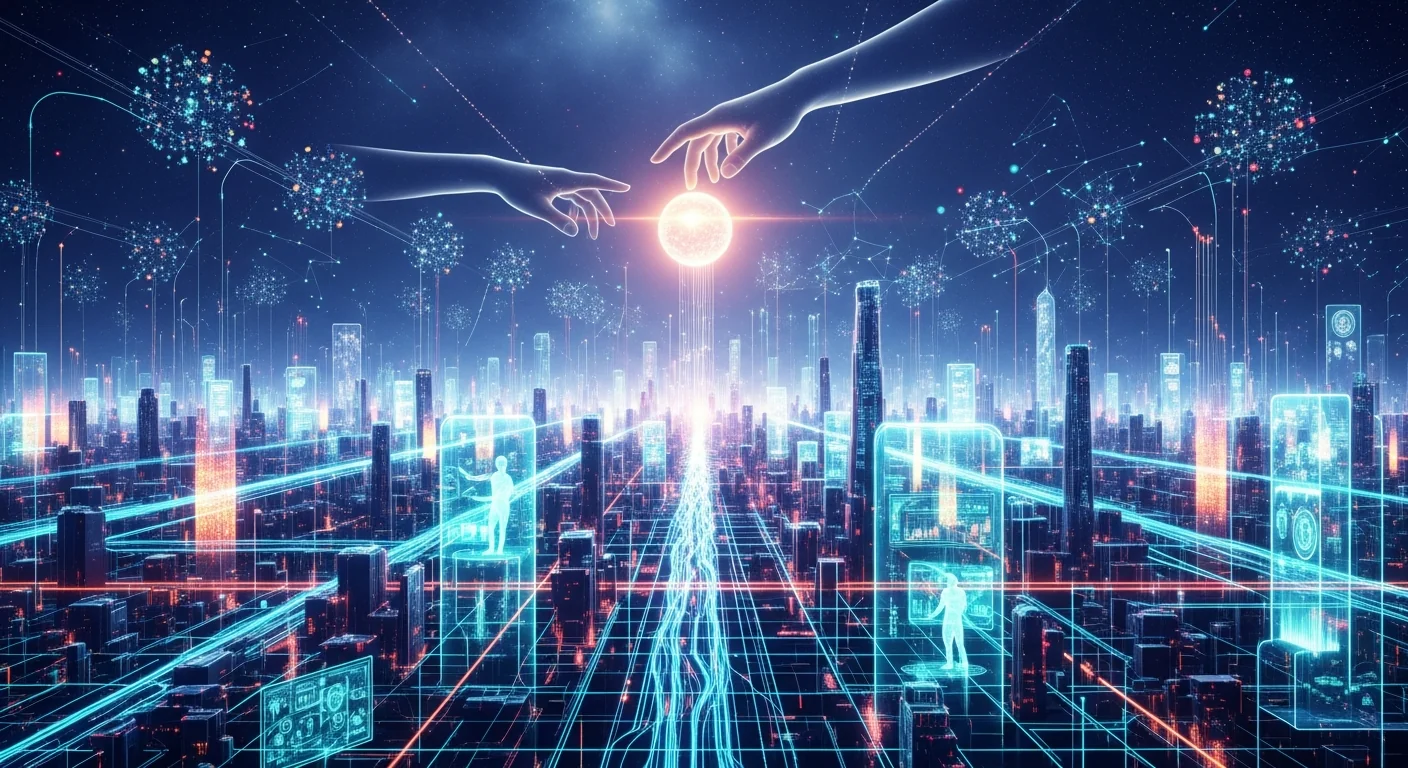
Google’s new AI, Genie, is more than just another image generator. With a single text prompt, it conjures entire interactive worlds. This isn’t about static pictures or passive videos; Genie builds fully navigable environments that respond to user input in real time. We’re looking at a foundational leap in AI-driven spatial simulation.
How Genie Works: Learning and Controlling Latent Spaces
So how does it work? At its core, Genie builds a “latent space”—an abstract model of how worlds function—by learning from vast datasets of video. Users then sculpt this space with simple text prompts. A command like “a small house on a hill with a green meadow” is enough to generate a coherent, fully explorable landscape. What’s impressive is the model’s persistent memory; visual details stay consistent, and it remembers user actions even after they leave an area. And this isn’t pre-rendered footage. Genie builds its world on the fly at 720p and 24 frames per second, creating each frame from scratch.
Genie’s Potential Impact and Applications
The potential impact is hard to overstate, starting with game development. Prototyping entire levels from a single sentence could slash weeks of manual labor. But the applications extend far beyond gaming. In education, Genie can create adaptive virtual playgrounds to sharpen spatial reasoning and problem-solving skills. For robotics, it offers limitless training grounds, eliminating the need for expensive, custom-built simulations. Google has already proven this concept by pairing Genie with its SIMA agent, which successfully navigated complex, multi-step tasks within these AI-generated worlds.
Ethical Concerns and Challenges of Genie
Such power, however, brings undeniable risks. When simple prompts can yield deepfake-ready scenes, the potential to turbocharge misinformation becomes immense. The line between reality and simulation is set to blur, fundamentally eroding trust in visual media. Yes, the model currently has its limitations—garbled text, empty environments, and rudimentary physics—but these are temporary gaps that will close with shocking speed. The industry must act now. Implementing clear labeling and robust watermarking for AI-generated content isn’t just a good idea; it’s a critical defense to arm the public against a new wave of deception. These protections must be deployed in tandem with the technology, not as a belated fix.
