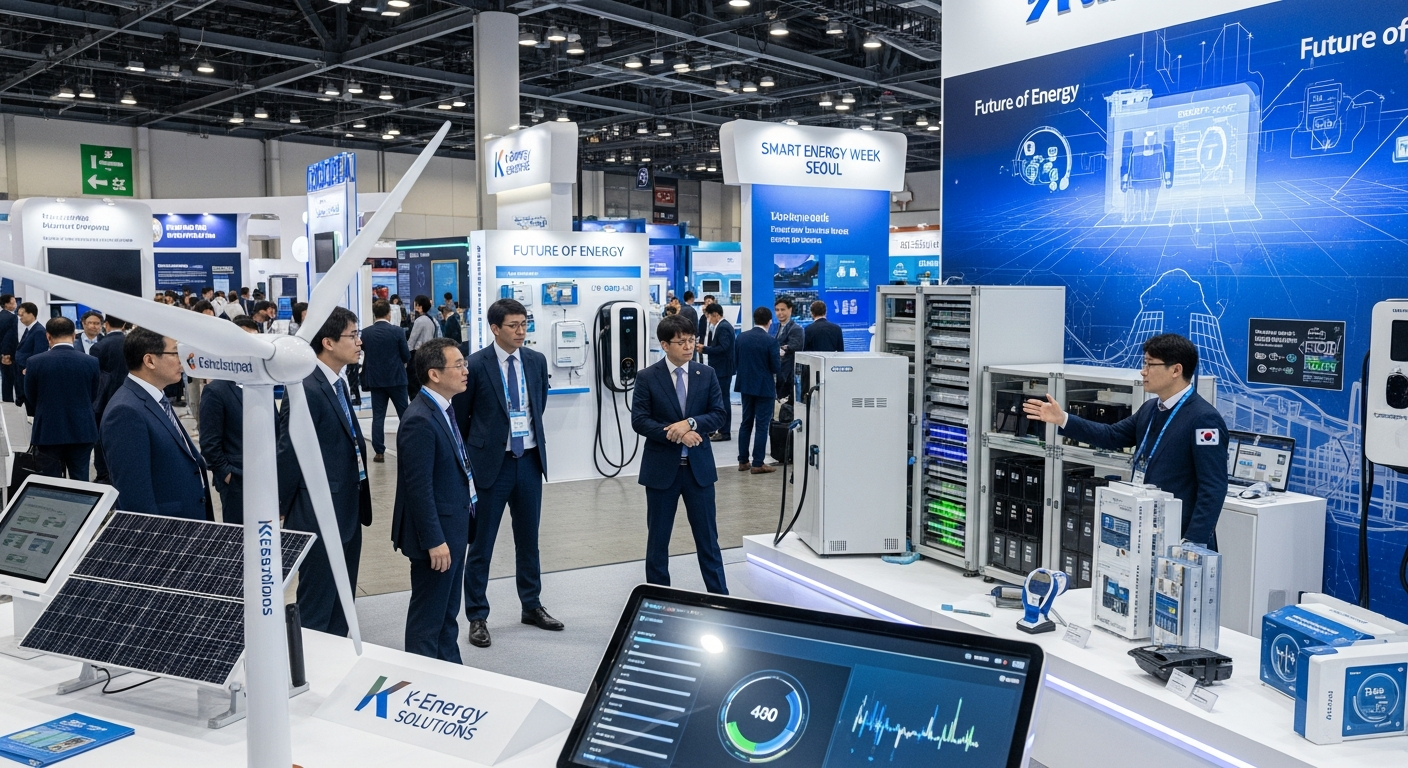

With over 1,600 exhibitors from 67 countries descending on Tokyo, Smart Energy Week has become a critical battleground for renewable and clean power technologies. For Korean firms, this is more than just a showcase; it’s a strategic move to solidify their leadership in Asia’s burgeoning offshore wind and clean energy markets. They are arriving with a full arsenal, including advanced hydrogen systems, grid technologies, and energy storage solutions.
Across Asia, the relentless expansion of digital infrastructure and industrial activity is driving a surge in electricity demand. This has created a powerful tailwind for LNG, which is staging a comeback as prices stabilize, enabling nations like China, India, and those in Southeast Asia to accelerate their shift away from coal. Positioned perfectly to ride this wave are Korean companies specializing in liquefied gas infrastructure and transition technologies.
Seoul’s ambitious goal—a 40% reduction in greenhouse gas emissions from 2018 levels by 2030—is forcing a massive reallocation of capital within the Korean economy. An estimated $99 billion injection into clean tech development is not just a domestic policy; it’s an incubator, forging Korean firms into premier suppliers with a distinct first-mover advantage. The message from exhibitors at Smart Energy Week is clear: securing Asian market share now hinges on reliable supply chains and battle-tested technology, both of which are being honed on their home turf.
The numbers paint a clear picture: global electricity demand is projected to climb 3.7% in 2026, with China and India at the epicenter of this growth. Within Asia, solar power is the undisputed king, set to account for a staggering 48.9% of new capacity additions by year-end—a testament to the region’s formidable manufacturing base.
But the real action happens far from the exhibit floor, as utilities, developers, and policymakers convene to forge critical partnerships. GS Entec, for instance, is strategically targeting Japan’s 10 GW offshore wind ambition and South Korea’s own 10.5 GW goal through 2030, a move designed to attract significant capital and technology alliances. It’s these high-stakes projects that are set to fuel the next wave of infrastructure spending across Asia’s leading economies.
[References & Sources]
- nacleanenergy.com
- wsew.jp
- eventbrite.co.uk
참고문헌