
A Strategic Pivot to Solve the AI Talent Gap: The ‘AX Graduate School’ Arrives
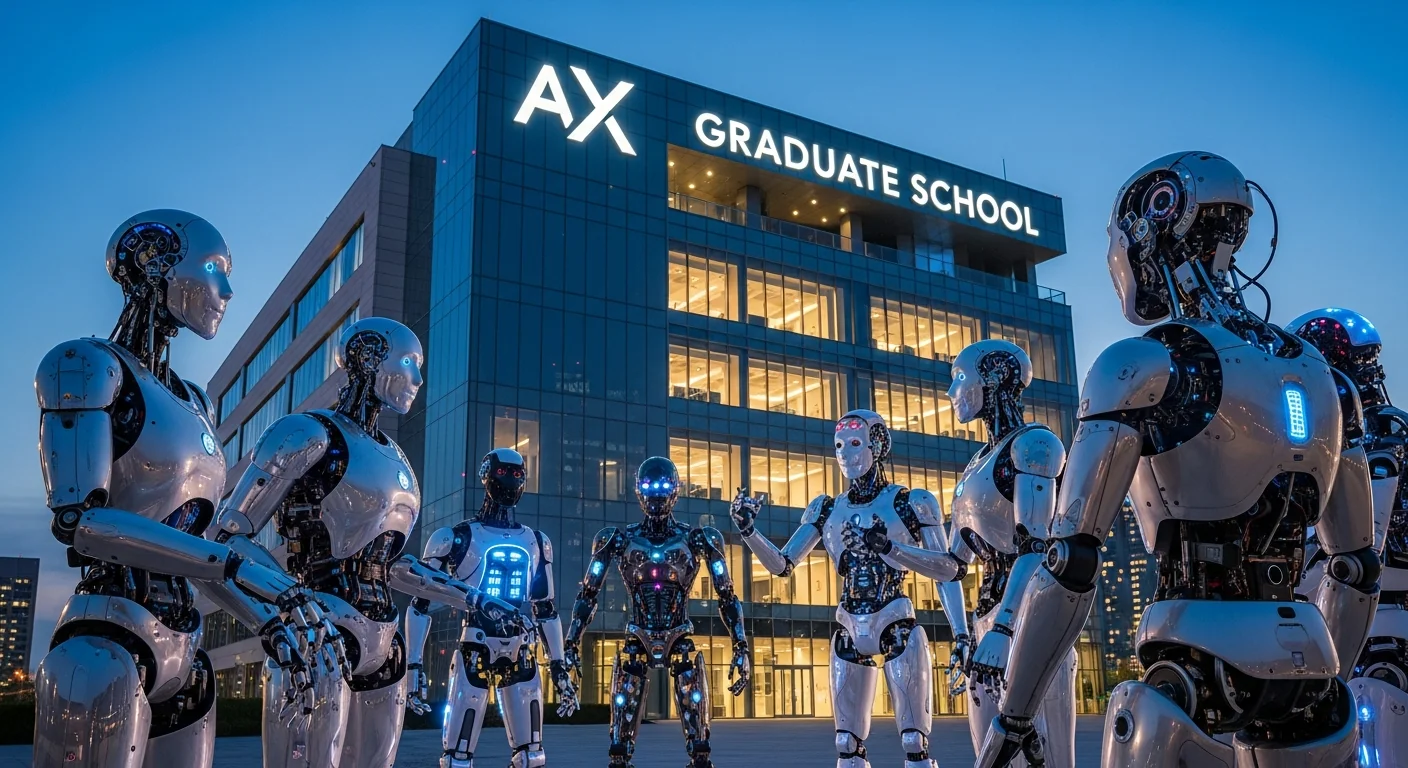
Facing a deepening AI talent crisis ahead of 2030, the Ministry of Science and ICT has unveiled its strategic answer: the ‘AX (AI for Everything) Graduate School’. This program marks a decisive shift in national strategy. Instead of merely training AI developers, the focus is now on fusing AI technology with deep domain expertise in core sectors like manufacturing, biotech, and energy. The message is clear: Korea is moving beyond pure AI research to cultivate experts who can immediately apply and scale technology in real-world business environments.
How the AX Model Works
The AX Graduate School concept is a fundamental departure from existing AI programs. Students will simultaneously master deep knowledge in a specific field—robotics, semiconductors, automotive, finance—and the practical skills to implement AI within it. Each graduate school will select up to two specialized convergence areas, building a curriculum that spans from foundational theory to project-based application. Industry partnerships are the linchpin of this model. Companies will establish on-campus joint research centers, co-supervise student projects, and provide real-world business problems as thesis topics. The result? Graduates who are not just skilled, but truly “plug-and-play”—ready to contribute from day one with a full understanding of corporate operations.
Three Major Ripple Effects on the Market
- Scaling the AI Workforce: The government’s plan to grow enrollment from an initial 200 master’s and doctoral students this year to 820 annually by 2030 is a direct assault on a critical bottleneck. Domestic research institutes have long warned that this specific tech talent shortage could cripple Korea’s industrial competitiveness.
- Accelerating Digital Transformation Across Industries: When an AI expert understands the nuances of a manufacturing process, a medical diagnosis, or a financial system, they unlock innovation opportunities that pure technologists often miss. Smart factories, AI-driven drug discovery, and algorithmic trading systems all generate explosive synergies from this hybrid expertise. History shows that the combination of domain knowledge and technical skill consistently drives the most valuable commercial breakthroughs.
- Bolstering Global Industrial Competitiveness: Injecting AI-converged talent into Korea’s semiconductor and automotive sectors—industries where the nation already holds significant market share—is a strategy to amplify existing strengths. As these graduates deploy across manufacturing, energy, and telecommunications, they will give domestic companies a decisive edge against global competitors who are already integrating AI into their operations.
Competitive Landscape Analysis
The AX Graduate School carves out a unique position in the market. While existing university AI departments emphasize theoretical depth, they often lack the industry connections vital for rapid commercialization. KAIST’s Graduate School of AI, though a top-tier domestic program, pursues a more research-oriented path, contrasting with the AX model’s application-first approach. Meanwhile, leading international institutions like Stanford’s AI initiative offer world-class research environments but cannot provide education tailored to Korea’s specific industrial landscape. The AX Graduate School, therefore, targets the optimal middle ground, blending academic credibility with the immediate, practical needs of Korean enterprise.
Key Program Overview
- The program will launch with 10 graduate schools by 2026, expanding to 22 by 2030, covering 11 designated fields: robotics, semiconductors, automotive, manufacturing, bio, security, energy, finance, telecom, aerospace, and home appliances.
- Each selected university will receive up to ₩3 billion annually for a maximum of six years, totaling ₩16.5 billion in support.
- To ensure programmatic diversity, the four major science and technology institutes—KAIST, GIST, DGIST, and UNIST—are excluded from applying.
- Universities located outside the Seoul metropolitan area will receive preferential scoring during evaluation, promoting a balanced regional distribution of talent.
Immediate Next Steps
- Scrutinize Program Details: The Ministry of Science and ICT and the Institute for Information & Communications Technology Planning & Evaluation (IITP) have posted application materials on their websites, available until March 25, 2026. Prospective applicants must analyze these documents carefully.
- Evaluate Specialization Fit: Candidates need to strategically determine which of the 11 designated fields best aligns with their background and career ambitions.
- Strengthen Core Competencies: To maximize their chances of acceptance, applicants should use the time before the deadline to demonstrate both foundational AI knowledge and proven expertise in their chosen domain.
Future Outlook
The initiative is already in motion. Within months, the first cohort of 200 students will enroll and begin immediate collaboration on projects with their industry partners. By year-end, the initial research findings from these partnerships will begin circulating throughout Korean industry. This will be the first real test of whether the government’s hybrid talent model can deliver the competitive edge that Korean industry so urgently needs.
