
US-Iran Understanding Reshapes Global Oil Market Dynamics
Plunging below the $75 mark, Brent crude has signaled a seismic shift in global energy markets. The benchmark fell 4.3% on June 26 to settle at $71.99 a barrel, a low not seen since the US-Israeli air war against Iran erupted in late February. Driving this precipitous drop is a preliminary understanding between Washington and Tehran to reopen the Strait of Hormuz, fueling hopes that severe supply disruptions are finally nearing an end.
The diplomatic breakthrough came on June 17, 2026, with the signing of a Memorandum of Understanding (MoU) in Islamabad. This agreement aims not only to end military hostilities and reopen the critical Strait of Hormuz but also to set the stage for final talks on Iran’s nuclear program and sanctions relief. In a powerful follow-up move, the U.S. Treasury’s Office of Foreign Assets Control (OFAC) issued General License X (GL X) on June 22. This license, effective through August 21, 2026, greenlights the production and sale of Iranian crude and petroleum products. Crucially, GL X allows transactions in U.S. dollars, marking one of the most significant sanctions waivers for Iran’s energy sector in decades.
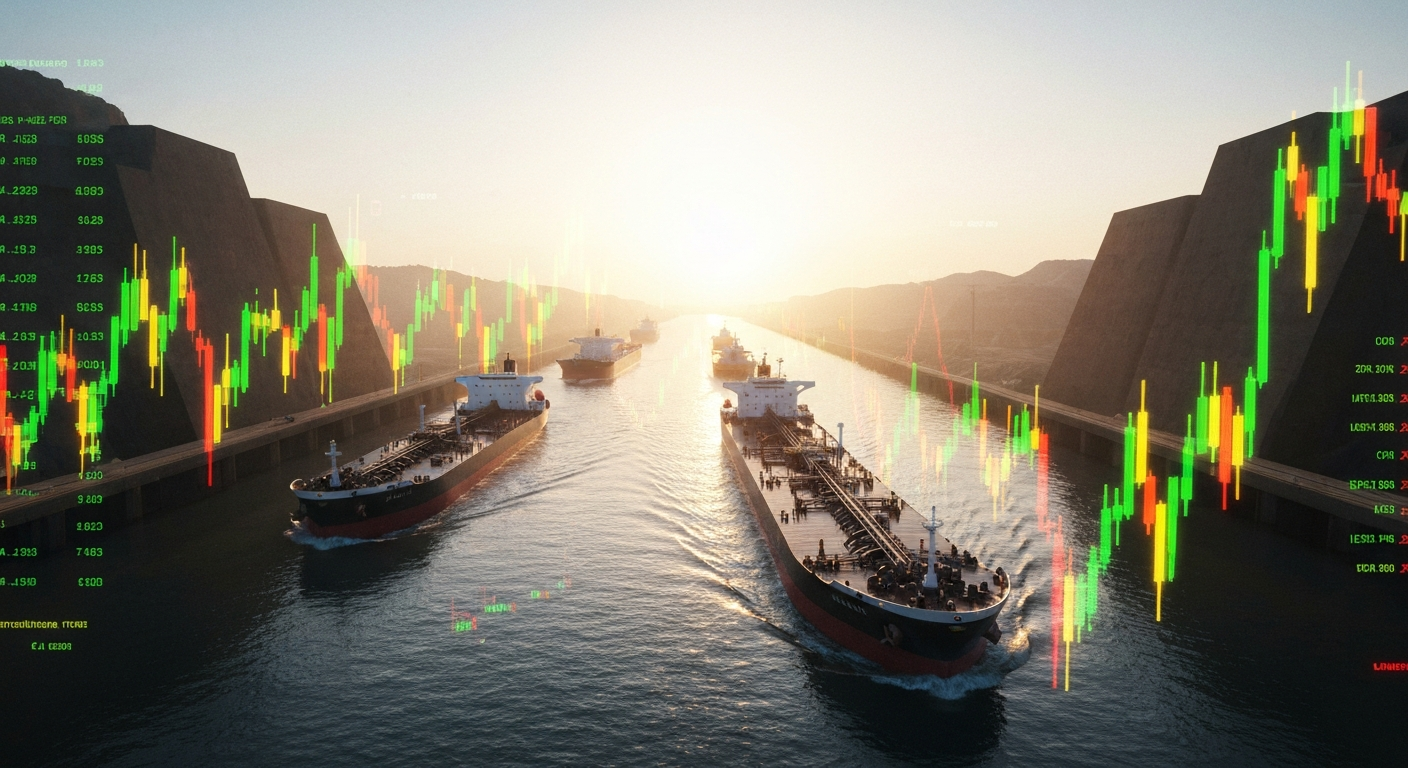
Markets reacted immediately, pricing in a substantial increase in global crude supply. Should the Strait of Hormuz fully normalize, analysts project that roughly 60 million barrels of oil currently trapped in the Persian Gulf could flood consumer markets. This new supply reality is reshaping forecasts; Wood Mackenzie now sees Brent averaging $78 a barrel in 2027, possibly falling to $70 by the fourth quarter. It’s a stark reversal from the $92 average in 2026, a price heavily inflated by the conflict premium between March and May.
Yet, the situation on the ground—or rather, at sea—remains highly precarious. Iran, which had blocked most traffic since February 28, 2026, and officially closed the Strait on March 2, has sent mixed signals. Despite some reports of increased transits in early June, the waterway’s status as of June 27 is still ‘RESTRICTED’ or ‘CLOSED,’ with traffic far from pre-crisis levels. The deal’s fragility was exposed when Iran reportedly re-closed the Strait on June 20, blaming Israeli actions in Lebanon. A subsequent attack on a cargo vessel on June 25 only compounded the uncertainty, temporarily halting evacuations. Even with a widened route announced near Oman on June 27, these repeated disruptions prove that the market needs more than diplomatic ink; it needs tangible stability in the shipping lanes.
Trading near $76 per barrel in late June 2026, Brent crude is telling a story of profound uncertainty. The price reflects neither a firm conviction in full normalization nor a bet on a complete breakdown of the deal. While the prospect of Iranian oil returning is a clear positive for global supply chains, persistent geopolitical friction in the Middle East guarantees continued volatility. The stakes are especially high for Asian markets, which depend on the Strait for a staggering 84-89% of their normal crude imports.
For market participants, the path forward requires vigilant monitoring of several key indicators. Progress on the final agreement, real-time vessel traffic data from the Strait, and any new geopolitical flare-ups are paramount. Beyond the Strait itself, the pace of Iran’s oil production recovery and future OPEC+ output decisions will be just as critical. The interplay of these complex factors will ultimately dictate the trajectory of oil prices in the months ahead.
References & Sources
