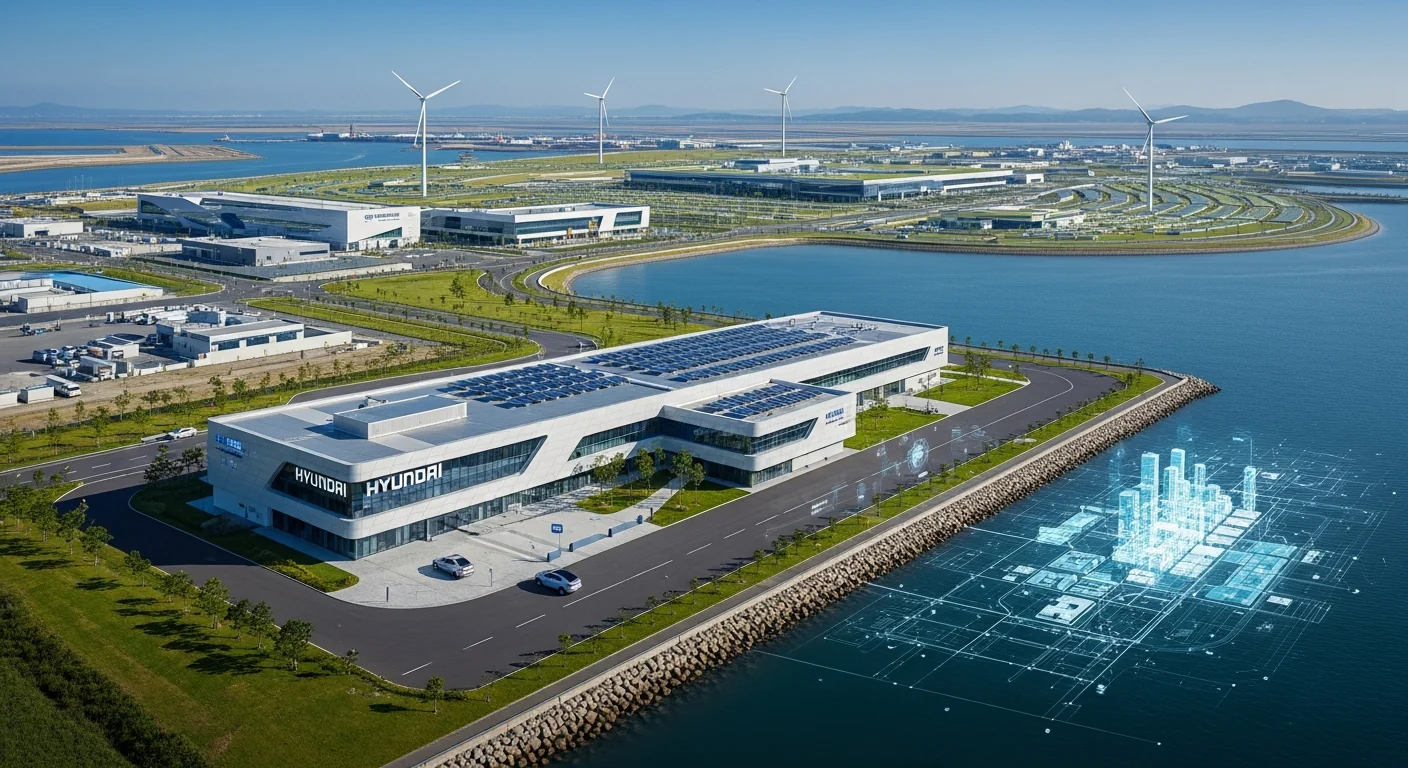

Hyundai Motor Group is making a decisive 9 trillion KRW bet on Saemangeum, aiming to transform the region into a future innovation hub. Set to launch in 2026, this ambitious plan centered on robotics, AI, and hydrogen energy is poised not only to revitalize the local economy but also to reshape South Korea’s entire high-tech industrial landscape.
An Integrated Industrial Ecosystem
At the heart of this investment is the creation of an integrated industrial ecosystem, designed to make these three sectors work in perfect concert.
AI Data Center (5.8 trillion KRW): A massive computing infrastructure equipped with 50,000 GPUs will serve as the brain for autonomous vehicles and smart factories. This facility is the critical foundation for the group’s push into Software Defined Vehicles (SDVs).
Robotics Manufacturing and Parts Cluster (400 billion KRW): This cluster will establish a manufacturing ecosystem with an annual production capacity of 30,000 units. It will mass-produce a diverse range of products, from logistics and delivery robots to wearable robotics, while also supporting contract manufacturing for smaller enterprises to foster mutual growth.
Water Electrolysis Plant (1 trillion KRW): A 200MW facility will produce 30,000 tons of green hydrogen annually, acting as the heart of Saemangeum by supplying clean energy for hydrogen mobility and the smart city initiative.
Solar Power Generation Facilities (1.3 trillion KRW): Laying the groundwork for energy independence, these facilities will supply the necessary power for the AI data center and hydrogen production, adhering to RE100 principles.
AI Hydrogen City (400 billion KRW): The ultimate vision is to create a fully integrated urban and industrial ecosystem that functions like a single city, seamlessly combining everything from hydrogen production and AI analytics to robotics applications.
Economic Impact and Performance
The economic ripple effects extend far beyond the initial investment. Based on Bank of Korea input-output tables, the project is projected to generate 16 trillion KRW in economic activity and create 71,000 direct and indirect jobs. A clear roadmap, with construction starting in 2027 and major facilities slated for completion by 2029, underscores the project’s viability.
More importantly, this project stands as a symbolic milestone for balanced national development. It aims to counteract the heavy concentration of industry in the Seoul metropolitan area and elevate North Jeolla Province into a premier hub for future-forward technologies.
Challenges and Outlook
Of course, the path forward isn’t without its challenges. Securing a stable power supply, establishing a reliable supply chain for high-performance GPUs, and implementing bold deregulation will be critical to success. The government’s formation of a cross-ministry task force last May is a clear acknowledgment of these hurdles.
This Saemangeum investment forms a critical pillar of Hyundai Motor Group’s broader 125.2 trillion KRW domestic investment strategy announced last year. By fusing its traditional manufacturing prowess with the future-defining technologies of AI, robotics, and hydrogen, Hyundai is making a decisive play to elevate South Korea’s standing in the global industrial arena. All eyes are on whether this ambitious gambit will pay off.
[References and Sources]
- hyundaimotorgroup.com
- newstomato.com
- h2news.kr
참고문헌
- >vertexaisearch.cloud.google.com – evrimagaci.org
>vertexaisearch.cloud.google.com – hyundaimotorgroup.com
References & Sources
