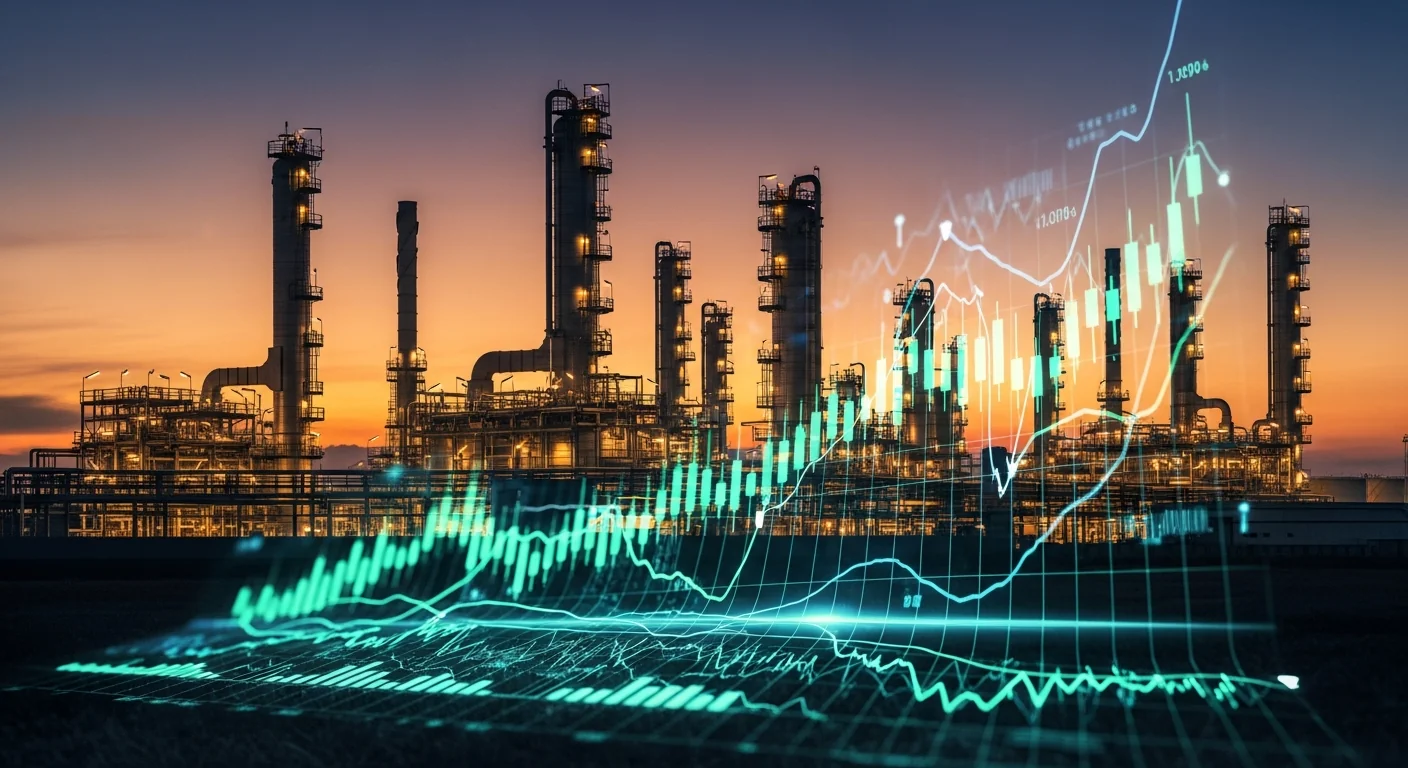

Geopolitical risk in the Middle East has hit a fever pitch following US-Israeli airstrikes on Iran. With international oil prices soaring, the Korean stock market, heavily dependent on energy imports, is now squarely on the hot seat.
Soaring Oil and the Global Economy
Iran, boasting the world’s third-largest oil reserves, pumps out 4.19 million barrels per day—a significant 3.5% of global production. Any attack on its energy infrastructure would inevitably disrupt this supply. Compounding the issue, the strikes escalate tension around the Strait of Hormuz, a vital chokepoint for 20-30% of the world’s seaborne oil, threatening to cripple the global supply chain.
The market’s reaction was swift and severe. Brent crude futures shot up 13% to breach $82 a barrel, a 14-month high. This surge presents a major headache for the U.S. Federal Reserve, as analyses show that every $10 increase in the price of oil can drive inflation up by 0.3 to 0.4 percentage points, placing significant pressure on its plans for interest rate cuts.
Impact on the Korean Economy
For an economy like South Korea’s, which imports all of its crude oil, a price spike is a direct blow. Still, market participants do not yet appear to be pricing in a worst-case scenario of all-out war.
- Stock Market: Heightened geopolitical risk is a classic recipe for investor anxiety, weighing heavily on the domestic stock market. We’ve seen the flip side, however: the KOSPI has rallied sharply on past news of potential truces between Israel and Iran.
- Currency: The combination of a higher import bill from expensive oil and a flight to the safe-haven US dollar is set to intensify upward pressure on the won-dollar exchange rate.
- Inflation: Higher oil prices will inevitably feed into domestic consumer prices after a time lag. Industries with high energy dependency, such as transportation and petrochemicals, will bear the brunt of the impact.
Technical Analysis and Strategic Insight
While a short-term shock is unavoidable, the KOSPI has historically shown remarkable resilience to external variables. For investors, now is the time to brace for volatility and prioritize risk management.
Conclusion: This attack is more than a short-term oil shock; it’s a catalyst amplifying global economic uncertainty. While the direct impact on the Korean market may be limited, the government must intensify its market monitoring and prepare preemptive measures. Investors should proceed with caution, but this volatile environment could also present opportunities in sectors with clear growth potential, such as AI and semiconductors.
[References and Sources]
- ycharts.com
- jpmorgan.com
- aljazeera.com
참고문헌
- >vertexaisearch.cloud.google.com – chosun.com
>vertexaisearch.cloud.google.com – voakorea.com
>vertexaisearch.cloud.google.com – hankyung.com
References & Sources
