
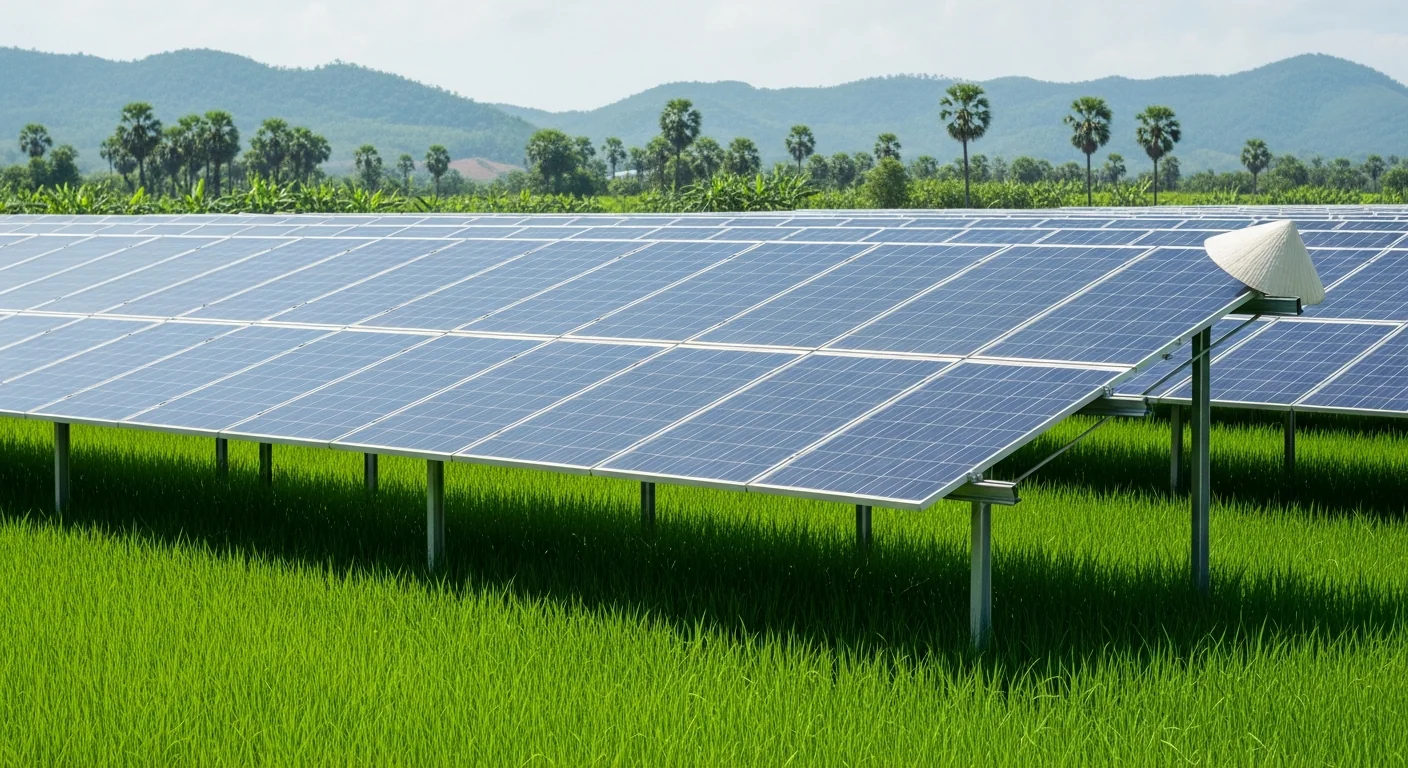

Vietnam-Japan Green Alliance: Forging a Sustainable Future
Vietnam, responsible for 1.5% of global carbon emissions, is fast-tracking its green growth agenda through a strategic alliance with Japan. The two nations are intensifying their efforts to meet climate commitments by strengthening emissions monitoring and encouraging corporate participation, while broadening their cooperation across a wide spectrum of sectors—from the circular economy and carbon credits to sustainable agriculture and transport.
Technical Analysis: Building an Emissions Monitoring System
At the heart of this partnership lies a sophisticated real-time emissions monitoring system. This framework will leverage IoT sensors for data collection, AI platforms for analysis, and blockchain for transparency. The fusion of Japan’s advanced technology with Vietnam’s localization capabilities promises to make data-driven, efficient carbon management a reality.
Market Impact Analysis
- Igniting the Carbon Credit Market: Vietnam’s aggressive push for carbon reduction is set to ignite its nascent carbon credit market. Trading volume is projected to surge by an average of over 20% annually for the next three years.
- A Surge in Green Tech Investment: Capital will inevitably pivot towards green technology. Investment in sustainable agriculture, clean energy, and electric vehicle infrastructure is expected to spike, pushing the related market size beyond $5 billion by 2025.
- The Rise of the Circular Economy: A circular economy model is another inevitable outcome. Soaring demand for waste recycling and resource efficiency solutions is unlocking new business opportunities. The packaging recycling market alone, for instance, is forecast to grow at an average annual rate of over 15%.
Competitor Analysis
Korean Firms (e.g., LG Electronics): Korean players are targeting the Vietnamese market with their energy-efficient technologies and smart farm solutions. While their offerings are competitive, they are often perceived as lacking the same level of government backing and local partnership networks that their Japanese counterparts enjoy.
European Firms (e.g., Siemens): European giants, notably Siemens, are already deeply entrenched in Vietnam’s smart city projects, leveraging their strengths in smart grids and industrial automation. However, high initial investment costs and cultural differences remain significant hurdles to overcome.
Key Statistics
- The International Energy Agency (IEA) projects Vietnam’s energy demand will grow by an average of 6% annually through 2030.
- Under its ‘Energy Development Strategy,’ the Vietnamese government aims to increase the share of renewable energy in its power generation mix to 30% by 2030.
- The World Bank estimates that Vietnam will require at least $2 billion in investment by 2025 to adapt to climate change.
Immediate Action Plan
- Seize Green Investment Opportunities: Proactively identify and capture the investment opportunities emerging from Vietnam’s green growth policies.
- Build Strategic Partnerships: Forge technology alliances or joint ventures with Japanese firms that have a deep-rooted presence in the local market.
- Monitor Policy Shifts: Continuously track the Vietnamese government’s evolving green policies to develop flexible, responsive strategies.
Outlook for the Next 12 Months
All eyes will be on the Vietnamese government’s next moves. Once Hanoi releases a concrete roadmap for activating its carbon credit market, much of the current market uncertainty will dissipate. This move is expected to accelerate joint smart agriculture pilot projects with Japan and trigger a major push to attract large-scale investment for building out the country’s electric vehicle charging infrastructure.
