
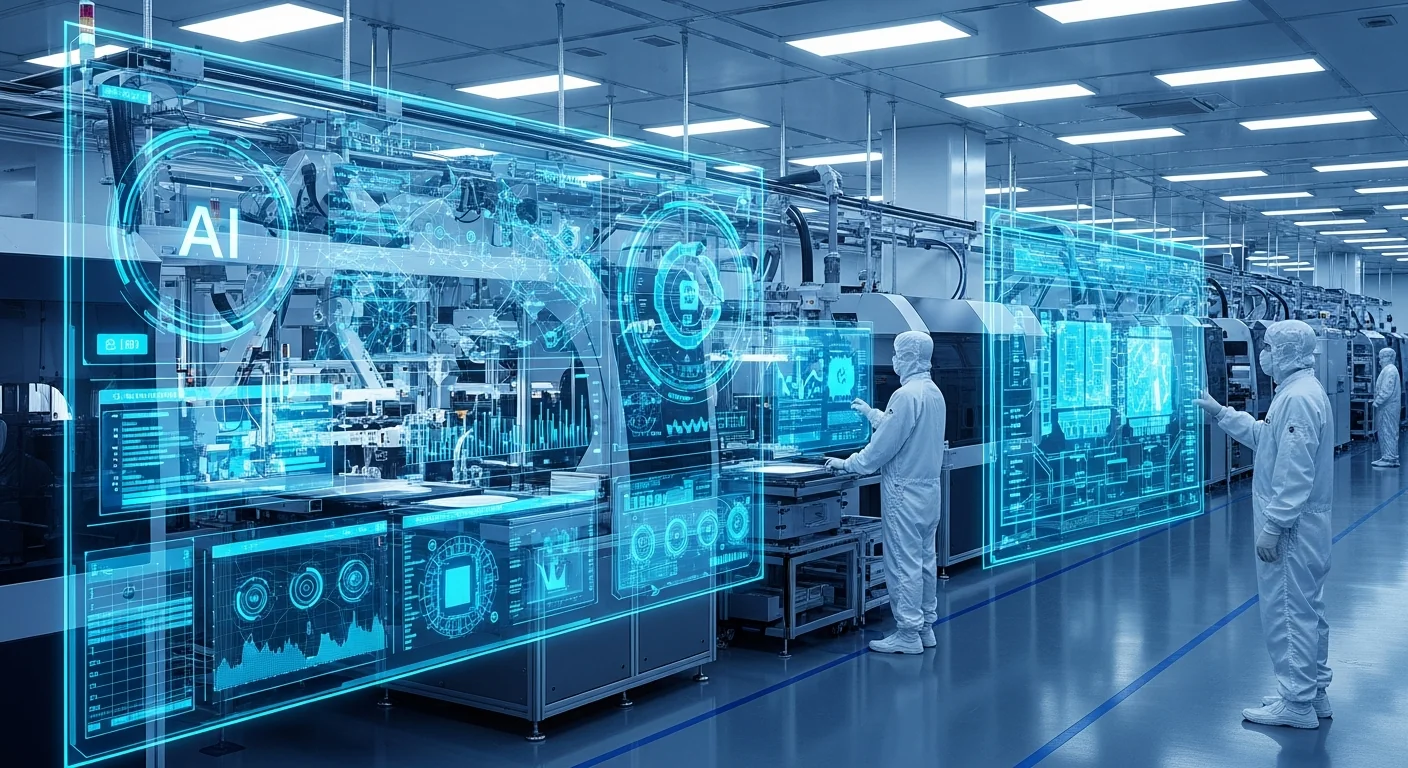

SK hynix’s Big Bet: An AI-Powered Autonomous Fab by 2027
A staggering 90% of all data generated in semiconductor manufacturing goes to waste. SK hynix sees this not as a problem, but as its next big opportunity.
Deep Dive Analysis
With a 2027 completion date, SK hynix’s planned ‘autonomous fab’ represents a groundbreaking push to automate the entire production line using artificial intelligence. The core of this strategy involves an AI system that learns and digitizes the expertise of seasoned engineers. This creates a dynamic database capable of predicting process anomalies and enabling immediate corrective action, offering a decisive solution to the industry’s persistent challenges of skilled labor shortages and an aging workforce.
How It Works Technologically
Inside the fab, AI will continuously analyze a torrent of real-time data from every piece of equipment to maximize efficiency. Machine learning algorithms are set to rapidly absorb and replicate the decision-making patterns of veteran engineers. By catching even the most subtle signs of deviation and automatically adjusting processes, a dramatic reduction in defect rates is not just a goal—it’s an inevitable outcome.
Market Impact
- Productivity Surge: The autonomous fab is projected to boost overall productivity by as much as 30%. This leap forward stems from AI-driven process optimization, which simultaneously increases wafer output and slashes costs.
- Drastic Defect Reduction: A real-time anomaly detection and auto-correction system will cut defect rates by over 15%. This isn’t just a quality improvement; it’s the foundation for producing consistently high-grade semiconductors and cementing customer trust.
- Lower Operating Costs: By eliminating human error and optimizing energy consumption, automated process management will deliver operating cost savings of more than 10%. This move is set to fundamentally elevate SK hynix’s cost competitiveness.
The Competitive Landscape
Rivals appear to be a step behind. While Samsung Electronics is ramping up its AI automation investments, it has yet to announce a comprehensive autonomous fab roadmap on par with SK hynix’s vision. TSMC, meanwhile, remains focused on data-driven smart factories that still require significant human oversight. This gap in strategy is precisely where SK hynix plans to forge a decisive technological lead.
By the Numbers
- McKinsey research indicates AI-based automation can enhance semiconductor industry productivity by up to 20%.
- Gartner projects global semiconductor revenue will hit $595 billion in 2024.
- According to SEMI, semiconductor equipment investment was on track to surpass $100 billion in 2023.
An Actionable Guide
For competitors and partners, SK hynix’s aggressive timeline demands a strategic response:
- Overhaul Data Strategy: The immediate priority must be to upgrade data collection and analysis systems—the very foundation of AI automation.
- Secure Critical AI Talent: Cultivating a team of AI and machine learning specialists is non-negotiable for anyone hoping to lead in process automation and optimization.
- Forge an Open Ecosystem: To accelerate adoption, companies must actively pursue technical collaborations with external AI solution providers.
Future Outlook
Over the next year, expect to see SK hynix accelerate its AI algorithm development and begin pilot testing in earnest. The company will also move to solidify its technological base by deepening partnerships with key equipment suppliers. This bold initiative will undoubtedly force rivals to re-evaluate their own AI investment strategies, potentially triggering a new wave of automation across the industry.
