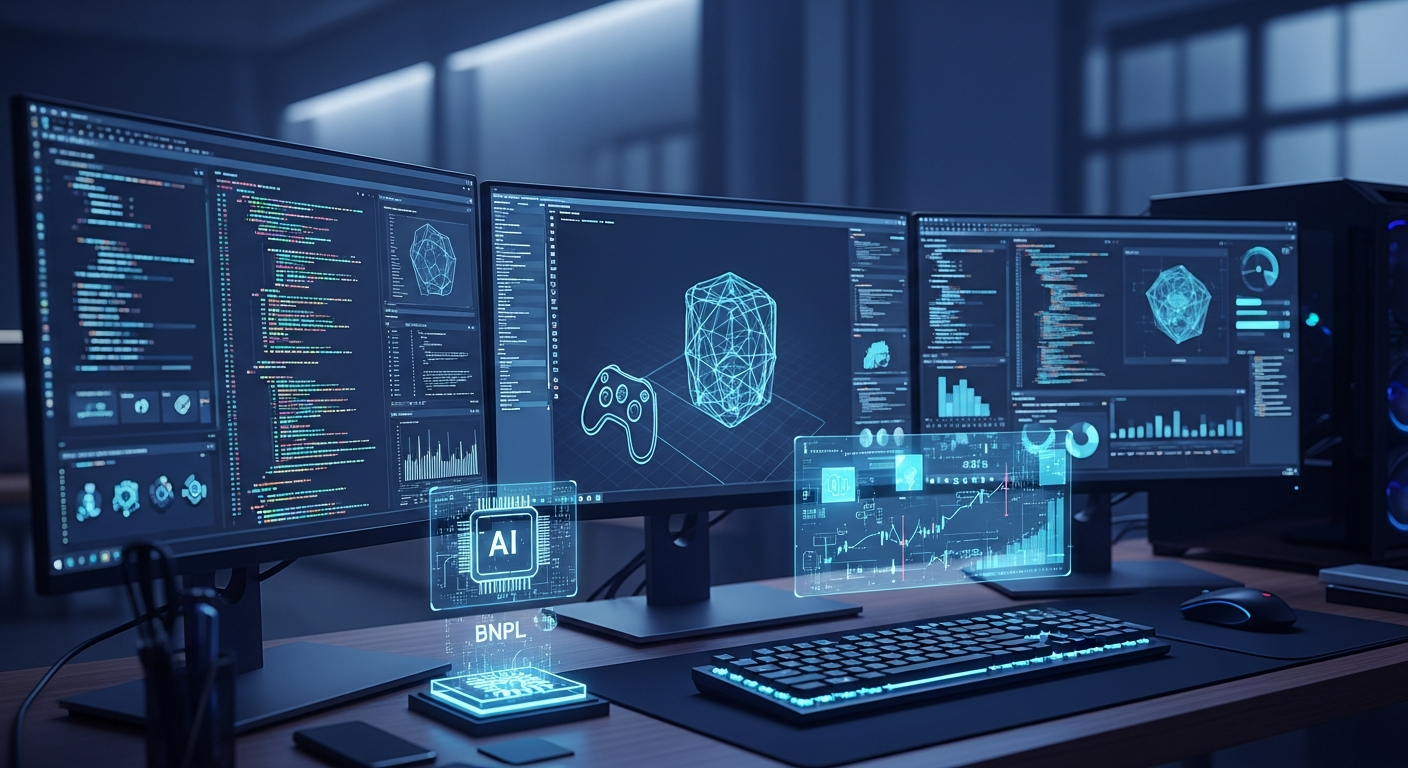

The game development landscape is set for a seismic shift by 2026, driven by the dual forces of AI and ‘Buy Now, Pay Later’ (BNPL). This isn’t a distant future; 87% of developers are already leveraging AI to slash costs, fundamentally changing how games are made and sold.
From project management to asset creation and coding, AI is becoming indispensable for game studios. Sophisticated tools now generate 3D models, textures, and animations from simple text prompts or images, dramatically compressing development timelines. NVIDIA’s RTX Mega Geometry, for instance, boosts ray tracing in complex scenes, empowering teams to craft more immersive worlds. On the coding front, AI assistants are boosting productivity by handling code generation, modifications, and bug detection. Even workflow management is getting an upgrade, with AI streamlining issue tracking and automating tasks for tighter team coordination.
For players, the financial barrier to entry is falling thanks to ‘Buy Now, Pay Later’ models. These schemes allow gamers to split or defer payments on new titles, DLCs, and subscriptions, softening the immediate financial impact. The partnership between G2A.COM and Klarna is a prime example of this trend fueling digital sales. The market’s potential is enormous: projections show it hitting $625-640 billion in 2026 and surging towards $912 billion by 2030.
The synergy is clear: AI is revolutionizing production by boosting efficiency and cutting costs, while BNPL is expanding the consumer base on the distribution side. Studios that master these twin pillars won’t just compete; they will define the next generation of gaming experiences and dominate the market.
[References & Sources]
- readthejoe.com
- techspot.com
- artemisiacollege.com
참고문헌