
Nexon’s AI Gambit: The Secret to a 30% Efficiency Surge
Nexon just boosted its game development efficiency by a staggering 30%. The secret wasn’t a breakthrough in pure research, but a relentless focus on practical, real-world application.
AI Is Reshaping the Gaming Landscape
By 2026, AI solutions are projected to slash game development costs by 20%. Artificial intelligence is no longer a novelty; it’s a core engine shaking up the entire industry, from initial development and marketing to the end-user experience.
A Deep Dive into the Technology
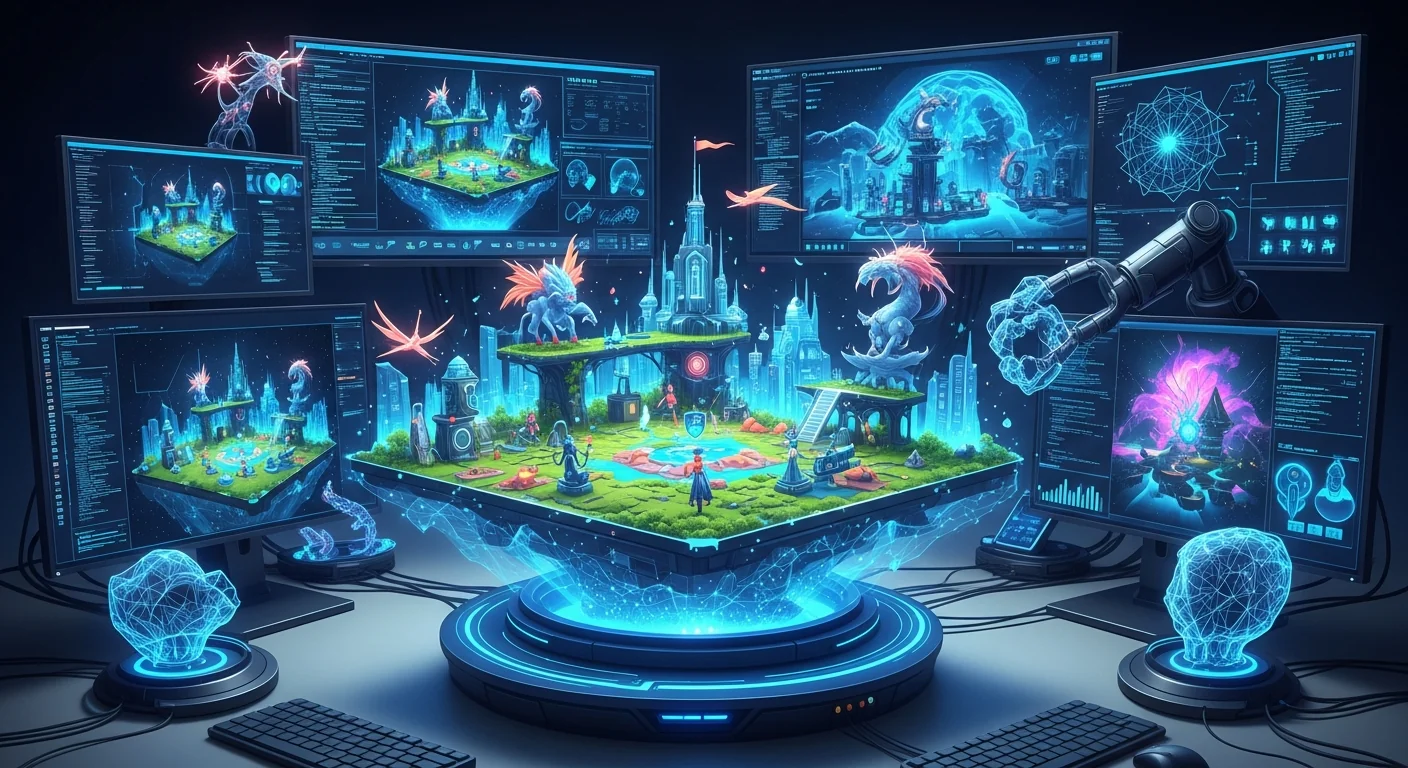
Specifically, AI is making deep inroads in procedural content generation (PCG), intelligent NPC behavior modeling, and automated game testing. Generative Adversarial Networks (GANs) now auto-generate assets and level designs, cutting development time and freeing up human developers to focus on purely creative tasks. Meanwhile, NPCs trained via reinforcement learning adapt to player actions in real-time, dramatically deepening game immersion.
Market Impact and Hard Numbers
- Increased Development Efficiency: AI-powered tools are cutting game development time and costs by an average of 30%. For resource-intensive projects like large-scale multiplayer games, AI’s role has become indispensable.
- Personalized Gaming Experiences: By analyzing player styles and preferences, AI delivers tailored content and difficulty, boosting player retention by an impressive 20%.
- Maximized Marketing ROI: Precision targeting of potential customers and optimizing marketing campaigns have driven a 15% increase in ad revenue. Around-the-clock support from AI chatbots directly translates to higher customer satisfaction.
The numbers back this up. A Game Developers Conference survey revealed that 70% of studios using AI reported significant productivity gains. Newzoo’s analysis found that AI-driven personalization systems lifted in-game purchase conversion rates by 10%, while MarketsandMarkets predicts the AI-powered gaming market will swell to $12 billion by 2025.
Competitor Analysis
Unity Technologies: The company is going all-in on automating the development process. AI tools like Unity Muse are front and center, designed to lighten the load of code generation and asset creation for developers.
Epic Games: Unreal Engine now integrates powerful AI features to support the creation of hyper-realistic environments. Its MetaHuman Creator, in particular, is a game-changer, enabling the generation of high-fidelity characters in mere minutes.
Three Imperatives for Right Now
- Establish a dedicated AI unit: The first step is to build internal expertise. This requires a specialized team that can integrate AI across both game development and marketing functions.
- Aggressively adopt and validate AI tools: Integrate AI tools directly into existing pipelines. Their effectiveness must be measured against clear metrics to identify and scale the most impactful solutions.
- Build a robust data infrastructure: Sophisticated personalization runs on data. A system for systematically collecting and analyzing player data is no longer optional—it’s an urgent necessity.
The Next 12 Months
Nexon’s 30% efficiency gain is a clear victory for its ‘pragmatic AI’ strategy. This approach, which prioritizes solving immediate challenges over pursuing pure research, has paid off handsomely. Looking ahead, AI-generated content will only grow more sophisticated over the next year and into 2027. We expect ‘live balancing,’ where games adjust difficulty in real-time based on player behavior, to become the norm. In marketing, hyper-personalized advertising will emerge as the key weapon for maximizing ROI.
