

Nuclear Power’s Digital Shift Begins with Data
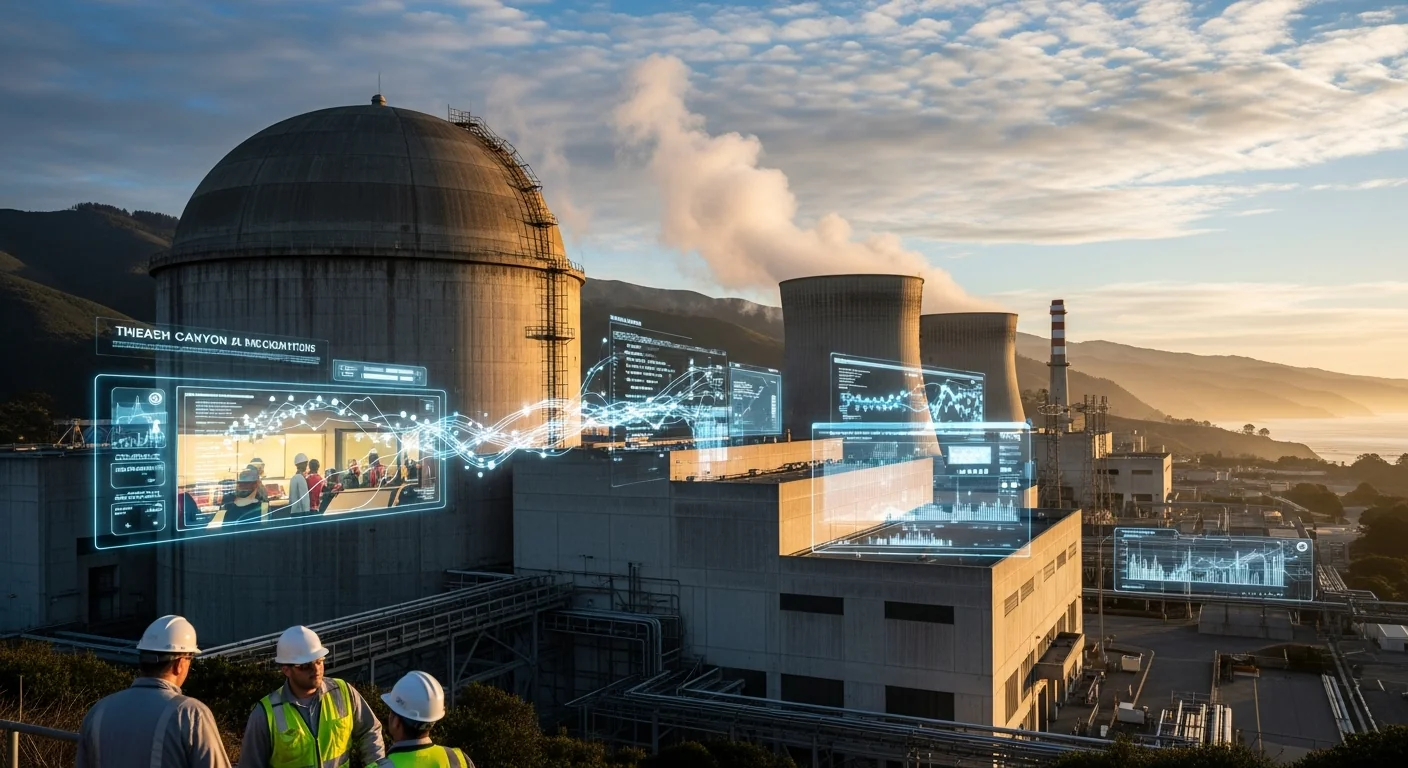
In a major technological first for the heavily regulated U.S. nuclear sector, an on-site generative AI tool has been commercially deployed at California’s Diablo Canyon plant. Partnering with AI startup Atomic Canyon, the plant is now streamlining its colossal documentation process with a tool named Neutron. The results are immediate and dramatic. An investigation into a safety valve issue, which previously required a staggering 180 days of document retrieval and preparation, was completed in just 40. This isn’t just an efficiency gain; it’s a new paradigm for tackling the nuclear industry’s chronic bottlenecks: paperwork and regulatory compliance.
Technical Breakdown: A Purpose-Built Nuclear AI
What makes the Neutron AI so effective is its deliberate design to overcome the limitations of general-purpose large language models. Atomic Canyon trained its proprietary models on a highly specialized dataset: 53 million pages of public documents from the U.S. Nuclear Regulatory Commission (NRC). This intensive training, powered by the Frontier supercomputer at the Department of Energy’s Oak Ridge National Laboratory, taught the AI the industry’s complex technical lexicon and minimized the risk of fabricated “hallucinations.” Running on-premise on NVIDIA H100 servers, the system can now parse Diablo Canyon’s 2 billion pages of internal records, converting many from archaic formats like microfiche. This allows engineers to move beyond clumsy keyword searches to conduct sophisticated semantic queries, unearthing critical procedures, past engineering changes, and regulatory requirements in seconds, not days.
Market Implications: Boosting Efficiency, Accelerating Future Builds
The implications of Diablo Canyon’s success ripple across the entire nuclear energy industry. A typical plant operating for over 40 years can accumulate billions of pages of engineering and regulatory records. AI tools like Neutron promise to eliminate thousands of man-hours spent on document retrieval, freeing up highly skilled workers to focus on high-value analysis. The benefits also extend to future projects. PG&E vice president Maureen Zawalick noted that such a tool could prove invaluable for the regulatory filings and construction of new facilities. By compressing timelines for complex licensing and permitting, AI becomes a critical enabler for reducing the cost and construction time of next-generation Small Modular Reactors (SMRs). A clear virtuous cycle is emerging: the nuclear industry powers the explosive growth of AI data centers, and AI, in turn, drives radical efficiency within the nuclear sector itself.
Actionable Conclusion: Watch the Pivot to Data-Centric Operations
This is not just another software adoption. For investors and industry leaders, this is the starting gun for the nuclear industry’s pivot to a data-centric operational model. The key trend to watch is the expansion of AI from simple document retrieval to more complex applications like predictive maintenance, real-time performance optimization, and even automated engineering design. Atomic Canyon is already in discussions with other nuclear facilities and SMR developers, while competition heats up with tech giants like Microsoft also developing solutions. Ultimately, the future competitiveness of any nuclear operator will hinge on its ability to integrate AI—safely and effectively—to slash costs, boost plant performance, and de-risk new construction projects.
References & Sources
참고문헌
