

Google’s Genie: A Single Line of Text to Build a New Reality?
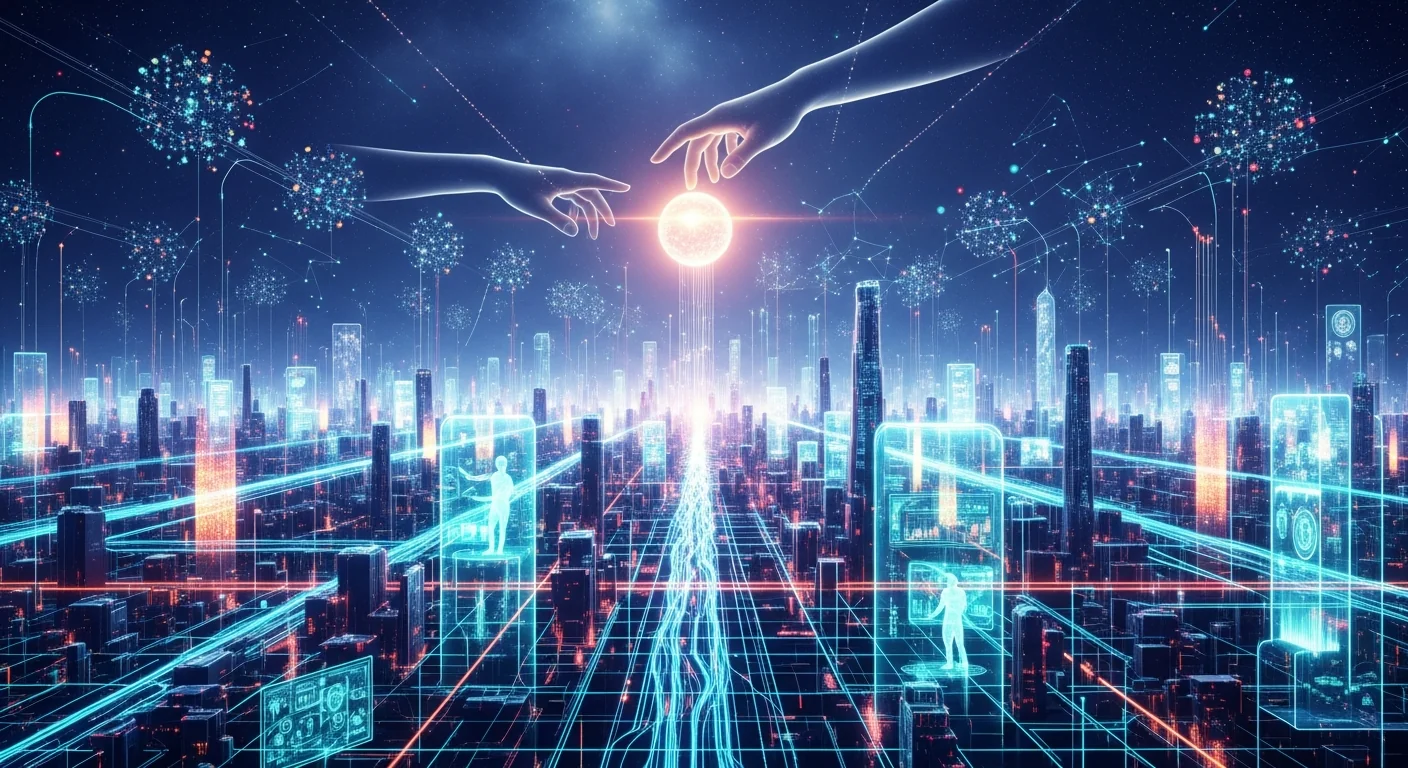
A single line of text is now all it takes to generate an entire simulated world. Google’s next-generation AI model, Genie, has arrived, moving far beyond simple image generation. This is a true game-changer, promising fully interactive environments that users can directly engage with.
How Genie Works: Mastering Latent Space
At its core, Genie operates on a ‘latent space’—an abstract world model built from training on a massive corpus of internet videos. Users control this model with simple text prompts, instantly bringing their imagination to life. For instance, a prompt like “a small house on a hill with a green meadow” doesn’t just create a static image; it generates a playable world where a user can immediately control a character and begin exploring.
Genie’s Potential Impact and Applications
The ripple effects of this technology are poised to disrupt industries across the board, from game development to education and entertainment. For game developers, the innovation is transformative: they can now go from an idea sketch to a playable prototype in mere moments. In the classroom, Genie unlocks the potential for deeply immersive learning experiences that amplify student creativity. Meanwhile, the entertainment sector will see the rise of entirely new content formats driven by user-generated narratives.
The Ethical Hurdles and Urgent Challenges
Such powerful technology, however, carries commensurate responsibility. The potential for misuse—specifically the mass production of fake news and deepfakes by malicious actors—is a significant concern. As the line between reality and virtuality blurs, the risk of social disruption becomes an unavoidable challenge. Addressing this requires establishing strict ethical guidelines and embedding technical safeguards from the earliest stages of development. Practical solutions, such as watermarking all generated content to aid discernment, must be a top priority.
