
The High Cost of Inaction: Ignoring Data Could Cost 20% of Revenue
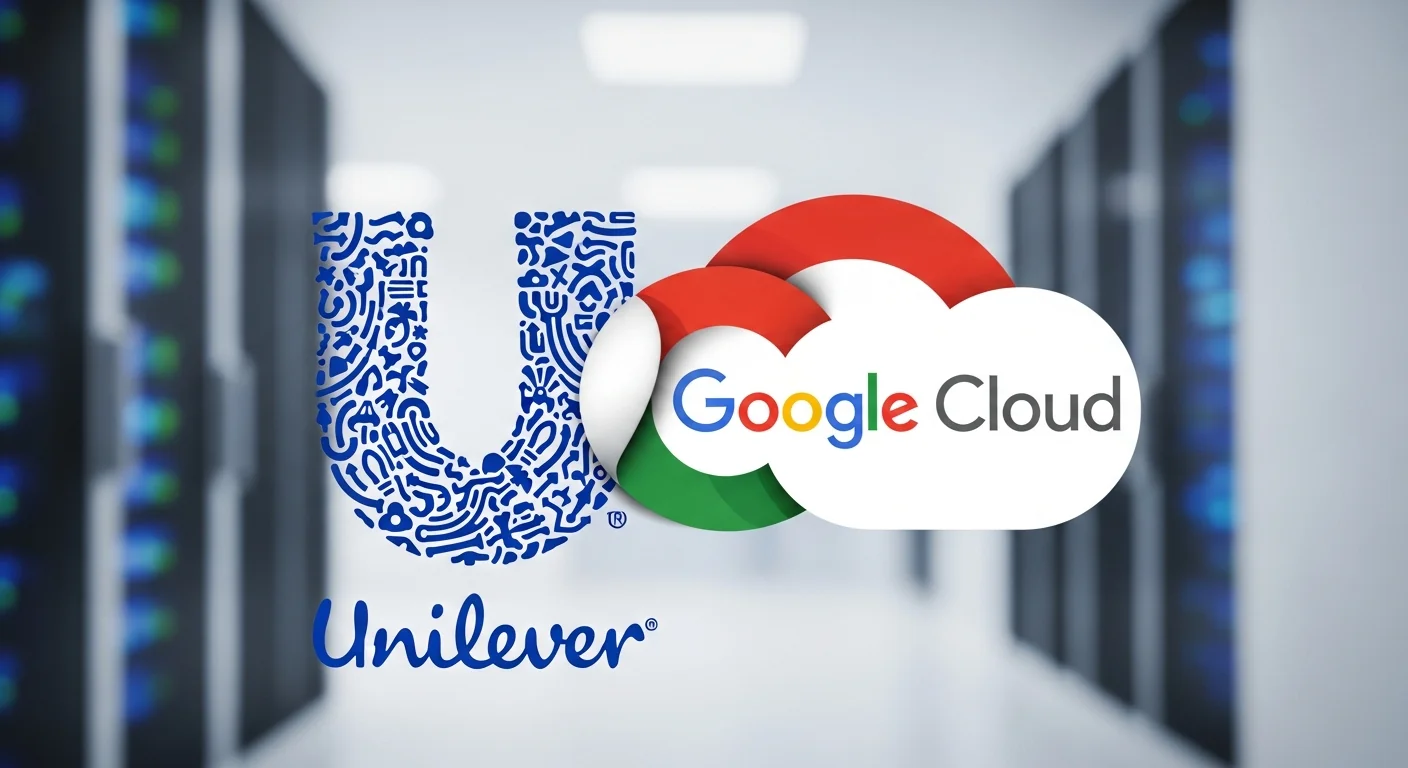
Unilever has just forged a five-year alliance with Google Cloud. This isn’t just about adopting new technology; it’s a fundamental move to embed Google’s AI and data platforms directly into Unilever’s business DNA. The objective is crystal clear: maximize efficiency, revolutionize the consumer experience, and drive significant revenue growth.
A Deeper Dive into the Technology
At its core, the partnership allows Unilever to leverage Google Cloud’s AI and machine learning to perform deep analysis on a massive scale—from consumer behavior and market trends to supply chain logistics. These insights won’t sit in a report; they will be immediately applied across the entire value chain, from product development to marketing and supply chain optimization. Google’s Vertex AI platform, in particular, will serve as a powerful engine, enabling Unilever’s data scientists to build and deploy AI models with unprecedented speed.
Three Key Market Impacts (The Numbers)
- Hyper-Personalized Marketing: AI-driven analytics will precisely target individual consumer preferences, boosting ad campaign efficiency by an estimated 15%.
- Supply Chain Optimization: Beyond simply improving demand forecasting, this move is set to cut inventory management costs by 10% and shorten product launch timelines, sharpening Unilever’s competitive edge.
- Revolutionized Product Development: Analyzing vast consumer datasets will become the new engine for creating blockbuster products, potentially increasing market launch success rates by over 20%.
Competitive Analysis: P&G and Nestle
Rivals are already making moves, but they fall short. While P&G analyzes consumer data on its proprietary platform, it simply can’t match the sophisticated AI capabilities of Google Cloud. Nestle, for its part, is pursuing digital transformation through various IT partnerships, yet it lacks the kind of comprehensive, integrated AI strategy that Unilever is now deploying across its entire business. This partnership isn’t just an upgrade—it’s a decisive move that positions Unilever to dominate its competitors.
Three Key Statistics from Trusted Sources
- A McKinsey report found that companies adopting AI experience an average revenue increase of 12%.
- Global research firm Gartner forecasts that by 2025, AI will enhance the customer experience by 25%.
- A PwC survey is even more direct: a staggering 72% of businesses identify AI as the core component for securing a competitive advantage.
The Immediate Three-Step Playbook
- Bolster Data Analytics Capabilities: The first priority is to build in-house expertise by hiring data scientists and upskilling the existing workforce. This is non-negotiable.
- Evaluate AI-Powered Solutions: Carefully assess a range of AI solutions, including Google Cloud, against specific business objectives to select the optimal toolset.
- Cultivate a Company-Wide AI Culture: Finally, AI cannot remain siloed in one department. It’s crucial to embed a culture of data-driven decision-making across the entire organization.
