
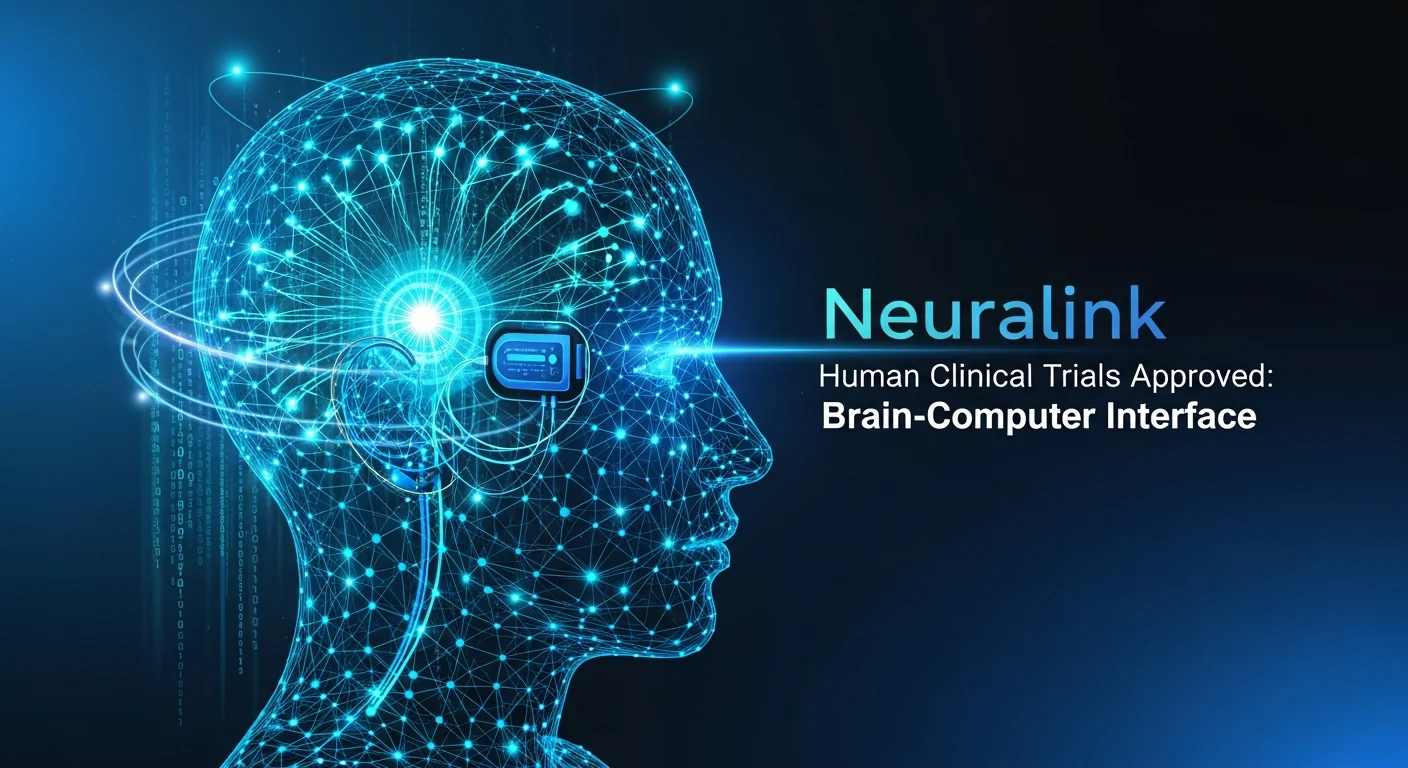

On October 26, 2023, Elon Musk’s Neuralink secured the FDA approval it had long sought for human clinical trials. This decision catapults brain-computer interface (BCI) technology from the realm of science fiction into tangible reality. While the approval marks a historic turning point for neuroscience, it also forces a confrontation with the profound social and ethical responsibilities that accompany such power.
1. What is Neuralink?
At the heart of Neuralink’s technology lies a brain implant no larger than a coin. Once surgically inserted, this device can not only read neural signals to control external devices but also write signals back, directly influencing brain activity. The potential applications are staggering, ranging from treating neurological disorders and restoring function to paralyzed patients to enhancing cognitive abilities in the healthy. The system is brought to life by connecting thousands of micro-electrodes directly to neurons, a procedure performed with robotic precision to minimize brain damage.
2. FDA Approval and Clinical Trial Plans
This FDA green light is far more than a bureaucratic milestone. It represents an official acknowledgment of the technology’s potential safety and efficacy, effectively clearing the path for its application in human patients. The first trials will focus on individuals with quadriplegia or amyotrophic lateral sclerosis (ALS). The plan is methodical, beginning with verification of the chip’s biosafety before moving to functional tests, such as controlling a computer cursor or a smartphone with thought alone.
3. Technical Challenges and Potential Risks
Beneath the veneer of a revolutionary future lie formidable technical hurdles. Immediate challenges include the inherent risks of the surgery itself and ensuring the long-term biocompatibility of the implant. The possibility of immune rejection or brain damage during insertion cannot be discounted. Furthermore, practical issues like battery life, secure wireless data transmission, and the precision of neural signal processing remain unsolved. The most profound limitation, however, is our incomplete understanding of neuroplasticity. We simply do not know enough about how the brain adapts over time to accurately predict the long-term effects of an implanted chip.
4. Ethical Issues and Social Impact
Commercializing BCI technology threatens to ignite severe social inequality. If the high cost of the procedure makes it exclusive to the wealthy, economic status will directly translate into a chasm of physical and cognitive abilities. The privacy implications are even more alarming. Once neural signals are transmitted externally, an individual’s most private thoughts and emotions become data points ripe for collection, surveillance, and exploitation. Hacking presents a nightmarish threat, where scenarios of forced actions or manipulated memories are no longer confined to fiction.
Beyond these concerns lies a fundamental challenge to human autonomy and identity. When technology can read and write neural signals, what becomes of ‘free will’? While the noble goal is to restore autonomy to paralyzed patients, we must confront the cold reality that the very same technology could become a tool for oppression.
5. Future Outlook and Possibilities
Still, the positive potential is immense. In the near term, Neuralink could radically improve the lives of patients with Parkinson’s, Alzheimer’s, and stroke, while giving back communication and independence to those with paralysis. The next frontier could be cognitive enhancement for the general population, boosting memory and concentration. As this technology accelerates, the boundary between human and machine will inevitably blur, forcing us into an era where we must answer the fundamental question: ‘What does it mean to be human?’
Conclusion
Neuralink’s FDA approval is undeniably a landmark moment for neuroengineering. Yet, technological advancement does not automatically equate to human progress. What’s urgently required is a regulatory framework—both legal and ethical—that can keep pace with development, backed by rigorous safety evaluations. A societal consensus must be forged around three core principles: the privacy of neural data, equitable access to the technology, and the preservation of human autonomy. The challenge of our time is to harness the blessings of this technology for all of humanity without sacrificing our dignity.
