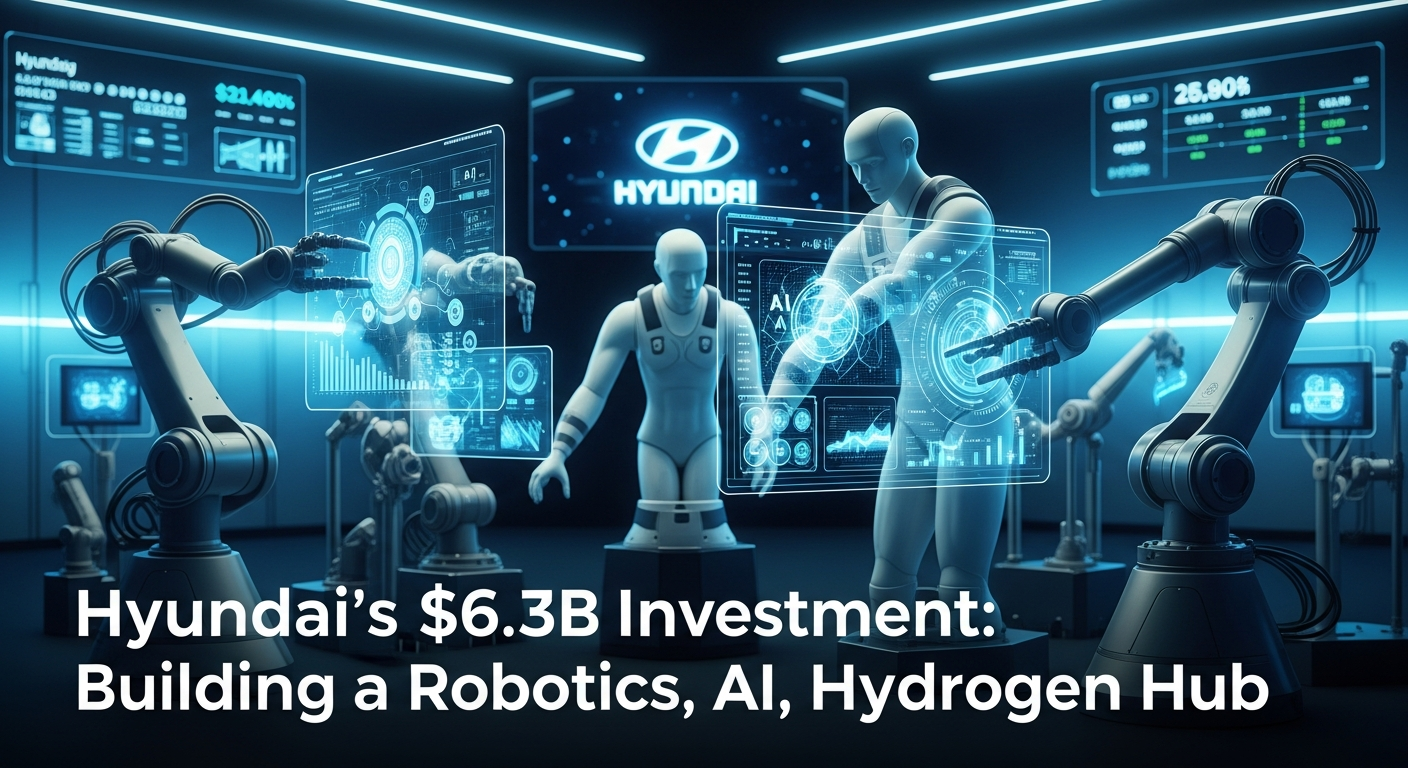

South Korea already boasts the world’s highest robot density, a position Hyundai Motor Group now intends to cement. The conglomerate is pouring 9 trillion KRW ($6.3 billion USD) into the Saemangeum region starting in 2026, a massive bet on the intertwined futures of robotics, AI, and hydrogen energy designed to ignite regional growth and forge a comprehensive hydrogen ecosystem.
This 9 trillion KRW commitment is a cornerstone of Hyundai’s much larger 125.2 trillion KRW domestic investment plan running through 2030. The choice of Saemangeum was no accident. The region offers a powerful combination of abundant renewable energy sources and superior logistics, including critical port, rail, and airport infrastructure. Hyundai will leverage these assets to construct its AI data center, a robotics cluster, and vital hydrogen production facilities.
A breakdown of the investment reveals a sharp focus. The lion’s share, 5.8 trillion KRW, will fund a massive AI data center, while 400 billion KRW is allocated for robotics manufacturing and parts production. The green energy component is equally ambitious: 1 trillion KRW is dedicated to a 200MW water electrolysis plant, which will be powered by a 1.3 trillion KRW gigawatt-scale solar farm. This solar installation will also supply the data center—a critical hub equipped with 50,000 NVIDIA GPUs, engineered to process the immense data streams from Hyundai’s future fleet of self-driving cars, robots, and smart factories.
Ultimately, Hyundai is architecting its vision for next-generation cities. This project is a blueprint for integrating AI-driven autonomous vehicles, robotic logistics, and smart safety systems within a framework of hydrogen-fueled urban sustainability. The production targets are aggressive, with the robotics facility expected to scale to 30,000 units annually by 2029. The timeline is just as ambitious: construction on the AI data center and solar farm kicks off in 2027, with a target completion date of 2029.
For the Korean economy, the implications are significant. The Saemangeum hub is projected to generate 16 trillion KRW in economic activity and create 71,000 jobs, delivering a much-needed stimulus to the region and fostering more balanced national development. To accelerate this vision, the government is providing crucial support through deregulation and by fast-tracking administrative approvals.
This Saemangeum project represents a powerful alignment of Hyundai’s corporate strategy with South Korea’s national priorities. It’s a decisive move that not only aims to transform a region but also solidifies the nation’s standing as a global technology powerhouse.
[References & Sources]
- trade.gov
- wikipedia.org
- saurenergy.com
참고문헌
- >vertexaisearch.cloud.google.com – kedglobal.com
>vertexaisearch.cloud.google.com – evrimagaci.org
References & Sources