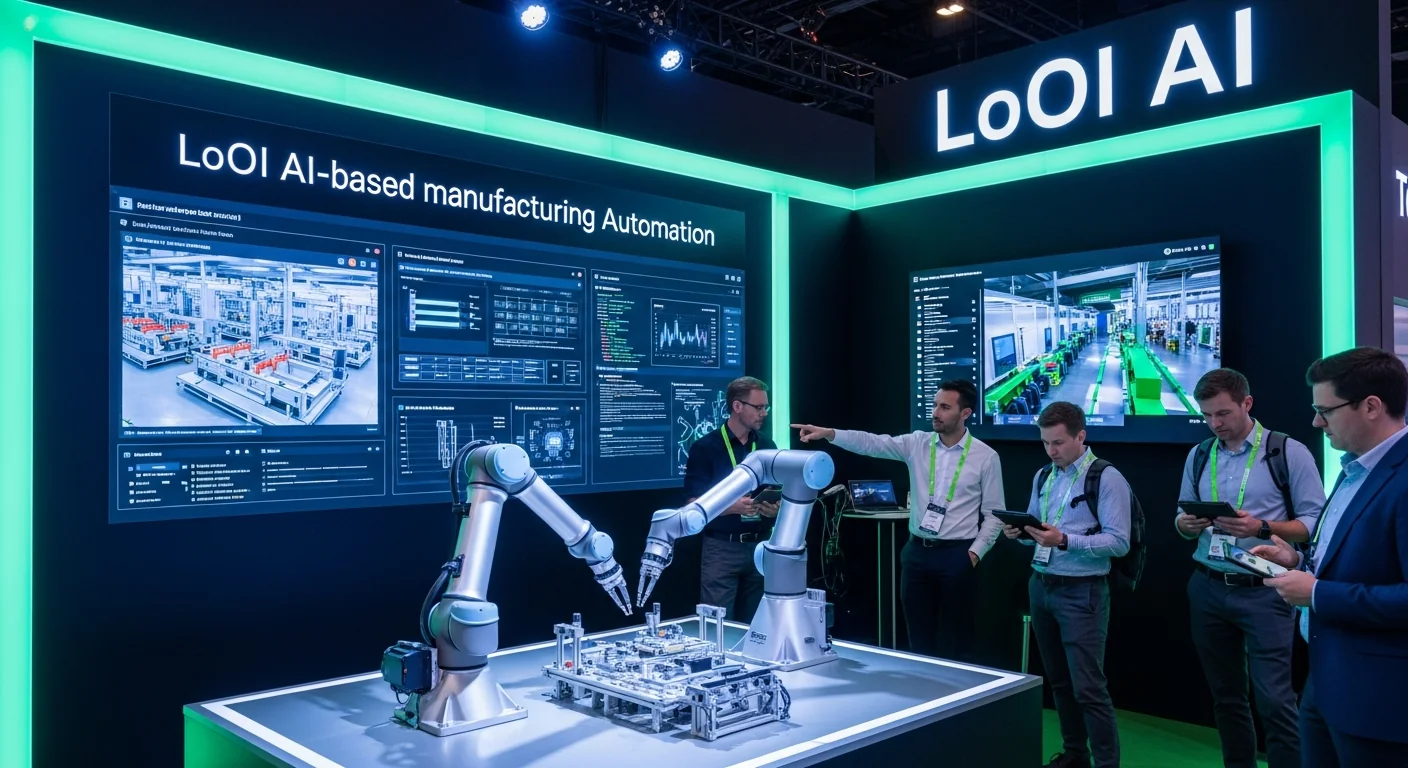

While a staggering 98% of manufacturers are testing AI-driven automation, a mere 20% are prepared for a full-scale rollout, according to industry reports. Stepping directly into this execution gap is LoOI, which showcased its advanced AI manufacturing technology at NVIDIA GTC 2026. Through key partnerships with Hyundai Motor and Kia, LoOI is already slashing engineering time and boosting production line efficiency.
Technical and Market Analysis
To streamline manufacturing, engineering, and design, LoOI leverages NVIDIA’s powerful CUDA-X and GPU toolset. At the core of its system is the Physical AI Data Factory Blueprint, which processes a constant flow of real-world and simulated data for more precise gathering, processing, and evaluation. This technological shift is one NVIDIA is championing across the industry, evidenced by its collaborations with giants like FANUC, HD Hyundai, and Mercedes-Benz.
Strategic Insight
NVIDIA CEO Jensen Huang’s recent declaration was stark: “The dawn of a new industrial revolution has arrived, where physical AI and autonomous AI agents are fundamentally reinventing how the world designs, engineers, and manufactures”. LoOI’s work is the embodiment of this vision. In live factory environments, Hyundai and Kia are providing concrete proof of concept, demonstrating the real-world impact. This partnership extends beyond the factory floor, as both automakers now build their autonomous driving technology on NVIDIA’s DRIVE Hyperion platform, effectively merging software-defined vehicles with a powerful AI backbone.
Data and Evidence
The market opportunity is massive. ABI Research projects digital spending in manufacturing to hit $224.7 billion by 2026, a 13.8% annual increase, with the automotive sector leading the charge at $87.3 billion. Yet, data from Redwood Software highlights a critical implementation gap: while 98% of companies are exploring AI automation, only 20% are truly equipped to scale it. This inefficiency is glaring in areas like production scheduling, where a mere 49% of companies have implemented automation—a prime target for significant AI-driven gains.
Actionable Conclusion
The collaboration between LoOI, Hyundai, and Kia offers a clear takeaway: the right AI technology directly translates to fewer engineering hours and higher factory output. For manufacturers, adopting these advanced systems is no longer optional; it’s essential for gaining a competitive edge and outpacing rivals. However, bridging the gap from pilot to full-scale production requires surmounting significant hurdles, including ensuring data quality, overcoming integration challenges, managing exceptions, addressing the skilled labor shortage, and establishing robust governance frameworks.
[References & Sources]
- phantasma.global
- prnewswire.com
- redwood.com
참고문헌
