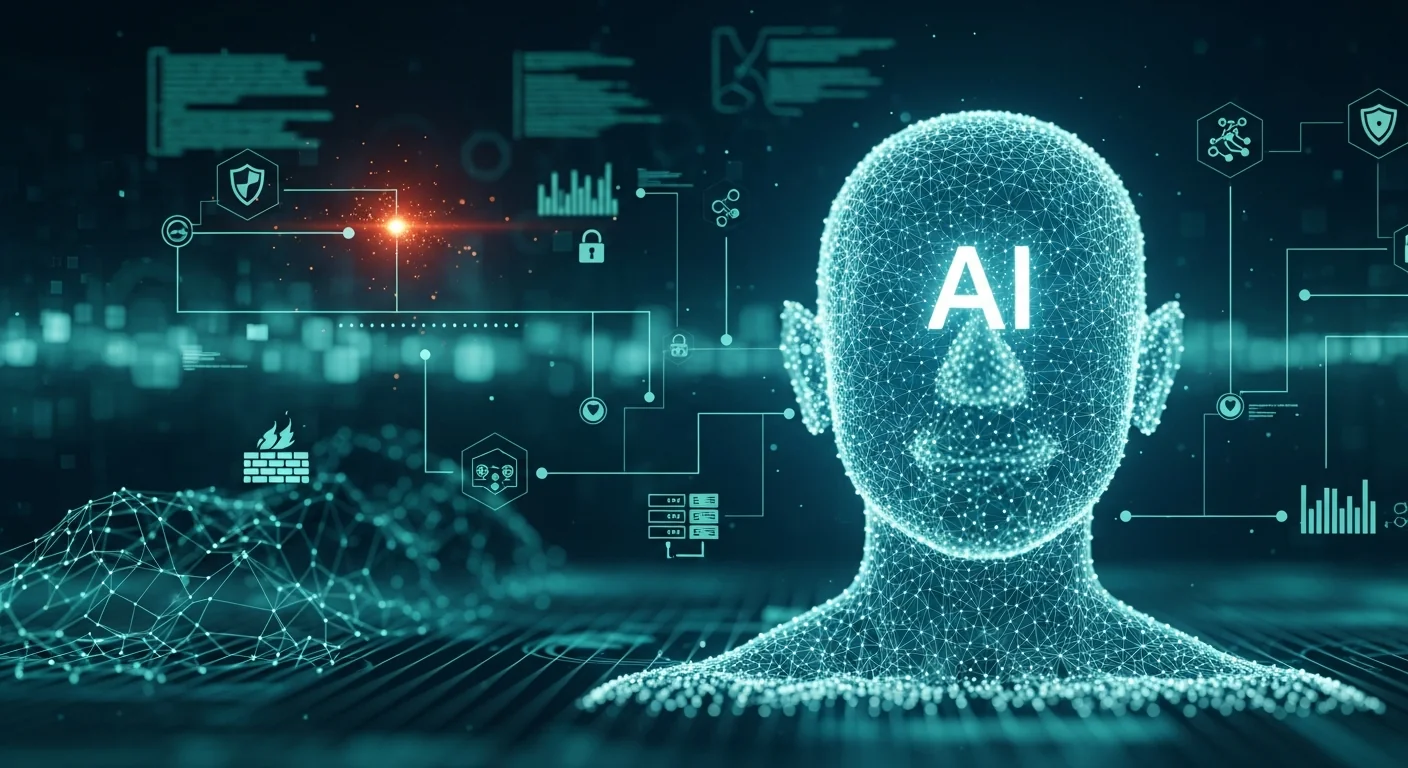

The race to adopt AI-powered applications is creating a parallel, and far more dangerous, acceleration in security risks. Zscaler CEO Jay Chaudhry recently issued a stark warning about a critical new vulnerability: autonomous AI agents. These agents, operating independently across enterprise systems, are becoming prime targets for hackers, threatening to expose vast troves of sensitive data and grind business operations to a halt.
This isn’t merely an extension of traditional cyber threats; it’s a paradigm shift. Conventional software is static, but AI agents learn and adapt in real time, making autonomous decisions far beyond the reach of legacy security controls. They handle sensitive data, engage with customers, and execute complex tasks without human intervention. This autonomy has opened the door to entirely new attack vectors: prompt injection to manipulate agent behavior, data leakage via model interactions, and model poisoning to corrupt the AI’s core logic. Among these, identity-based attacks using stolen API keys and OAuth tokens have become the fastest-growing threat, giving attackers a direct key to the kingdom.
As Chaudhry correctly points out, the very nature of the attack surface has been rewritten by AI agents. A single compromised agent with high-level permissions is no longer just a breach; it’s a superhighway for attackers to move laterally, map valuable targets, and exfiltrate data at machine speed. The industry is already feeling the pressure. Research confirms this acceleration, with a staggering 76% of organizations admitting they struggle to keep pace with AI-driven attacks. For nearly half of all security leaders, these threats now represent their number one ransomware concern.
This urgency is creating a significant market opportunity. With the rapid expansion of AI agent deployments, demand for specialized security solutions is surging. Firms like Zscaler are responding by positioning zero trust architecture as a core defense, augmented by AI-powered security tools. The strategy is clear: treat every AI agent as a high-privilege identity that requires continuous verification. This involves deploying real-time behavioral analytics to spot anomalies before a breach occurs and, critically, extending the core principles of zero trust to the AI systems themselves.
Incremental patches and legacy thinking simply won’t work here. To build effective defenses, organizations must embed deep auditability and explainability into their AI models from the ground up. This means implementing dynamic authorization frameworks that react to agent behavior in real time and establishing governance that treats AI agents with the same scrutiny as high-level human administrators. The alternative is unthinkable: handing attackers autonomous weapons that operate at a speed no human defense team can possibly match.
The calculus is straightforward. AI agents are set to completely transform enterprise operations, but this revolution hinges entirely on whether security can keep pace. A proactive investment in AI-specific security infrastructure is no longer an optional line item. It is the absolute foundation for survival and success in this new autonomous era.
[References & Sources]
- netenrich.com
- business-standard.com
- obsidiansecurity.com
참고문헌
